Showing posts with label Columbus. Show all posts

Friday, 8 August 2014

The Great Pyramid of Titicaca, Bolivia

Crystal Quintero, Xochitl, Pat Macpherson, Wisdom Quarterly;  "Lost Temples: Mystery of the Akapana Pyramid" (NationalGeographic.com, NatGeo)
Lake Titicaca, Bolivia, with Andes mountains in the distance (Anthony Lacoste)


LAKE TITICACA, Bolivia - Titicaca (in the hispanicized spelling) or Titiqaqa is a lake in the Andes on the border of Peru and Bolivia. By volume of water, it is the largest lake in South America. Lake Maracaibo has a larger surface area, but it is considered to be a large brackish bay due to its direct connection with the sea. Titicaca is often called the highest navigable lake in the world, with a surface elevation of 12,507 feet (3,812 m)... Bolivia has a mystery beyond the lake, that of Akapana. Scientists decode the life-giving riddle of Bolivia's great Akapana pyramid.

Friday, 4 July 2014

Why is America really called "America"?

Seth Auberon, Pat Macpherson, Pfc. Sandoval, Wisdom Quarterly; "The Naming of America: Fragments We've Shored Against Ourselves" by Johnathan Cohen (uhmc.sunysb.edu)
USA is #1 at ideals but not soccer, human rights, peacemaking... (Dan Kitwood/Getty Images)
Where are all the fireworks and star-spangled spectacles? (losangeles.cbslocal.com)
Local MTV feeder, KROQ FM (CBS, Inc.) reveals best places in LA/OC to watch fireworks
 
Navajo flag representing Native Americans
USA - It's [Declaration of] Independence Day, the 4th of July, so it's time to decry war and conquest and to celebrate rebellion.

England sent out invaders with lots of technology, took over most of the known world, including this ancient naga territory of America -- which is NOT named after Amerigo Vespucci or any old European map. Then we rebelled, absorbed people from all over the world, mostly from Africa, where are forebears stole them from, and mixed with the indigenous people we did not kill off.
 
This country belongs to the 99% (occupy.com)
It's odd that place names are kept the same when invaders can easily change them on a whim, as they do in many places to remind them of home. Whatever the reason, whatever its name, the English, Spanish, French, Vikings -- and earlier the Afghans/Chinese (judging from the body of written records and anthropological evidence), Egyptians (judging from the pyramids and the trace amounts of "New World" cocaine in ancient Egyptian mummies), the Khmer (judging from the megalithic architecture and strange demise of various pre-Mexican Mesoamerican empires mimicking the history of the Southeast Asian Empire of Angkor in present-day Cambodia), and Africans or Australian aborigines (judging from the fossil record). But the story is even stranger, and it is certainly connected one way or another to the very ancient earthling nagas.
How it's done in formerly Buddhist Kyrgyzstan, Independence Day, Bishkek (Cyrille Gibot)
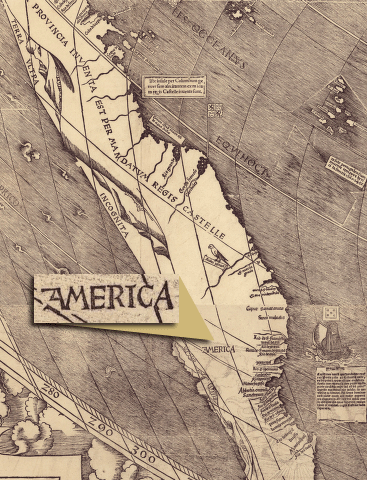
Click here to see entire map.
The name America (applied to present-day Brazil) appeared for what is believed the first time on Martin Waldseemüller's 1507 world map, known as the Baptismal Certificate of the New World and also America's Birth Certificate. More
América, no invoco tu nombre en vano
["America, I don't invoke your name in vain"]
-Pablo Neruda, Canto General
The Naming of America
Johnathan Cohen (edited by Wisdom Quarterly)
"America" (gabelli-us.com)
AMERICA, we [incorrectly] learn as schoolchildren, was named in honor of Amerigo Vespucci, for his discovery of the mainland of the New World. We tend not to question this [deceptive] lesson about the naming of America.
 
By the time we are adults it lingers vaguely in most of us, along with images of wave-tossed caravels and forests peopled with naked cannibals. Not surprisingly, the notion that America was named for Vespucci has long been universally accepted, so much so that a lineal descendant, America Vespucci, came to New Orleans in 1839 and asked for a land grant "in recognition of her name and parentage."
 
Since the late 19th century, however, conflicting ideas about the truth of the derivation have been set forth with profound cultural and political implications. To question the origin of America's name is to question the nature of not only our history lessons but our very identity as Americans.
 
Traditional history lessons about the discovery of America also raise questions about the meaning of discovery itself. It is now universally recognized that neither Vespucci nor Columbus "discovered" America. They were of course preceded by the pre-historic Asian forebears of Native Americans, who migrated across some ice-bridge in the Bering Straits or over the stepping stones of the Aleutian Islands.
 
Kukulcán, Mayan god of the wind.
A black African discovery of America, it has been argued, took place around 3,000 years ago and influenced the development of Mayan, Aztec, and Inca civilizations [judging from facial features of the large stone monuments and other records].
 
The records of Scandinavian expeditions to America are found in sagas -- their historic cores encrusted with additions made by every storyteller who had ever repeated them. The Icelandic Saga of Eric the Red, the settler of Greenland, which tells how Eric's son Leif came to Vinland, was first written down in the second half of the 13th century, 250 years after Leif found a western land full of "wheatfields and vines"; from this history emerged a fanciful theory in 1930 that the origin of "America" is Scandinavian: Amt meaning "district" plus Eric, to form Amteric, or the Land of (Leif) Eric.
 
Other Norsemen went out to the land Leif had discovered; in fact, contemporary advocates of the Norse connection claim that from around the beginning of the 11th century, North Atlantic sailors called this place Ommerike (oh-MEH-ric-eh), an Old Norse word meaning "farthest outland."
 
(This theory is currently being promoted by white supremacists of the so-called Christian Party, who are intent on preserving the nation's Nordic character, and who argue that the Norse Ommerike derives from the Gothic Amalric which, according to them, means "Kingdom of Heaven.")
 
But most non-Scandinavians were ignorant of these sailors' bold exploits until the 17th century, and what they actually found was not seriously discussed by European geographers until the 18th century.
 
Further, other discoveries of America have been credited to the Irish, who had sailed to a land they called Iargalon, the land beyond the sunset, and to the Phoenicians, who purportedly came here before the Norse.
 
The 1497 voyage by John Cabot to the Labrador coast of Newfoundland constitutes yet another discovery of the American mainland, which led to an early 20th-century account of the naming of America, recently revived, that claims the New World was named after an Englishman (Welshman, actually) called Richard Amerike.
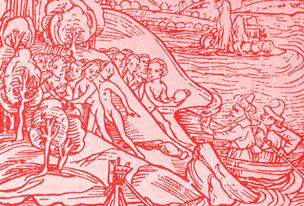
 
From Map of the Discoveries of Columbus, Christopher Columbus/Carolus Verardus, 1493. 
Yet, despite the issue of who discovered America, we are still confronted with the awesome fact that it was the voyages of Columbus, and not earlier ones, that changed the course of world history.

Indeed, as Tzvetan Todorov, author of The Conquest of America (1984; tr. Richard Howard), has argued,
 
"The conquest of America...heralds and establishes our present identity; even if every date that permits us to separate any two periods is arbitrary, none is more suitable, in order to mark the beginning of the modern era, than the year 1492, the year Columbus crosses the Atlantic Ocean."
 
Columbus clearly made a monumental discovery in showing Europe how to sail across the Atlantic; Vespucci's great contribution was to tell Europe that the land Columbus had found was not Asia but a New World (and that a western route to Asia involved yet another ocean beyond it). 
 
[What about the name?]
The naming of America, then, becomes essential to a full understanding of our history and cultural values -- ourselves -- especially when considered in terms of the range of theories about the origin of the name. 

The Maya Connection

The most explosive, haunting, almost credible etymology -- the so-called Amerrique theory, which was first advanced in 1875 -- reappeared in the late 1970s in an essay by Guyanan novelist Jan Carew, titled "The Caribbean Writer and Exile."

Here Carew focuses on the identity struggle of Caribbeans who are "subject to successive waves of cultural alienation from birth -- a process that has its origins embedded in a mosaic of cultural fragments -- Amerindian, African, European, Asian."
He adds that "the European fragment is brought into sharper focus than the others, but it remains a fragment." It is in his discussion of this European fragment that he turns to the early historical accounts written by "European colonizers, about their apocalyptic intrusion into the Amerindian domains" -- histories which, he argues, are largely fictions "characterized, with few exceptions, by romantic evasions of truth and voluminous omissions."

Carew moves from the "fictions" of Columbus to those of Vespucci with these striking words: "Alberigo Vespucci, and I deliberately use his authentic Christian name, a Florentine dilettante and rascal, corrected Columbus's error [thinking he had found the Orient]...Vespucci, having sailed to the American mainland... More

Monday, 12 May 2014

I'm a Mexican Buddhist...in LA/LA Land (video)

Crystal Quintero, Ashley Wells, CC Liu, Pfc. Sandoval, Wisdom Quarterly (Part 2)
"LA/LA"? Welcome to LA LA Land: Los Angeles, Latin America (sweetnrawme.com)

If I were Frieda Kahlo
LOS ANGELES, Latin America - The Getty is preparing to launch an art exhibit that accentuates the embarrassment of artistic riches we have in Los Angeles, which not everyone realizes is in Latin America.

It is for a lot of reasons. Not only did it used to be Mexico until European Invaders during U.S. War on the Spanish annexed it like Ukraine, it is again predominantly Latin American.

Buddhists discovered America before Columbus
Although Asians are the fastest growing ethnicity in the U.S., more Latinas and Latinos live in California than any other group.

Most are not Mexican Buddhists anymore, but a lot are. And it's amazing to find out that there is a connection between the Native Americans, First Nations people, and Mexicans (Aztecs, Maya or Mayans, Toltecs, Olmecs, Incas, and many others) from neighboring Mexico, Mesoamerica, and Central America.
 
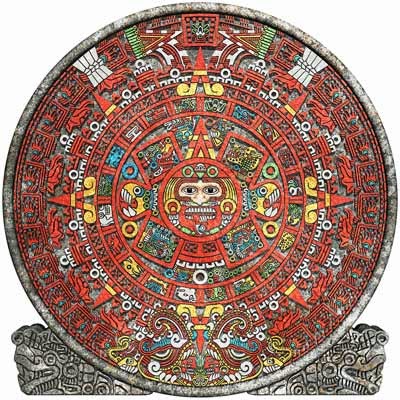
The famous "Mayan Calendar" is Aztec
It will be a long time before that information goes mainstream.

But it takes awhile for the truth to surface. In 1885 Edward P. Vining published the facts about inglorious Columbus and the Afghan Buddhist missionaries, led by the Chinese Buddhist monk Hwui Shan (Hui Shen), who arrived in America in the 5th century. America is the Fusang they discovered. So everyone will have to settle for the Getty's Pacific Standard Time 2017.
Getty Foundation (getty.edu)
TheGetty and the Getty Foundation: Art and Art History in Los Angeles (getty.edu)
If I were a leftist Aztec warrior marching through the streets of Los Angeles (latimes.com)
 
In the fall of 2011 Los Angeles celebrated the launch of Pacific Standard Time: Art in L.A. 1945-1980, an unprecedented collaboration of arts institutions across Southern California joining together to tell the story of the birth of the L.A. art scene.
 
If I were Irish-Mexican like Peter (as Che)*
Yet it was 230 years earlier, in 1781, that the city of Los Angeles itself was born when El Pueblo de Nuestra Señora la Reina de los Ángeles [de Porciúncula] was founded as part of New Spain. [A pueblo like that of the Puebloan Buddhists!]

Thus, while Los Angeles [the "City of Angels"] often represents the vanguard of contemporary culture in the United States, it is at the same time a Latin American city of long duration.
 
If I went to BofA or KA
Today, nearly half of the population of Los Angeles has roots in Latin America, contributing to Southern California as a lively center of artistic production and a natural nexus of cultural creativity between North and South. 
 
In recent years a number of exhibitions in the Americas and Europe have offered an introduction to the original and varied heritage of Latin America and the Latin American diaspora.

Now there is an opportunity for a broader and deeper examination of this art through a renewed collaboration by the Pacific Standard Time partners. In the process, Southern California will play a significant role in the research and presentation of Latin American art. More

Buddhism was in Mexico before Christianity (PRI video)

Tuesday, 8 April 2014

Were Anasazi [Native Americans] Buddhists?

Dhr. Seven (ed.), Wisdom Quarterly; Hendon Harris (chinesediscoveramerica.com)

The most famous building in the entire Tibetan plateau, Potala Pueblo, Lhasa (HCC)
Tibetan store (Aaron Berkovich/flickr)
Were the Anasazi, who are known to many as the Native Americans of the Southwest, Buddhists? 
 
Buddhism began in the sixth century BCE in India [although the Buddha was from neighboring Afghanistan -- the ancient northwestern frontier of Gandhara and to points west -- where the Dharma quickly took hold among his familial clan simultaneous with its spread in Magadha/modern Bihar, India].

It soon spread to ancient Greece and parts of its empire in Central Asia [Bactria, Sogdiana, etc., where Alexander the Great left yet another "Alexandria" in Kandahar, Afghanistan, when it was part of the Hellenic Empire], the geopolitical Middle East, and some believe to Europe (Kalmykia) as far north as Scandinavia and even North America, which was partly ancient Mexico, a spread Rick Fields documented in How the Swans Came to the Lake: A Narrative History of Buddhism in America and Edward P. Vining's Inglorious Columbus, which recounts how a group of Afghan Buddhist monks led by Chinese Buddhist missionary Hwui Shan  "discovered" America and therefore interacted with the Native Americans long before the genocidal, Polish, Jewish Christopher Columbus].

This is where the Native Anasazi (or Ancestral Puebloan people, such as the Hopi, Hisatsinom, and others) come in.
One piece of evidence is the ancient Buddhist proclivity for carving building and shrines into mountains and creating distinctive rock formations. They are now found all over the world and bear a likeness to that favored by Vedic Hinduism/Buddhism. Buddhism ultimately reached China in the first century ACE, after it had made a grand impact on Greece bringing in many Eastern philosophical idea -- the atom (kalapa), democratic voting and rudimentary parliamentary rules of order (Sangha organization according to the Vinaya), and so on.
 
The Anasazi culture mysteriously appeared in North America at an undetermined time and disappeared about 1300 ACE. Where did these incredibly advanced people come from? How and why did they just as mysteriously disappear? We know they were astronomers because we have found some of their observatories. We know they were road builders because we have found their roads. We know they were incredibly proficient at stone carving and masonry because we have found evidence of their work and architectural styles in the Four Corners area of the Southwest.
 
Native American indigenous Apache, remnant Anasazi spirit dancers, 1887 (Native Skeptic)
 
These architectural styles and art carved in stone provide the best evidence that the source of the Anasazi culture with its advanced knowledge and artistry was Vedic Asia.
 
This is a provocative statement likely to offend a few scholars. However, if one takes the time to examine the art and architecture, compare examples from each culture side by side, it will provide clear evidence of their connection.
 
Rock cliffs of the Grand Canyon, Arizona
If one were to start by using the image search terms “Were the Anasazi people Buddhist?” one would find that the architectural styles of the Puebloan people (Anasazi) and Chinese Buddhists are so similar that they show up interchangeably on the image page clearly demonstrating that they used the same techniques for carving out rock caves. (See examples of rock caves carved high on the cliffs of Bandelier National Park, New Mexico. They bear an incredible likeness to Asian Buddhist caves). 

Further search “Architecture-Pueblo complexes and Great Houses” or “Bandelier National Park Rock Cave Images” to see more). Compare these to the Caves of Dunhuang and the Longmen Caves in China or to the recently discovered Shangri-la Buddhist Caves of Nepal all of which are carved high up on rock faces.
 
Luoyang Shaolin Buddhist temple (G-W-H)
For evidence of IDENTICAL construction techniques used in ancient China and in ancient North America “zoom in” on these pictures of the rock-cut caves at Bandelier National Monument, USA and the Caves at Dunhuang, China.  Both locations, separated by the vast Pacific Ocean, show identical horizontal rows of small bored holes cut into the cliff faces perhaps to insert wooden pole frames for shade canopies for each location thousands of miles apart.
 
Tibetan structures are like Puebloan dwellings of the Southwest. This American adobe complex was likely built between 1000-1450 AD near Taos, New Mexico, USA (wiki).
  
Rock-cut remains, Bandelier, NM, USA
Ancient Buddhists seem to have been fascinated by rocks shaped a particular way. Here is a very unusually shaped rock in Thailand and an almost identically shaped rock in the Bisti Badlands, New Mexico. 
 
The Bisti Badlands are an interesting place in the Four Corners region, where the Anasazi people lived. However, the common opinion is that “The Canadian Goose Bisti,” “The Sleeping Lizard Bisti,” “The Flying Turtle Bisti,” and so on are simply random acts of erosion. A more plausible explanation is that these rock formations are ruins of a people exhibiting a Vedic cultural heritage because of at least three different types of rock formations there.
  1. Mushroom rocks like the ones found at Mushroom State Park, Kansas are found throughout these 45,000 acres of badlands. “Mushroom Rocks” are the chattra symbols of ancient Buddhism. Chattra is the Sanskrit word for “mushroom,” which is also the word for the Parasol, one of the Eight Auspicious Symbols of Buddhism. More

Monday, 7 April 2014

I'm a Mexican Buddhist (video)

Crystal I. Quintero, Pfc. Sandoval, CC Liu, Ashley Wells, Wisdom Quarterly (PART 1)
Mexican-American in L.A. Sit and sit, wait and wait, grow and grow (Yoga9v/facebook)
Nathalie Cardone sings "Hasta Siempre" (Forever, lit. Until Always) subtitled lyrics

Devotion (Guido Dingemans/flickr.com)
Can one be Latin American and Buddhist? It seems like such an American, particularly a Californian, thing to do. Then I think, California was Latin America, a part of Mexico, until it was invaded and annexed by the USA. This was during the American-Spanish War, post British colonial invasion, after Columbus and the Conquistadores buttered up the people with European diseases and sadistic Old World ways.

The amazing thing is that Mexico and Mesoamerica (the stretch of land between North America and South America), El Norte being the US, Canada, and Greenland, was Buddhist long before it was Catholic, Christian, or agnostic.

Ernesto Che Guevara Lynch, Latin-Irish revolutionary hero

Afghan Buds in America
For long ago Asian Buddhist monks from China visited and shared a wealth of advanced technological knowledge about spirituality, religion, pottery, art, food, and everything (and everyone) under the Sun.

It's how the Native Americans -- the American "Indians," the First Nations of Canada, the Indigenous Mexicans, the Inuit of Alaska and Greenland -- got such advanced spiritual knowledge while presumably living like cave dwellers in a "savage" pre-colonial environment.


Hope Sandoval, once lead singer of Mazzy Star, performing their greatest hit, "Fade Into You"

Which world-religion was first?
Wisdom Quarterly has covered much of this shocking new historical territory (with Rick Fields, Edward P. Vining, the History Channel, National Geographic, Hendon Harris, and others), so the real question is, Why would any modern person prefer to find guidance in the Enlightened One?

If the first Noble Truth is "All conditioned existence is disappointing or unsatisfactory," my own suffering, particularly in the Love Department, resonates with that. I weep, I hurt, I'm happy to roll in disappointing-sensuality, and I'm yet to be fulfilled. 

When I date, I fade into you. When I yearn for social justice, I want to be Che and always and forever fight for freedom and justice, not in name like imperial US wars but in truth. Like, maybe, the real struggle for liberation I need to wage is for personal liberation. It would help everyone around me, it would free me, and it would lead to world peace or peace in the world anyway. I am you, you are me, we're different, we're the same, we're all one, we've yet to meet... So you see, the Buddha is the best guide to find the freedom and light he found. Buena suerte (Good luck).

Monday, 31 March 2014

The Story of Indian Americans (video)

Xochitl, Ashley Wells, CC Liu, Wisdom Quarterly

500 Nations: The Story of Indian Americans (Part 1)

Recent estimates indicate that the population may have been in excess of 100 million people spanning from Alaska and Greenland to the southern tip of South America. In Pre-Colombian North America (north of Mesoamerica), and in Pre-Canada, most people lived along the coast and along major rivers.

(TNH) "America Before Columbus" Part 1

Native America before European colonization: By the time the corrupt conqueror Columbus came to enslave people in the Caribbean Islands in 1492, unknown to him and majority of the Eastern Hemisphere, he landed on islands located in the middle of two huge continents now known has North and South America. Both were teaming with huge civilizations that rivaled any in the world at the time and thousands of smaller First Nations, clans, and tribes.

Monday, 14 October 2013

Happy Indigenous-Genocide Day! (video)

Native American Day (American Indian Day) is a state holiday in California, established in 1968 to honor Native American cultures and contributions to the state and the US.

Hey, is that the mast of an imperial fleet coming from the sea to invade, rape, and kill us all? What are you talking about? I don't see nothing. (Day-Off)
     
We laugh, we cry, we joke, we point out irony.
Clashes broke out between state sponsored police and indigenous protesters and their supporters in Chile's capital following a demonstration by thousands marching for indigenous rights on Saturday.

The Santiago Times reports protesters took to Santiago's streets on "Columbus" Day for political self-determination and to protest the government's role in land theft disputes in the country's south.
 
Genocidal conqueror (morzadec.es.free.fr)
The newspaper adds that while the protest started peacefully, groups of hooded demonstrators [or agent provocateurs sent in by police] vandalized street signs and sidewalks. Riot police answered [the planned provocation] with tear gas and water cannons.

The march was organized by the Mapuches, Chile's largest indigenous group, Al Jazeera notes. According to the Associated Press, the word Mapuche means "people of the land," and the group remains among those fighting for independence despite many Indian groups ending resistance to the Spanish [imperial] conquest in the late 19th century. 

"Look what I discovered!" "How awkward." Columbus Day invasion (iamhobab.com)
 
"Today is NOT a day to celebrate. It is a day to condemn and repudiate all the abuses that we’ve suffered for more than 500 years," one protester said, according to Democracy Now!

"We’re here today to tell the Chilean state and current government that we shall resist, that we shall be in defense and in resistance to what’s happening in the (Mapuche) territory."
  

In Chile, thousands of Mapuche indigenous people and their supporters took to the streets of the capital Santiago in an anti-Columbus Day march Saturday. The Mapuche are Chile’s largest indigenous group. They are calling for the return of ancestral lands and an end to the targeting of Mapuche activists under a supposed "anti-terrorism" law. One protester condemned the day marking 521 years since Christopher (Cristobal) Columbus’s arrival in the Americas. Meulen Huencho: "Today is not a day to celebrate.... More

Columbus invaded the future US in 1492 (CT)
Chile has used a controversial anti-terrorism law instituted under Gen. Augusto Pinochet's dictatorship to prosecute Mapuche Indians. The government accuses indigenous groups of using violence in their struggle to recover ancestral land.
 
According to U.N. special investigator on human rights and counter-terrorism Ben Emmerson, Chile's government has used the law to discriminate against the Mapuche. More + Video

Indigenous People's Day
Wisdom Quarterly (Wikipedia edit)
Almost any holiday is a good holiday if it means a day off (greetingcarduniverse.com)
 
Indigenous People's Day (also known as NATIVE AMERICAN DAY) is a holiday celebrated in various localities in the United States.

It was begun as a counter-celebration to the implicitly racist, imperialist, genocide-celebrating Columbus Day. Its purpose is to promote Native American culture and commemorate the history of the Native peoples of the Americas. The celebration began in Berkeley, California and Denver, Colorado as a socially and historically conscious alternative to Columbus Day, which is listed as a federal holiday in the United States but in protest is not observed as a state holiday in every state.

Queen, I'll conquer and enslave "India"...
Indigenous People's Day is usually held on the second Monday of October, coinciding with the federal government's official observance. The idea of replacing Columbus Day with a day celebrating the indigenous people of North America first arose in 1977 from the International Conference on Discrimination Against Indigenous Populations in the Americas, sponsored by the United Nations in Geneva, Switzerland. In 1990, at the First Continental Conference on 500 Years of Indian Resistance in Quito, Ecuador... More

Couldn't see the mass murderers coming?
David Hambling ("I See No Ships: Questioning Perceptual Blindness," ForteanTimes.com)
European explorers found indigenous peoples unable to see their tall ships -- or did they? Are people blind to unexplained phenomena because their brains simply can’t handle anything they don’t understand? This story, quoted in social science circles and popular with New Agers, was repeated in the recent film What The Bleep Do We Know? – “When the tall European ships first approached the early Native Americans, it was such an ‘impossible’ vision in their reality that their highly filtered perceptions couldn’t register what was happening, and they literally failed to ‘see’ the ships.” More

Monday, 30 September 2013

Bridging Science and Spirituality (Dr. Pert)

Amber Larson, CC Liu, Xochitl, Wisdom Quarterly; Candace Pert (candacepert.com)
Dr. Pert passed away on Sept. 12, 2013 and memorial services will be held on Oct. 27, 2013 at 10:00 am at the Historic Jewish Synagogue, Sixth & I, Washington, D.C.


Psychosomatic Wellness (soundstrue.com)
Dr. Candace Pert, who discovered the opiate receptor and starred in "What the Bleep Do We Know?" brilliantly shared her scientific research in a form that made readily understandable and engaging for non-scientists.

She communicated her wisdom via lectures worldwide, documentaries, films, CDs, and in her books, Molecules of Emotion: The Scientific Basis Behind Mind-Body Medicine and her Hay House publication, Everything You Need to Feel Go(o)d.

Curing cancer spontaneously with inner work and natural remedies? Doctors cannot see/admit the possibility even with verifiable proof. There is a lot of money to be made from cancer by "blind" treatment specialists using radiation, chemotherapy poisons, and costly invasive surgeries. Viva el capitalismo! (See Part II)
 
Energetic meditation for health
She taught how the BodyMind functions as a single psychosomatic network of informational molecules which deeply influence our health and happiness. Moreover, in a way that includes yet transcends left-brained scientific inquiry, she guided us on how to utilize this knowledge to enhance our lives by embarking on spiritual and emotional paths to healing.

She welcomed all spiritual practice into her life, and she loved all people. Dr. Pert dedicated herself to creating new drugs for serious illnesses. She was, after all, first trained as a pharmacologist. More than 25 years ago, she had an inspiration, a "vision" as it is described in her first book, about how to make a drug for HIV/AIDS. At that time this scourge was not controlled; it was destroying the lives of many. She spent the last 28 years of her life pursuing research to create a non-toxic treatment and a vaccine for HIV/AIDS. More She went from neuropeptides to chakras.
 
Meditation: from neuropeptides to chakras
“Healing the Hurting, Shining the Light” was produced by Dr. Pert with her son, Brandon Pert, a musician, audio production expert, and sound mixer, exclusively for distribution from her website.
 
The download is a 30-minute meditation that uniquely combines induction into a relaxed state via breathing directions, lecture material, and chakra (subtle-energy wheel) affirmations. The music is composed according to a scientifically designed key on a scale whose frequencies are in harmony with the light spectrum.
 
An appreciation of the ancient wisdom of the Vedic chakra system, which corresponds to modern scientific discoveries about the location of neuropeptide-enriched nodal points along our bodies’ longitudinal axis, can help us enter a relaxed state of mind where natural recuperation and recovery can occur.
 
Learning new positive thought patterns is also facilitated so that auditors can permit conscious calm access to our “bodyminds” below the neck. So often today we are unnecessarily stressed out instead of blissed out, spending time and energy subconsciously focusing on irrelevant frantic survival patterns which no longer serve us.
 
This meditation is taken from the original CD “Healing the Hurting, Shining the Light” available with three extra tracks exclusively on her site. More