Crystal Quintero, Pfc. Sandoval; Amber Larson, Seven (eds.), Wisdom Quarterly; LA Times |
| Mexican-Americans and other Latinos wandering around the City of Angels (latimes.com) |
 |
| Los Angeles' favorite soccer/futbol team, like its favorite cuisine, comes from Mexico (AP) |
 |
| It's all about directly experiencing the Truth |
Q: If you were a "Mexican Buddhist," wouldn't you live in L.A.?
A: I guess that's true. I don't live in Latin America. I must be a Mexican-American Buddhist because I live in Los Angeles.
Buddhist temples here are very welcoming to people who speak Spanish or Spanglish. They try to be very accommodating to explain
the Dharma or offer meditation instruction.
 |
| La Virgen de Guadalupe as Latin Guan Yin |
Beyond Chino Hills, far to the east near the massive Hindu
mandir which is larger than the Malibu forest
mandir, there is a large Thai Buddhist temple that tried to get a permit from the city to build a golden
stupa. The city said it was too big. So they cut it down to size and set it in the parking lot. That temple has a little guest house dedicated to Native Americans, who were once the locals before colonization and incorporation. When one asks the monks why it's there, they explain that it's out of reverence for the people who originally settled that land.
 |
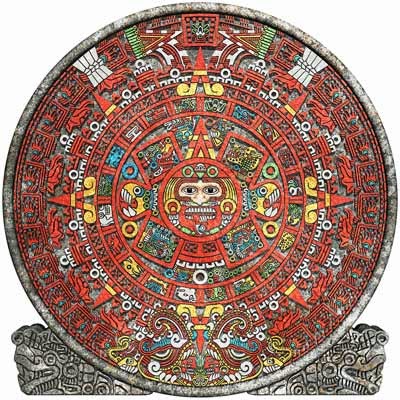
| Ancient Mexico in Mesoamerica was partially usurped to form the United States. Mesoamerica included North and Central America, including California, where the people remember the Mayan, Aztec, Toltec, and Olmec empires (wiki) |
 |
| Reality check: El Pueblo de L.A. |
Going West (Hsi Lai) temple-complex in Hacienda Heights on the border with Orange County is very welcoming, too. They are a Taiwanese Mahayana missionary movement, so one expects it. One does not expect to be so warmly treated in about 100 much smaller temples that dot Latin neighborhoods all over L.A. County.
Q: And what Dharma message do you like best?
A: The message of independent thinking.
The Dharma is not about faith or priestly authority. It is about
free inquiry and a
sangha, a
community, that includes the people who practice the Path.
The Kalama Sutra tells us so, as do so many teachings of the Buddha.
Like the original
Protestant movement opposing corrupt Catholic institutions, Buddhism says we don't need an intermediary between us and the Truth, us and reality, us and enlightenment (seeing things as they really are), seeing the end-of-suffering (
nirvana).
We don't need idols, Gods, or heroes. They're all well and good. What we
need is
practice and
insight. And that's up to us. No one gets anywhere without help, but no one can help us so much that they are doing it for us. No one can do it for us. I think
Mexican-Americans can really relate to this. Maybe all Americans in our diversity can, like disaffected Presbyterians and languishing Lutherans [Editor:
Like my dad, you mean?] What did people want but a direct experience of sacred knowledge, liberating
enlightenment, of the divine, of the
entheogenic (
godhood-within) experience.
Speaking of diversity, before there was America there was Mexico. And Mexico was the place for diversity. It still is! The
Los Angeles Times recently (hardcopy June 13, online June 12, 2014) had a front page story titled "Mestizo Nation: Mexican DNA reveals a staggering range of diversity"!
Mestizo means "mixed" (
miscegenation, which was
illegal in the U.S. until the 1950s, but
has been and
is now one of the most popular things Anglos and Latinos do, like
Sofia Vergara and "
Al Bundy" on
Modern Family as the new
Lucy and her Hispanic hubby).
 |
| Afghan, Chinese Buddhist missionaries to Cali |
"Mexico," it seems, gets its name from one Indian tribe, the
Mexica or
Mēxihcatls, who were Aztecs.
Mexicans again became
the majority group in sunny California in 2013, but now we're Mexican-Americans, and many of us are interested in Buddhism. After all, what few know is that Buddhism arrived in Mexico and California LONG before Europeans, Columbus, or Christianity.
Writers, artists, and historians have long pondered what it means to be Mexican. Now science has offered its answer, and it could change how medicine uses racial and ethnic categories to assess disease risk, testing, and treatment.








+fixed.jpg)