Showing posts with label Indian. Show all posts

Friday, 23 May 2014

Rebirth: Indian Buddhism under Modi (video)

Crystal Quintero and Seth Auberon (eds.), Wisdom QuarterlyBuddhistChannel.tv (buddhistnews.tv); "India Jones and the Election of Doom" (Daily Show with Jon Stewart)
The Daily Show's Jason Jones chases down look-alikes of India's new PM Narendra Modi in an attempt to interview him about a bloody piece of his past. (thedailyshow.cc.com)
 
Rebirth of Indian Buddhism under PM Modi
Senaka Weeraratna, Lankaweb, May 21, 2014

Newly elected prime minister will promote India’s rich Buddhist heritage to attract tourists and scholars and enhance India’s standing in the world.
 
NEW DELHI, India - The world’s first global Buddhist missionary, Anagarika Dharmapala, and the most talked about man in India today and perhaps in the entire policy and decision making world, Prime Minister designate Narendra Modi, share something in common. More

Bangladesh makes amends after anti-Buddhist rampage
Nicholas Farrelly, Myanmar Times, May 22, 2014
In contrast to Burma, the government moved quickly to rebuild and restore Buddhist buildings.

DHAKA, Bangladesh - “Who did this?” I asked a monk [in formerly Buddhist now Muslim "Bangla" or "West Bengal"] on a recent afternoon in Ramu, southeastern Bangladesh. “It was the Islamists,” he replied. He pointed to the marks beneath the glistening new paint where a Buddha’s head had been cleaved off and rented asunder. When asked about the culprits -- “miscreants” in the local application of English – he gave me a glimpse of monastic resignation. “I don’t know. They are people who don’t understand.” More

Lonesome Japanese Buddhist temple comes alive with cute anime characters

Yusuke Kato, Asahi Shimbun, May 19, 2014
TOKYO, Japan - Shoeizan Ryohoji Temple, tucked away in a residential area in western Tokyo, has a 400+ year history. But until just a few years ago, many locals didn’t even know the Nichiren Shu [devotional] sect Buddhist building was there. More

More from BCTV
http://www.asianart.org/exhibitions_index/yoga
http://www.buddhistravel.com/

Monday, 5 May 2014

Cinco de Mayo means Latin culture in USA


No one celebrates it in Mexico, but we sure love it in the US. What is Cinco de Mayo? The "Fifth of May" commemorates a time when Mexico rebuffed and repelled French imperial troops who were sent in to collect banking debts. They were defeated and turned away (but returned a year later and succeeded).

Brentwood, L.A. (Lalo Alacaraz/GoComics)
No one in Mexico would think to celebrate the fiasco, choosing instead to commemorate the September 16th "Mexican Independence Day" revolution that overthrew Spanish imperial rule. Long after Buddhism arrived, Spain came to Mexico and wiped out millions in waves of genocides that introduced chattel slavery, disease, mass rape, incarceration, the death penalty, corporate business, and deadly forms of Christianity -- mostly, but not exclusively, Holy Roman Imperial Catholicism.

Of course, the day is now debased in a 4th of July-style Beer and BBQ fest. Why drink Bud when you can have a Corona and enrich corporations on both sides of the border? Viva la revoluciรณn!

Satirist/Cartoonist Lalo Alcaraz is a Pacifica Radio co-host in Los Angeles (KPFK FM)

Wednesday, 23 April 2014

Native Americans on gay marriage, junk food...

Xochitl; CC Liu, Ashley Wells, (eds.) Wisdom Quarterly; NPR.org; Take Two (SCPR.org)
Cleaning, restoring, and hiking Hahamongna, sacred Tongva land, Native Los Angeles

Navajo Nation rainbow flag (dbking/flickr.com/npr.org)

How some Natives dealt with homosexuality
LGBTQ (transgendersociety.yolasite.com)
It may be that gay marriage is not accepted by traditional Native Americans, like California's Chumash (ranging from Malibu to San Luis Obispo). They nevertheless found a progressive and inclusive solution to gender-bending, transsexuality, and homosexuality: "Two-spirit people."

San Francisco march (indybay.org)
Two-spirit is a modern umbrella term used by some indigenous North Americans for gender-variant individuals within their communities.
 
Non-Native anthropologists have historically used the term berdaches (almost exactly like the analogous Afghan/Pashtun bacheh) for individuals who fulfill one of many mixed gender roles in First Nations and Native American tribes.
The complex social psychology of sex and the social construction of gender among Native Americans and ancient Asians can teach us a great deal to allay our unconscious sexism (GJ)
  
Ancient Afghans and Chinese in America
But this term has more recently fallen out of favor (in Afghanistan as well). Third and fourth gender roles historically embodied by two-spirit people include performing work and cross dressing, that is, wearing clothing associated with the other gender
 
Some tribes consider there to be at least four gender identities: (1) feminine men, (2) masculine men, (3) feminine women, and (4) masculine women. The presence of male two-spirits "was a fundamental institution among most tribal peoples" (Brian Joseph Gilley, Becoming Two-Spirit: Gay Identity and Social Acceptance in Indian Country, 2008). According to Will Roscoe, male and female two-spirits have been "documented in over 130 North America tribes, in every region of the continent" (Will Roscoe, The Zuni Man-Woman, p.5, 1991).
 
Transsexual and transgender Native Americans existed, and were even accepted and assimilated, before Western contact (Transgender Society/de Batz, Illinois,1735)
.
Banning Native American Gay Marriage
Tell Me More (npr.org)
But we need gay marriage or they win!
The Navajo Nation has has prohibited same-sex marriage since 2005, when the Dine Marriage Law was passed. Now, critics are challenging that ban.  As the largest reservation in the U.S., the Navajo Nation straddles the borders of three states: New Mexico, Arizona, and Utah. Utah has been embroiled in its own same-sex marriage battle recently (the state halted gay marriages Monday).  But these state laws do not affect the Navajo Nation ban. Michel Martin, the excellent host of NPR's nightly Tell Me More, recently sat down with Deswood Tome, a special adviser to the president of the Navajo Nation and activist Alray Nelson of the Coalition for Navajo Equality. LISTEN

Impact of The Long Walk felt 150 years later
Laurel Morales, Fronteras Desk (Take Two, Jan. 24, 2014)
The Long Walk for Navajos and Apaches (Bosque Redondo Memorial/Shonto Begay)
 
Navajo Artist Shonto Begay says, “I could feel and hear the cries of the people the trail the heat the cold. I had to be deep deep inside that to try to bring out the echoes of the cries on the trail.”

January marked the 150th anniversary of what Navajo and Mescalero Apache people call "The Long Walk," similar to the forced death-march known as the "Trail of Tears."

Native American (SuperG82/flickr)
In 1864 the U.S. Army forced the Navajo and Apache to walk 400 miles from their assigned reservation in northeastern Arizona to the edge of the Pecos River in eastern New Mexico. As expected thousands died during that long, arduous journey.

These days, so many Navajos like musician Clarence Clearwater have moved off the reservation for work.

Clearwater performs on the Grand Canyon Railway -- the lone Indian among dozens of cowboys and train robbers entertaining tourists.
 
“I always tell people I’m there to temper the cowboys,” Clearwater said. “I’m there to give people the knowledge that there was more of the West than just cowboys.”
 
Clearwater retraced his great-great-great-grandfather’s footsteps 50 years ago for The Long Walk’s 100th anniversary. Along the way he learned a song about going home. LISTEN
  • A history of discrimination denying affirmative action
Native American Junk-Food Tax?
"Advocates Vow To Revive Navajo Junk-Food Tax" (AP/NPR, April 22, 2014)
This mouth-watering burger is a delicious vegan melt with baked fries (Vegan)

 
Don't tell anyone they're good as in healthy.
FLAGSTAFF, Arizona - Facing a high prevalence of diabetes, many American Indian tribes are returning to their roots with community and home gardens, cooking classes that incorporate traditional foods, and running programs to encourage healthy lifestyles.
 
The latest effort on the Navajo Nation, the country's largest reservation, is to use the tax system to spur people to ditch junk food.
 
Sobochesh berries (eattheweeds.com)
A proposed 2 percent sales tax on chips, cookies and sodas failed Tuesday in a Tribal Council vote. But the measure still has widespread support, and advocates plan to revive it, with the hope of making the tribe one of the first governments to enact a junk-food tax.
 
Elected officials across the U.S. have taken aim at sugary drinks with proposed bans, size limits, tax hikes and warning labels, though their efforts have not gained widespread traction. In Mexico, lawmakers approved a junk food tax and a tax on soft drinks last year as part of that government's campaign to fight obesity.
 
Navajo President Ben Shelly earlier this year vetoed measures to establish a junk-food tax and eliminate the tax on fresh fruit and vegetables. At Tuesday's meeting, tribal lawmakers overturned the veto on the tax cut, but a vote to secure the junk-food tax fell short. Lawmakers voted 13-7 in favor of it, but the tax needed 16 votes to pass. More

Tuesday, 22 April 2014

Join the Om Healing Circle of Los Angeles

Ashley Wells, Seth Auberon, Wisdom Quarterly; Kaustubhi (omhealingcircle@gmail.com)
"OM" (aum) is the primordial or cosmic "sound of the universe" (Didi/esotericonline.net)
 
Everyone is invited to visit and join the Om Healing Circle in Los Angeles. It meets every first and third Saturday of the month at 1:00 pm. Together, participants seek to heal themselves, humanity, and Mother Earth (Bhumi, Gaia, Pachamama...). Om is a seed (bija) mantra with powerful resonant effects.
Healing Mantras
Enrico Galvini (CEO of Bodhisattva Music) and his faithful dog recommend Healing Mantras by Thomas Ashley-Farrand holding the German version in the jungles of Costa Rica.
Thomas Ashley-Farrand explains the Vedic origins, meanings, and uses of mantra.

    Monday, 14 April 2014

    Native Americans of coastal Southern California

    Xochitl, Ashley Wells, Wisdom Quarterly; Chumash Life (March 2014), SantaYnezChumash

    (santaynezchumash.org)
    The Tongva lived in Los Angeles foothills and basin, but the coast from Malibu to Paso Robles (SLO County) was the domain of the Chumash. Who were they?
    • A look into the life of a modern grape juice-maker: a tribal member who's breaking down barriers for women and for Native Americans.
    • Learn about the fight to reclaim land that was home to Chumash ancestors and could be home to the tribe's future generations.
    • See spectacular treasures and historical artifacts that will be part of the tribe's museum and cultural center.
    • Meet some extraordinary canines who travel the world to save human lives during this profile of one of the tribe's valued community partners: the Search Dog Foundation.
    Inter Tribal Powwows
    Buddhism among Pueblo Indians
    This weekend, April 12-13, was the 16th Annual Chumash Day Powwow and Inter Tribal Gathering in Malibu at Malibu Bluffs Park, 24250 Pacific Coast Highway. All drums and dancers were welcomed with Head Gourd Saginaw Grant, MC Bobby Whitebird, Arena Director Victor Chavez, Northern Host Drum Blue Star, Southern Host Drum Big Medicine, Head Man Dennis Garcia, Head Woman Sarita McGowana. Powwows continue in other cities

    The earliest Native Americans were Buddhists from the Tibetan Autonomous Region, China, seen here in Mahavairocana purifying ritual 2014 (Ven. Janyang Zangpo/flickr.com)
      
    Powwow (UCDavis.edu)
    Next weekend, April 19-20, is the 4th Annual Cal State University Dominguez Hills Pow Wow honoring the Indigenous Peoples of the Americas (11am-8pm) with Spiritual Laeader: Jimi Castillo (Tongva/Acjachemen), Head Gourd Dancer: Earl Steen (Muscogee Creek), Master of Ceremonies: John Dawson (San Carlos Apache), Arena Director: Victor Chavez (Dine), Host Southern Drum: Sooner Nation, Host Northern Drum: Changing Spirits. All Drums and Dancers welcome! SEE VIDEOS. Open to the public, FREE admission (parking $4 on Saturday, free on Sunday). Location: Cal State University Dominguez Hills Sculpture Garden, 1000 E. Victoria St., Carson, California 90807, Steve Rosales (Yaqui/Cora-Huichol) 310.872.7515. More
     
    Behind Malibu Beach is a forested canyon (Santa Monica Mountains) that opens into the SF Valley at Topanga, which hosts Earth Day 2014. Come "Back to the Garden" 10am-sunset.

      Tuesday, 8 April 2014

      Were Anasazi [Native Americans] Buddhists?

      Dhr. Seven (ed.), Wisdom Quarterly; Hendon Harris (chinesediscoveramerica.com)

      The most famous building in the entire Tibetan plateau, Potala Pueblo, Lhasa (HCC)
      Tibetan store (Aaron Berkovich/flickr)
      Were the Anasazi, who are known to many as the Native Americans of the Southwest, Buddhists? 
       
      Buddhism began in the sixth century BCE in India [although the Buddha was from neighboring Afghanistan -- the ancient northwestern frontier of Gandhara and to points west -- where the Dharma quickly took hold among his familial clan simultaneous with its spread in Magadha/modern Bihar, India].

      It soon spread to ancient Greece and parts of its empire in Central Asia [Bactria, Sogdiana, etc., where Alexander the Great left yet another "Alexandria" in Kandahar, Afghanistan, when it was part of the Hellenic Empire], the geopolitical Middle East, and some believe to Europe (Kalmykia) as far north as Scandinavia and even North America, which was partly ancient Mexico, a spread Rick Fields documented in How the Swans Came to the Lake: A Narrative History of Buddhism in America and Edward P. Vining's Inglorious Columbus, which recounts how a group of Afghan Buddhist monks led by Chinese Buddhist missionary Hwui Shan  "discovered" America and therefore interacted with the Native Americans long before the genocidal, Polish, Jewish Christopher Columbus].

      This is where the Native Anasazi (or Ancestral Puebloan people, such as the Hopi, Hisatsinom, and others) come in.
      One piece of evidence is the ancient Buddhist proclivity for carving building and shrines into mountains and creating distinctive rock formations. They are now found all over the world and bear a likeness to that favored by Vedic Hinduism/Buddhism. Buddhism ultimately reached China in the first century ACE, after it had made a grand impact on Greece bringing in many Eastern philosophical idea -- the atom (kalapa), democratic voting and rudimentary parliamentary rules of order (Sangha organization according to the Vinaya), and so on.
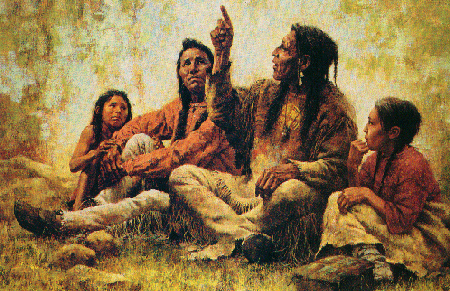
       
      The Anasazi culture mysteriously appeared in North America at an undetermined time and disappeared about 1300 ACE. Where did these incredibly advanced people come from? How and why did they just as mysteriously disappear? We know they were astronomers because we have found some of their observatories. We know they were road builders because we have found their roads. We know they were incredibly proficient at stone carving and masonry because we have found evidence of their work and architectural styles in the Four Corners area of the Southwest.
       
      Native American indigenous Apache, remnant Anasazi spirit dancers, 1887 (Native Skeptic)
       
      These architectural styles and art carved in stone provide the best evidence that the source of the Anasazi culture with its advanced knowledge and artistry was Vedic Asia.
       
      This is a provocative statement likely to offend a few scholars. However, if one takes the time to examine the art and architecture, compare examples from each culture side by side, it will provide clear evidence of their connection.
       
      Rock cliffs of the Grand Canyon, Arizona
      If one were to start by using the image search terms “Were the Anasazi people Buddhist?” one would find that the architectural styles of the Puebloan people (Anasazi) and Chinese Buddhists are so similar that they show up interchangeably on the image page clearly demonstrating that they used the same techniques for carving out rock caves. (See examples of rock caves carved high on the cliffs of Bandelier National Park, New Mexico. They bear an incredible likeness to Asian Buddhist caves). 

      Further search “Architecture-Pueblo complexes and Great Houses” or “Bandelier National Park Rock Cave Images” to see more). Compare these to the Caves of Dunhuang and the Longmen Caves in China or to the recently discovered Shangri-la Buddhist Caves of Nepal all of which are carved high up on rock faces.
       
      Luoyang Shaolin Buddhist temple (G-W-H)
      For evidence of IDENTICAL construction techniques used in ancient China and in ancient North America “zoom in” on these pictures of the rock-cut caves at Bandelier National Monument, USA and the Caves at Dunhuang, China.  Both locations, separated by the vast Pacific Ocean, show identical horizontal rows of small bored holes cut into the cliff faces perhaps to insert wooden pole frames for shade canopies for each location thousands of miles apart.
       
      Tibetan structures are like Puebloan dwellings of the Southwest. This American adobe complex was likely built between 1000-1450 AD near Taos, New Mexico, USA (wiki).
        
      Rock-cut remains, Bandelier, NM, USA
      Ancient Buddhists seem to have been fascinated by rocks shaped a particular way. Here is a very unusually shaped rock in Thailand and an almost identically shaped rock in the Bisti Badlands, New Mexico. 
       
      The Bisti Badlands are an interesting place in the Four Corners region, where the Anasazi people lived. However, the common opinion is that “The Canadian Goose Bisti,” “The Sleeping Lizard Bisti,” “The Flying Turtle Bisti,” and so on are simply random acts of erosion. A more plausible explanation is that these rock formations are ruins of a people exhibiting a Vedic cultural heritage because of at least three different types of rock formations there.
      1. Mushroom rocks like the ones found at Mushroom State Park, Kansas are found throughout these 45,000 acres of badlands. “Mushroom Rocks” are the chattra symbols of ancient Buddhism. Chattra is the Sanskrit word for “mushroom,” which is also the word for the Parasol, one of the Eight Auspicious Symbols of Buddhism. More

      Losing Zen Buddhist activist Matthiessen (NPR)

      Pat Macpherson, CC Liu, Wisdom Quarterly; Weekend Edition Sunday (NPR, April 6, 2014)
      Bhumi/Gaia is a precious thing, nurturing and full of intelligence (NASA/colourbox.com)

       
      Zen (counterpointpress.com)
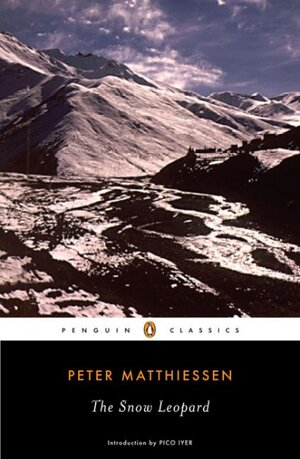
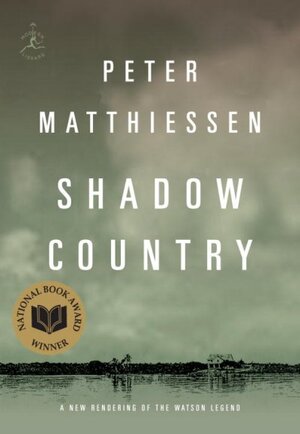
      Author Peter Muryo Matthiessen has died in New York at the age of 86 from acute myeloid leukemia. He was a novelist and naturalist, who wrote 33 books, among his best-known being The Snow Leopard and the novels Far Tortuga and At Play in the Fields of the Lord, which was made into a Hollywood film.

      He is the only writer to ever win the National Book Award in the categories of Fiction (for Shadow Country) and General Nonfiction (for The Snow Leopard, which also won for Contemporary Thought). 
       
      The Snow LeopardHe was also a political activist, a Buddhist teacher, co-founder of The Paris Review and, briefly, a spy.
       
      In his first nonfiction book, Matthiessen staked out the territory he would revisit the rest of his life -- the destruction of nature and natural peoples at the hands of humankind. Wilderness in America, published in 1959, is a history of the extinction of animal and bird species in North America:
      Species appear, and left behind by a changing earth, they disappear forever, and there is a certain solace in the inexorable. But until man, the highest predator, evolved, the process of extinction was a slow one. No species but man, so far as is known, unaided by circumstance or climactic change, has ever extinguished another.
      Wilderness in America led to a series of assignments from The New Yorker that in turn led to a series of books....
       
      Matthiessen traveled to New Guinea in 1961 with Michael Rockefeller, who disappeared and may have been the victim of headhunters (or so the legend goes). He wrote about trips to Africa, the Himalayas, South America, and Antarctica. 
      But he said he never intended to write nonfiction. "Fiction is my first love, and that's the way I began," he said. "And frankly, when I began nonfiction, I did it for money."
       
      Shadow CountryMcKay Jenkins, the author of The Peter Matthiessen Reader and several nature books, says that's astonishing. "That's kind of like Babe Ruth wanting to be remembered as a pitcher," Jenkins says. "Matthiessen is held in such high regard as a nonfiction writer by nonfiction writers that they sometimes say, 'How is it possible that this guy can be such a virtuoso fiction writer, and give his equally substantial body of nonfiction work such short shrift?' Because all the rest of us are trying to do what we can to mimic his nonfiction work."
       
      Matthiessen was remarkable in a lot of ways. He was born in Manhattan in 1927 to a wealthy family. After a stint in the Navy, he attended Yale, where he began writing short stories -- and where one of his professors recruited him into the CIA [like someone somewhere did Barry Obama, Johnny Kerry, Bush Sr., Karl(yle) Rove, Dick Cheney...and the even the fleeing Dalai Lama. The Company gets around.]

      In 1953, Matthiessen co-founded what would become one of the most important literary magazines of the 20th Century, The Paris Review. But he did it as a cover for his CIA activities -- the only adventure in his long life that he said he ever regretted.
       
      "I was a spy," he said. "When I went in there, it was the end of the Cold War -- Russia was a great menace out there in the distance. It was considered very patriotic to join the CIA. I didn't know my politics were going to veer leftward, and that I would really come to despise the CIA."
       
      Matthiessen's politics led to a lifelong career as an activist. He wrote books about union [American farmworker] organizer Cesar Chavez, the American Indian Movement...
       
      After Matthiessen's second wife, Deborah, died of cancer in 1972, he embraced Zen Buddhism and eventually became a priest and teacher. In his 1978 book, The Snow Leopard, Matthiessen wrote about a spiritual journey in the remote mountains of Nepal, and the impossibility of capturing experience in words:
      The sun is round. I ring with life, and the mountains ring, and when I can hear it, there is a ringing that we share. I understand all this, not in my mind, but in my heart, knowing how meaningless it is to try to capture what cannot be expressed, knowing that mere words will remain when I read it all again, another day. LISTEN
      Peter Muryo Matthiessen [was] a two-time winner of the National Book Award, a longtime Zen practitioner, and Bernie Glassman’s first Dharma successor. He [was] an active Zen teacher in Sagaponack, New York.