 |
| Bhumi/Gaia is a precious thing, nurturing and full of intelligence (NASA/colourbox.com) |
 |
| Zen (counterpointpress.com) |
Author Peter Muryo Matthiessen has died in New York at the age of 86 from acute myeloid leukemia. He was a novelist and naturalist, who wrote 33 books, among his best-known being The Snow Leopard and the novels Far Tortuga and At Play in the Fields of the Lord, which was made into a Hollywood film.
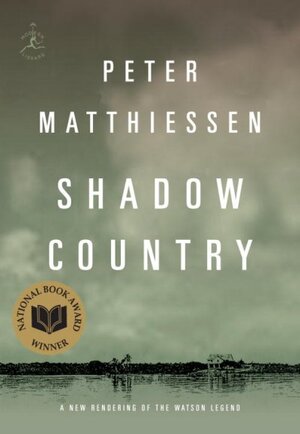
He is the only writer to ever win the National Book Award in the categories of Fiction (for Shadow Country) and General Nonfiction (for The Snow Leopard, which also won for Contemporary Thought).
 He was also a political activist, a Buddhist teacher, co-founder of The Paris Review and, briefly, a spy.
In his first nonfiction book, Matthiessen staked out the territory he would revisit the rest of his life -- the destruction of nature and natural peoples at the hands of humankind. Wilderness in America, published in 1959, is a history of the extinction of animal and bird species in North America:
Species appear, and left behind by a changing earth, they disappear forever, and there is a certain solace in the inexorable. But until man, the highest predator, evolved, the process of extinction was a slow one. No species but man, so far as is known, unaided by circumstance or climactic change, has ever extinguished another.
Wilderness in America led to a series of assignments from The New Yorker that in turn led to a series of books....
Matthiessen traveled to New Guinea in 1961 with Michael Rockefeller, who disappeared and may have been the victim of headhunters (or so the legend goes). He wrote about trips to Africa, the Himalayas, South America, and Antarctica.
But he said he never intended to write nonfiction. "Fiction is my first love, and that's the way I began," he said. "And frankly, when I began nonfiction, I did it for money."
 McKay Jenkins, the author of The Peter Matthiessen Reader and several nature books, says that's astonishing. "That's kind of like Babe Ruth wanting to be remembered as a pitcher," Jenkins says. "Matthiessen is held in such high regard as a nonfiction writer by nonfiction writers that they sometimes say, 'How is it possible that this guy can be such a virtuoso fiction writer, and give his equally substantial body of nonfiction work such short shrift?' Because all the rest of us are trying to do what we can to mimic his nonfiction work."
Matthiessen was remarkable in a lot of ways. He was born in Manhattan in 1927 to a wealthy family. After a stint in the Navy, he attended Yale, where he began writing short stories -- and where one of his professors recruited him into the CIA [like someone somewhere did Barry Obama, Johnny Kerry, Bush Sr., Karl(yle) Rove, Dick Cheney...and the even the fleeing Dalai Lama. The Company gets around.]
In 1953, Matthiessen co-founded what would become one of the most important literary magazines of the 20th Century, The Paris Review. But he did it as a cover for his CIA activities -- the only adventure in his long life that he said he ever regretted.
 "I was a spy," he said. "When I went in there, it was the end of the Cold War -- Russia was a great menace out there in the distance. It was considered very patriotic to join the CIA. I didn't know my politics were going to veer leftward, and that I would really come to despise the CIA."
Matthiessen's politics led to a lifelong career as an activist. He wrote books about union [American farmworker] organizer Cesar Chavez, the American Indian Movement...
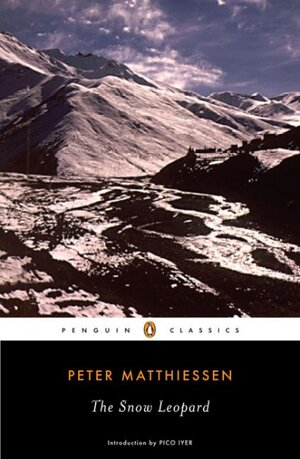
After Matthiessen's second wife, Deborah, died of cancer in 1972, he embraced Zen Buddhism and eventually became a priest and teacher. In his 1978 book, The Snow Leopard, Matthiessen wrote about a spiritual journey in the remote mountains of Nepal, and the impossibility of capturing experience in words:
The sun is round. I ring with life, and the mountains ring, and when I can hear it, there is a ringing that we share. I understand all this, not in my mind, but in my heart, knowing how meaningless it is to try to capture what cannot be expressed, knowing that mere words will remain when I read it all again, another day. LISTEN
Peter Muryo Matthiessen [was] a two-time winner of the National Book Award, a longtime Zen practitioner, and Bernie Glassman’s first Dharma successor. He [was] an active Zen teacher in Sagaponack, New York.
- The BBC's Nick Higham talks to Dr. James Lovelock, the author of Rough Ride to the Future, which predicts the Earth's future…
- …the Earth was like. But in a hundred million years, it sank back to normal." Dr. Lovelock is the creator of the Gaia hypothesis, which posits that…


- The Way of the Knife: Mark Mazzetti on KPFA today
- The Way of the Knife: Life in the CIA (or Why just spy when you can kill like an independent mercenary army for multinational capitalist corporations?)
- AUDIO: A nonbeliever tries to make sense of the visions she had as a teen (Barbara Ehrenreich on Fresh Air with Terry Gross, WWHY/NPR)
- When life gives you raspberries, make pie!
