Showing posts with label British colonial rule. Show all posts

Friday, 1 August 2014

How Israel's PR controls the media (video)

Ashley Wells, Sheldon S., Dhr. Seven, CC Liu, Wisdom Quarterly; documentary directors and (mediaed.org, IMDB.com)
Why is the U.S. public unaware of the war crimes our government (military-industrial complex) and Israel are committing even though it's in the news all day long? Careful public relations, also known as well crafted propaganda. Jahlly and Ratzkoff explain in Peace, Propaganda & the Promised Land.

This video shows how the foreign policy interests of American political elites -- working in combination with Israeli public relations strategies -- influence U.S. news reporting about the Middle East conflict.

Combining American and British TV news clips with observations of analysts, journalists, and political activists, "Peace, Propaganda & the Promised Land" provides a brief historical overview, a striking media comparison, and an examination of factors that have distorted U.S. media coverage and, in turn, [controlled] American public opinion.
What will it take to get the U.S. public's attention about our and Israel's crimes? Topless FEMEN protesters conduct a "Slut Walk" in Tel Aviv, May 10, 2014 calling attention to religious sexism, patriarchy, militarism, and crimes against humanity.
 
Peace, Propaganda & the Promised Land:
U.S. Media on Israel-Palestine
Peace, Propaganda & the Promised Land provides a striking comparison of U.S. and international media coverage.
 
It focuses on the "crisis" [actually Israel's genocide, ethnic cleansing, and crimes against humanity] in the Middle East, zeroing in on distortions in U.S. coverage reinforce false perceptions of the Israeli-Palestinian problem.
 
I did what you said. - You'll get over it.
This pivotal documentary exposes how the foreign policy interests of American political elites -- big oil, a need to have an American military base in the region, and others -- work in combination with Israeli public relations (PR) strategies to exercise a powerful influence over how news from Israel is reported.

Through the voices of scholars, media critics, peace activists, religious figures, and Middle East experts, Peace, Propaganda & the Promised Land carefully analyzes and explains how -- through the use of language, framing and context -- the Israeli occupation of the West Bank and Gaza remains hidden in the news media, and Israeli colonization of the occupied territories appears to be a defensive move rather than an offensive one.

Jewish-Israeli occupiers demand Muslim-Arab blood: All the U.S. gets in its mainstream media are slanted, spun, pro-Israeli images, explanations, and crafted talking points (newser.com)
 
The documentary also explores the ways that U.S. journalists, for reasons ranging from intimidation to a lack of thorough investigation, have become complicit in carrying out Israel's PR campaign. At its core, the documentary raises questions about the ethics and role of journalism, and the relationship between media and politics.

Interviewees include Seth Ackerman, Mjr. Stav Adivi, Rabbi Arik Ascherman, Hanan Ashrawi, Noam Chomsky, Robert Fisk, Neve Gordon, Toufic Haddad, Sam Husseini, Hussein Ibish, Robert Jensen, Rabbi Michael Lerner, Karen Pfeifer, Alisa Solomon, and Gila Svirsky. More

Arresting and imprisoning children 10 and older: Why is this Palestinian kid dressed in "concentration camp" garb being manhandled by a heavily armed adult Israeli militant?

Thursday, 24 July 2014

The Buddhist art of Pakistan (Lahore Museum)

Dhr. Seven, Ashley Wells, CC Liu, Wisdom Quarterly; Team No Limit Creativity, Business Consultants (NLC360.com, facebook); LahoreMuseum.org (VIRTUAL TOUR)
Lahore Museum exhibits (lahoremuseum.org/No Limit Creativity/NLC360.com)
Lahore Museum Virtual Tour (No Limit Creativity, business consultants, NLC360.com)
 
The Lahore Museum (لاہور میوزیم لاہور عجائب گھر) was originally established in 1865-66 on the site of the hall of the 1864 Punjab Exhibition (Government of Pakistan).
 
Maitreya, 5th cent. BCE (MOW)
It was shifted in 1894 to its present site on The Mall in Lahore, in the Punjab region of India (which 1947's Partition became the country of Pakistan due to upheavals created by British colonial rule).

Rudyard Kipling's father, John Lockwood Kipling, was one of the earliest and most famous curators of the museum. Over 250,000 visitors were registered in 2005. The current building complex that houses the Lahore Museum was designed by the well-known architect Sir Ganga Ram.

Gandhara Buddhist art (WQ)
The Museum is the biggest museum in the new country and full of exquisite Gandhara (Greco-Indian fusion) art. Many rooms have been under repair for a long time, and others still show a rather old-fashioned and often rudimentary display of objects, with captions only in Urdu (the local language).

There are important relics from the Indus Valley Civilization (Indus River Valley), Ghandara and Greco-Bactrian periods as well as some Tibetan and Nepalese work on display. The museum has a number of Greco-Buddhist sculptures, Mughal and Pahari paintings on display. The Fasting Buddha from the Ghandara period is one of the most famous objects of the museum. More

What was Gandhāra?
Gandhāra (Sanskrit गन्धार, Pashto ګندارا‎, Urdu گندھارا‎) was an ancient kingdom in the Swat and Kabul river valleys and the Pothohar Plateau [that border modern Iran in the southwest in the province of Seistan-Balochistan west of ancient Mohenjo-daro].

These are in the modern-day states of northern Pakistan and northeastern Afghanistan (Gandhara Civilization). Its main cities were Purushapura (modern Peshawar), literally meaning "City of Men" (Encyclopædia Britannica: Gandhara) and Takshashila (modern Taxila). More
 
Lahore Museum: A Gallery of Our Culture, Guided Tour cover (library.tcdc.or.th)
View virtual tour properly using Flash Player Version 9.0.28 or later (NLC360.com).
First images of the Buddha, Gandhara, Lahore Museum, Pakistan (Bijapuri Ed Sentner/flickr)

Friday, 4 July 2014

Why is America really called "America"?

Seth Auberon, Pat Macpherson, Pfc. Sandoval, Wisdom Quarterly; "The Naming of America: Fragments We've Shored Against Ourselves" by Johnathan Cohen (uhmc.sunysb.edu)
USA is #1 at ideals but not soccer, human rights, peacemaking... (Dan Kitwood/Getty Images)
Where are all the fireworks and star-spangled spectacles? (losangeles.cbslocal.com)
Local MTV feeder, KROQ FM (CBS, Inc.) reveals best places in LA/OC to watch fireworks
 
Navajo flag representing Native Americans
USA - It's [Declaration of] Independence Day, the 4th of July, so it's time to decry war and conquest and to celebrate rebellion.

England sent out invaders with lots of technology, took over most of the known world, including this ancient naga territory of America -- which is NOT named after Amerigo Vespucci or any old European map. Then we rebelled, absorbed people from all over the world, mostly from Africa, where are forebears stole them from, and mixed with the indigenous people we did not kill off.
 
This country belongs to the 99% (occupy.com)
It's odd that place names are kept the same when invaders can easily change them on a whim, as they do in many places to remind them of home. Whatever the reason, whatever its name, the English, Spanish, French, Vikings -- and earlier the Afghans/Chinese (judging from the body of written records and anthropological evidence), Egyptians (judging from the pyramids and the trace amounts of "New World" cocaine in ancient Egyptian mummies), the Khmer (judging from the megalithic architecture and strange demise of various pre-Mexican Mesoamerican empires mimicking the history of the Southeast Asian Empire of Angkor in present-day Cambodia), and Africans or Australian aborigines (judging from the fossil record). But the story is even stranger, and it is certainly connected one way or another to the very ancient earthling nagas.
How it's done in formerly Buddhist Kyrgyzstan, Independence Day, Bishkek (Cyrille Gibot)
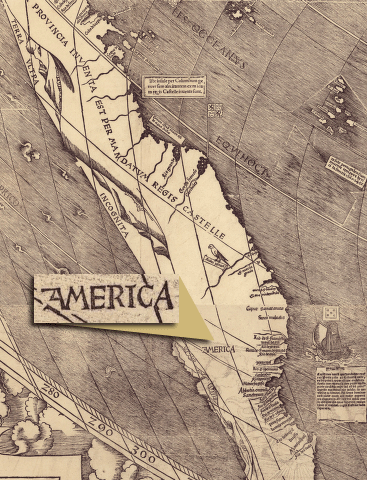
Click here to see entire map.
The name America (applied to present-day Brazil) appeared for what is believed the first time on Martin Waldseemüller's 1507 world map, known as the Baptismal Certificate of the New World and also America's Birth Certificate. More
América, no invoco tu nombre en vano
["America, I don't invoke your name in vain"]
-Pablo Neruda, Canto General
The Naming of America
Johnathan Cohen (edited by Wisdom Quarterly)
"America" (gabelli-us.com)
AMERICA, we [incorrectly] learn as schoolchildren, was named in honor of Amerigo Vespucci, for his discovery of the mainland of the New World. We tend not to question this [deceptive] lesson about the naming of America.
 
By the time we are adults it lingers vaguely in most of us, along with images of wave-tossed caravels and forests peopled with naked cannibals. Not surprisingly, the notion that America was named for Vespucci has long been universally accepted, so much so that a lineal descendant, America Vespucci, came to New Orleans in 1839 and asked for a land grant "in recognition of her name and parentage."
 
Since the late 19th century, however, conflicting ideas about the truth of the derivation have been set forth with profound cultural and political implications. To question the origin of America's name is to question the nature of not only our history lessons but our very identity as Americans.
 
Traditional history lessons about the discovery of America also raise questions about the meaning of discovery itself. It is now universally recognized that neither Vespucci nor Columbus "discovered" America. They were of course preceded by the pre-historic Asian forebears of Native Americans, who migrated across some ice-bridge in the Bering Straits or over the stepping stones of the Aleutian Islands.
 
Kukulcán, Mayan god of the wind.
A black African discovery of America, it has been argued, took place around 3,000 years ago and influenced the development of Mayan, Aztec, and Inca civilizations [judging from facial features of the large stone monuments and other records].
 
The records of Scandinavian expeditions to America are found in sagas -- their historic cores encrusted with additions made by every storyteller who had ever repeated them. The Icelandic Saga of Eric the Red, the settler of Greenland, which tells how Eric's son Leif came to Vinland, was first written down in the second half of the 13th century, 250 years after Leif found a western land full of "wheatfields and vines"; from this history emerged a fanciful theory in 1930 that the origin of "America" is Scandinavian: Amt meaning "district" plus Eric, to form Amteric, or the Land of (Leif) Eric.
 
Other Norsemen went out to the land Leif had discovered; in fact, contemporary advocates of the Norse connection claim that from around the beginning of the 11th century, North Atlantic sailors called this place Ommerike (oh-MEH-ric-eh), an Old Norse word meaning "farthest outland."
 
(This theory is currently being promoted by white supremacists of the so-called Christian Party, who are intent on preserving the nation's Nordic character, and who argue that the Norse Ommerike derives from the Gothic Amalric which, according to them, means "Kingdom of Heaven.")
 
But most non-Scandinavians were ignorant of these sailors' bold exploits until the 17th century, and what they actually found was not seriously discussed by European geographers until the 18th century.
 
Further, other discoveries of America have been credited to the Irish, who had sailed to a land they called Iargalon, the land beyond the sunset, and to the Phoenicians, who purportedly came here before the Norse.
 
The 1497 voyage by John Cabot to the Labrador coast of Newfoundland constitutes yet another discovery of the American mainland, which led to an early 20th-century account of the naming of America, recently revived, that claims the New World was named after an Englishman (Welshman, actually) called Richard Amerike.
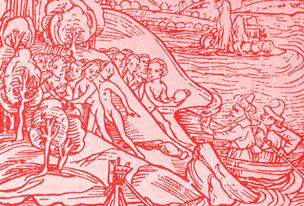
 
From Map of the Discoveries of Columbus, Christopher Columbus/Carolus Verardus, 1493. 
Yet, despite the issue of who discovered America, we are still confronted with the awesome fact that it was the voyages of Columbus, and not earlier ones, that changed the course of world history.

Indeed, as Tzvetan Todorov, author of The Conquest of America (1984; tr. Richard Howard), has argued,
 
"The conquest of America...heralds and establishes our present identity; even if every date that permits us to separate any two periods is arbitrary, none is more suitable, in order to mark the beginning of the modern era, than the year 1492, the year Columbus crosses the Atlantic Ocean."
 
Columbus clearly made a monumental discovery in showing Europe how to sail across the Atlantic; Vespucci's great contribution was to tell Europe that the land Columbus had found was not Asia but a New World (and that a western route to Asia involved yet another ocean beyond it). 
 
[What about the name?]
The naming of America, then, becomes essential to a full understanding of our history and cultural values -- ourselves -- especially when considered in terms of the range of theories about the origin of the name. 

The Maya Connection
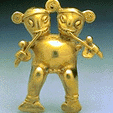
The most explosive, haunting, almost credible etymology -- the so-called Amerrique theory, which was first advanced in 1875 -- reappeared in the late 1970s in an essay by Guyanan novelist Jan Carew, titled "The Caribbean Writer and Exile."

Here Carew focuses on the identity struggle of Caribbeans who are "subject to successive waves of cultural alienation from birth -- a process that has its origins embedded in a mosaic of cultural fragments -- Amerindian, African, European, Asian."
He adds that "the European fragment is brought into sharper focus than the others, but it remains a fragment." It is in his discussion of this European fragment that he turns to the early historical accounts written by "European colonizers, about their apocalyptic intrusion into the Amerindian domains" -- histories which, he argues, are largely fictions "characterized, with few exceptions, by romantic evasions of truth and voluminous omissions."

Carew moves from the "fictions" of Columbus to those of Vespucci with these striking words: "Alberigo Vespucci, and I deliberately use his authentic Christian name, a Florentine dilettante and rascal, corrected Columbus's error [thinking he had found the Orient]...Vespucci, having sailed to the American mainland... More

Saturday, 14 June 2014

World's most famous Irish Buddhist (video)

Dhr. Seven, Pat Macpherson, Amber Larson, Wisdom Quarterly; UCCIreland
Prof. Brian Bocking, The Study of Religions Department, University College Cork, Dec. 2010

Los Angeles' Big Irish Fair Music Fest
The entire Irish population of Los Angeles has drained into the seaside shantytown of once bucolic now industrial Long Beach City, made famous by Snoop Dogg as "The LBC!"

It is the site of this year's Big Irish Fair and Music Fest. The Moon hangs high, and songs of auld are sung.

Few in this Buddhist town -- full of Cambodian and Bangladeshi Theravada, Tibetan Vajrayana, Chinese and Vietnamese Mahayana temples, and even an American Zendo and yoga studios galore, now overflowing with Ireland'ers, Irish expats, and the massive diaspora -- will know that the most famous Irish Buddhist in history is Ven. Dhammaloka from Dublin.

He was the first Westerner to ordain in the Buddhist tradition of Asia.

A tiny island of magnificent world import
Who was this "hobo," this wanderer, world traveler, spiritual pioneer, the most famous Occident in the old Orient who blazed a trail for us all? Ignored by history, this enigmatic freethinking Dubliner used various aliases, with the Buddhist name Dhammaloka ("Dharma World"), the "Irish Buddhist," who came before Brits Alan Bennett and H. Gordon Wallace and other credited as the first Westerners to explore Buddhism as monastics.

He converted from Catholicism to Theravada Buddhism around 1900, and became widely known throughout Asia in the process. He managed, as a good Irishman, to eventually fall afoul of the colonial establishment and its Christian missionaries.

Uncovering Ven. U Dhammaloka's unique story has taken some inspired detective work on the part of UCC's Prof. Brian Bocking and his colleagues. But their efforts have not been in vain. The Lost Irish Buddhist emerges after all these years as one of the earliest Western Buddhist monks, pre-dating many others who have claimed the title. Prof. Bocking takes us through an amazing odyssey.

Emerald Isle: sunset across Lower Lough Erne Fermanagh, Ireland (ayay.co.uk)
 
The First [Western] Buddhist monk
I drove out to UC Riverside [on May 16, 2011] to hear a professor in from Cork, Ireland talk about perhaps the first Irish Buddhist monk -- at least the first one we know of, who took robes in Burma fighting Christian incursions [British hegemony], defending the Dharma after his ordination, appointing himself "the Bishop of Rangoon," Burma.

His birth name is unclear because of the aliases he used in life, so his birth and death, to date, remain speculative (1856-1914?). He's a predecessor, combative if genuine, of more refined and less cantankerous Western converts. His appearance, suddenly in 1900, and his fading out by 1914, makes up a rather Zelig-like "hobo" bohemian character in Asia, where he covered considerable territory. He garnered fervent press -- some generated by his alter ego/nom de plume "Captain Daylight." He's a character worth getting to know.

The 2011 issue of Contemporary Buddhism featured Prof. Brian Bocking's article alongside scholars Thomas Tweed, Alicia Turner, and Laurence Cox (see his initial research). They hosted a UC Cork Dhammaloka Day Conference on Feb. 19th 2011 highlighting their research. More

Thursday, 5 June 2014

FBI exposes L.A. County Jail guards (video)

Pat Macpherson, Amber Larson, Seth Auberon, Wisdom Quarterly; Victoria Kim (latimes.com, June 4, 2014); Rob Halford and Judas Priest, Chris Barnes and Six Feet Under
Jailhouse Sheriff's deputies walk past cells on the 3000 floor of the L.A. County Men's Central Jail in downtown, housing 19,000 detainees and inmates (Jay L. Clendenin/LA Times)


Police (Sheriff's deputies) eager to commit felonious assault with great bodily injury to create climate of terror and oppression for all awaiting their day in court. Innocent until proven guilty is reversed in this upside down world of darkness, the rotting -pool nestled in the center of the City of Lights.

One officer recently pleaded guilty to assembling an automatic weapon for private off-duty use, and 19 or so are up on felony charges of conspiracy and impeding an investigation... -- because the worst thing one can do in jail is fink on another. This is not the lore of prisoners, it is the active mantra of the jailers. To tell on them and expose their crimes means the full weight of the Force will be brought down on you to silence you and continue their illegal behavior. Exposure might stop the police brutality, homosexual officer-on-prisoner rapes, and unwarranted murders of prisoner (framed to look as if they committed suicide or were killed by other inmates, when more often than not a simple form of killing an inmate is by exposing him to great danger by placing him defenseless in closed quarters with deadly inmates and then saying it was "just one of those things" that happens in jail).

No one wants to hear about it. None of us wants to believe police of all people commit the most heinous crimes under color of uniform sanctioned by the state and all of complicit by our silence, police revenge killings, deputy sexual assaults, predatory-police and sociopathic-jailer torture. And so it continues. 

Accused criminals are blamed. They must be "causing" good, wholesome officers to behave this way. The Stanford Prison Experiment tells us that the social context contributes a great deal, but who becomes a police officer, a jailer, a punishment-meting patrolman (most are men)? The average person doesn't. Troubled, thrill seeking misfits do, as do many damaged people back from war, who enjoy wearing uniforms, vastly outgunning "enemies," and acting with impunity.

Breaking the Law? "There I was completely wasting, out of work and down/ All inside it's so frustrating as I drift from town to town/ Feel as though nobody cares if I live or die/ So I might as well begin to put some action in my life!/ CHORUS: Breaking the law, breaking the law.../ So much for the golden future, I can't even start/ I've had every promise broken, there's anger in my heart/ You don't know what it's like, you don't have a clue/ If you did, you'd find yourselves doing the same thing, too!/ CHORUS/ You don't know what it's like!" (Judas Priest/Rob Halford).
 
(Judas Priest) These were to good ol' days when a British rock band led by a closeted gay singer dressed extravagantly in leather and chains could sing staccato of "breaking the law."
 
Jail deputy told FBI agent of "unwritten rule" on fights with inmates
Victoria Kim (latimes.com)
Cop vs. cop, FBI vs. Sheriff's deputies
On top of the many protocols and regulations he learned in training, Los Angeles County Sheriff's Deputy William David Courson was taught one "unwritten rule": If an inmate fights with a deputy, that inmate ends up at the hospital [or the morgue].
 
He learned the rule at a jail operations training session led by a sergeant and two deputies in a classroom full of about 50 deputies, Courson testified Wednesday [June 4, 2014]. Courson, who has worked at Men's Central Jail since graduating from the academy in early 2008, described [police] violence and [police] coverups among jail guards at the federal trial of six sheriff's officials on charges of obstruction of justice.
 
The "unwritten rule" was among the things Courson told [a female] FBI agent investigating the jails. He had asked the agent out on dates after seeing her at the jail facility. Over meals at a taco joint and a breakfast cafe, he talked to her about the jail's culture and specific incidents -- not realizing that all the while, she was wearing a wire and recording him as a potential target in the investigation into excessive force and corruption in the sheriff-run jails.
 
(6FU) Fast forward a few decades, and it's now the bad new days, as Florida Bigoot/yakkha/skunkape Chris Barnes growls "No Warning Shots," Six Feet Under, "Maximum Violence."
 
Courson said that during pill call one night not long after he started working at the jails, he saw a deputy come up from behind an inmate and start a fight. That same day, a senior deputy came up to him and asked him what he saw.
 
"I asked him what did he want to hear," Courson said. The senior deputy responded: "Say you were upstairs running the showers," he recalled the senior deputy saying.
 
None of the five [police] men and one woman on trial are accused of civil rights violations or excessive force [felonies they committed and commit on a routine basis]; they faces charges of attempting to impede the investigation by hiding a federal informant and threatening the case agent with arrest... More

"No Warning Shot"
Lyrics by Chris Barnes
Vientiane, Laos (Ianh3000)
"Die, die!/ The end of all law/ Four shots fired, another body falls/ I execute the guilty, violently/ Undercover killing spree, no warning shot// CHORUS: Die, [mister], die, die/ Die, [mister], die, die!/ Die, [mister], die, die! / I'll put a bullet between your [blooming] eyes// Pull the trigger, cock the hammer back/ Fifth shot to the back of your neck/ You're not a threat, you're a [blooming] disease/ Eradicate the enemy/ Dead body, another crime scene/ Blood-stained pavement, chalk outline/ Bullet holes, you're dead and cold/ The end of all law, no warning shot// CHORUS// I put the gun to the side of your head/ Squeezing the trigger/ Powder burnt skin, breaking through cranial bone/ Decayed brain tissue implodes/ Just another life that you thought you could control/ Just another pig, dead, with some extra holes/ You better think again, before I kill again/ You won't survive, when the bullets start to fly/ Protect and serve yourself/ Dug your own grave, now rot/ In that hole decay/ The murder will never stop, no warning shot// CHORUS

Friday, 30 May 2014

"Belle" and a word on Reparations (video)

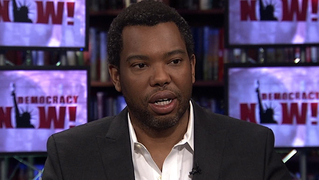
Ashley Wellls, Pat Macpherson, Seven, CC Liu, Wisdom Quarterly; Ta-Nehisi Coates, Amy Goodman, Juan Gonzalez (Democracy Now, 5/30/14); Michel Martin (Tell Me More/NPR.org)

(FMT) An illegitimate mixed race daughter of a wealthy British aristocrat, a Royal Navy Admiral... based on a true story, "Belle" follows the story of an Dido Elizebeth Belle (played by Gugu Mbatha-Raw), the illegitimate mixed race daughter of a Royal Navy Admiral. Raised by her aristocratic great-uncle, Lord Mansfield, and his wife, Lady Mansfield, Dido's lineage affords her certain privileges, yet the color of her skin prevents her from fully participating in the traditions of her social standing. Left to wonder if she will ever find love (because she, unlike the women of her time, can afford to marry for love due to her handsome inheritance), Dido falls for an idealistic young [religieux, a] vicar's son bent on change who, with her help, shapes Lord Mansfield's role as Lord Chief Justice to end slavery in England.
 
Written by Misan Sagay. Directed by Amma Asante. Also starring Tom Wilkinson, Emily Watson, Sara Gadon, Penelope Wilton, Miranda Richardson, Tom Felton, Sam Reid, Matthew Goode. © Fox Searchlight Picture. In theaters today, May 30, 2014.

The Untold History of Slavery in the United States of America (AP/msnbc.com)


The Case for Reparations
Reckoning with U.S. slavery and institutional racism 
Coates-nobug
Part 2: Coates on slavery reparations
An explosive new cover-story in the June 2014 issue of The Atlantic magazine by the famed essayist Ta-Nehisi Coates has rekindled a national discussion on reparations for American slavery and institutional racism.

Levittown, Penn. 1957 (AP/Bill Ingraham)
Coates explores how slavery, Jim Crow segregation, and federally-backed racist housing policy systematically and purposely robbed African Americans of their possessions [recapitulated in the recent Wall Street banking/mortgage housing bubble and foreclosure crisis] and prevented them from accruing inter-generational wealth.

Much of the essay focuses on predatory lending schemes that bilked potential African-American homeowners, concluding: "Until we reckon with our compounding moral debts, America will never be whole." More
"Belle": Romance, Race, and Slavery with Jane Austen style
Gugu Mbatha-Raw as Dido Elizabeth Belle in Belle.After the success of movies about the brutality of slavery, the film Belle brings a new perspective. Actress Gugu Mbatha-Raw talks about her role as a mixed-race 18th century heroine.

British actress Gugu Mbatha-Raw was brought up on Jane Austen adaptations. "You know, the Pride and Prejudice with Colin Firth and Jennifer Ehle was something I watched on a weekly basis with my mum at home in Oxfordshire," she tells NPR's [magnificent but exiting "Tell Me More" host] Michel Martin. AUDIO: LISTEN NOW
 
Screen_shot_2014-02-17_at_9.20.00_am
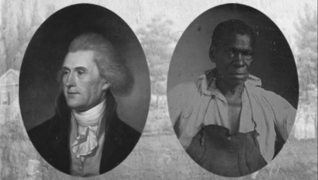
Untold History: More than quarter of US presidents involved in slavery, human trafficking

Monday, 31 March 2014

The Story of Indian Americans (video)

Xochitl, Ashley Wells, CC Liu, Wisdom Quarterly

500 Nations: The Story of Indian Americans (Part 1)

Recent estimates indicate that the population may have been in excess of 100 million people spanning from Alaska and Greenland to the southern tip of South America. In Pre-Colombian North America (north of Mesoamerica), and in Pre-Canada, most people lived along the coast and along major rivers.

(TNH) "America Before Columbus" Part 1

Native America before European colonization: By the time the corrupt conqueror Columbus came to enslave people in the Caribbean Islands in 1492, unknown to him and majority of the Eastern Hemisphere, he landed on islands located in the middle of two huge continents now known has North and South America. Both were teaming with huge civilizations that rivaled any in the world at the time and thousands of smaller First Nations, clans, and tribes.

Friday, 29 November 2013

Ebony and Ivy: University Slavery (video)

Ashley Wells, Wisdom Quarterly; Amy Goodman, DemocracyNow.org
This shocking conversation with Prof. Wilder continues in Part II. The extended interview with the MIT American history professor examines slaves in the nation’s elite schools.

Elite universities in America were built on slaves? An MIT professor and author of a new book, which has been 10 years in the making, examines how many major U.S. universities -- Harvard, Yale, Princeton, Brown, Dartmouth, Rutgers, Williams, and UNC, among others -- are drenched in the blood and sweat of Africans forcibly brought to the United States as slaves.

 
In Ebony & Ivy: Race, Slavery, and the Troubled History of America’s Universities," Massachusetts Institute of Technology (MIT) American history Professor Craig Steven Wilder reveals how the slave economy and higher education grew up together. 
 
"When you think about the colonial world, until the American Revolution, there is only one college in the South, William & Mary... The other eight colleges were all Northern schools. And they’re actually located in key sites, for the most part, of the merchant economy where the slave traders had come to power and rose as the financial and intellectual backers of new culture of the colonies," Wilder says. More


Continuing the conversation on slavery, Democracy Now! is joined by a woman who uncovered that her ancestors were the largest slave-trading family in U.S. history. Katrina Browne documented her roots in the film, "Traces of the Trade: A Story from the Deep North."

It reveals how her family, the DeWolfs based in Rhode Island, was once the largest slave-trading family in U.S. history. And it continued even after slavery was abolished by furnishing human slaves offshore, where it remained legal.

After the film aired on PBS in 2008, Browne went on to found the Tracing Center on Histories and Legacies of Slavery. More

Friday, 15 November 2013

US tech firms feeling NSA spying bite

Pat Macpherson, Pfc. Sandoval, Wisdom Quarterly; Tom Gjelten; Krishnadev Calamur
This Modern World (Tom Tomorrow/thismodernworld.com)
 
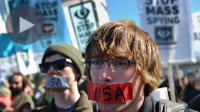
Protest of NSA spying, D.C. Oct. 13, '13 (DN)
(NPR) Recent disclosures about NSA (National Security Agency) surveillance have affected U.S. relations with allies and tainted America's image around the world.
 
Now the fallout seems to be creeping into the U.S. tech sector. Cisco Systems, which manufactures network equipment, posted disappointing first-quarter numbers this week and warned that revenues for the current quarter could drop as much as 10 percent from a year ago -- partly as a consequence of the revelations on widespread NSA spying.

When NSA cubicles rule the world (Reuters)
The company's chief financial officer, Frank Calderone, told analysts that reports that the NSA is intercepting electronic data transfers have created "a level of uncertainty or concern" among customers, particularly in emerging markets.

Cisco shares plummeted, losing more than 11 percent of their value, on Wednesday's news. Though the impact of the NSA revelations isn't evenly shared across the tech sector, other companies are also feeling the bite. Google's chief legal officer, David Drummond, cited Cisco's problems during remarks at a conference Thursday in Washington, D.C., saying... More

Reunion: Google's "India Strategy"
Iconic Muslim art and architecture of Taj Mahal is symbol of Hindu India (sjpaderborn)


Partitioned friends reunited by Internet
India and Pakistan have fought three wars, countless skirmishes, and engaged in a decades-long standoff over Kashmir. But a new Google ad has warmed the cockles of subcontinental hearts, leading to an outpouring of goodwill on social media and newspaper websites. The ad centers on two friends separated by Partition [the division of India into two countries to create Pakistan]. That's the period in 1947 that led British India to be divided into two countries -- Pakistan, a homeland for Muslims, and India, which is predominantly Hindu but officially secular. Partition occupies a central place in the collective memory of the two nations. Millions of Hindus, Muslims, and Sikhs were killed, and millions were uprooted from their homes. The legacy of that era clouds much of the relations between the two countries even today. Enter [the CIA and MIC through] Google. More
Brief History of India's Partition
 
India is still fighting for its borders
1858- The India Act: power transferred to British Colonial government. 1885- Indian National Congress founded by Allen O. Hume to unite all Indians and strengthen bonds with occupying Britain. 1905- First Partition of Bengal for administrative purposes, which gives Muslims a state majority. 1906- All India Muslim League founded to promote Muslim political interests. 1909- Revocation of Partition of Bengal, which creates anti-British and anti-Hindu sentiments among Muslims as they lose their majority in East Bengal. 1916- Lucknow Pact, the Congress and the League unite in demand for greater self-government, which is denied by British rulers. 1919- Amritsar Massacre, when Gen. Dyer opens fire on 20,000 unarmed Indian civilians at a political demonstration, causing Congress and the League to lose faith in the British occupation. 1919- Montagu-Chelmsford Reforms (implemented in 1921), when communal representation was institutionalized for the first time, and reserved legislative seats are allocated for significant minorities. 1920- Mahatma Gandhi launches a non-violent, non-cooperation movement, or Satyagraha (Truth Movement) against the British for a Free India. 1929- Congress calls for full independence. 1930- Dr. Allama Iqbal, a poet-politician, calls for a separate homeland for Muslims at the Allahabad session of the Muslim League. Gandhi starts civil disobedience movement against the Salt Laws by which British have a monopoly over production and sale of salt.
 

Google's earlier heart-wrenching story from the subcontinent to
advertise its [CIA] products. Australian man adopted from India uses
Google Maps to reconnect with his birth family. Keep tissues handy!
 
1930-31- The Round Table conferences are set up to consider dominion status for India, which fail because of non-attendance by the Congress and because Gandhi, who does attend, claims he is the only representative for all of India. 1931- Irwin-Gandhi Pact, which concedes to Gandhi's demands at the Round Table conferences and further isolates Muslim League from Congress and British. 1935- Government of India Act proposes a federal India of political provinces with elected local governments but British control over foreign policy and "defense." 1937- Elections, when Congress gains majority. 1940- Jinnah calls for establishment of Pakistan in an independent and partitioned India. 1942- Cripps Mission to India to conduct negotiations between all political parties and to set up a cabinet government, and Congress adopts Quit India Resolution to rid India of British rule, when Congress leaders are arrested for obstructing war effort. 1942-43- Muslim League gains more power, ministries formed in Sind, Bengal, and North-West Frontier Province, and greater influence in the Punjab. 1944- Gandhi released from prison, unsuccessful Gandhi-Jinnah talks, but Muslims see this as an acknowledgment that Jinnah represents all Indian Muslims. 1946- Muslim League participates in interim government that is set up according to the Cabinet Mission Plan. 1947- Announcement of Lord Mountbatten's plan for partition of India, June 3rd, Partition of India and Pakistan on August 15, with Radcliffe Award of boundaries of the nations on August 16th. 1971- East Pakistan separates from West Pakistan whereby Bangladesh is born.