Showing posts with label the black. Show all posts

Tuesday, 19 August 2014

How many black boys have to die? (Berkeley)

CC Liu, Crystal Quintero (eds.), Wisdom Quarterly; Assistant Director Stephen Menendian, Haas Institute for a Fair and Inclusive Society (berkeley.edu, August. 14, 2014)
UC Berkeley campus tower overlooking San Francisco and Bay Bridge (berkeleyside.com)
 
How Many Black Boys Have to Die? Berkeley Faculty weigh in
Stephen Menendian
Menendian
Although the “facts” are still coming out [and the police cover up is well underway], we can add Michael Brown of Ferguson, Missouri to the list of young black men and boys killed by overzealous police or armed civilians:
 
Trayvon Martin, Eric Garner, Sean Bell, Amadou Diallo, Oscar Grant, Jordan Davis, and so many more, including young women like Renisha McBride.
 
The ultimate tragedy is that each of these deaths seems to have done little to prevent the next [senseless police killing]. As I wrote two years ago, each death reopens a conversation on race framed to ask all of the wrong questions.
 
I predicted that “until we start asking the right questions, I fear there will be more Trayvon Martins.”
 
This list reminds us that these deaths are not isolated incidents, but part of a larger pattern -- a picture we can only make out if we step back for a broader view. A series of similar incidents occurred across the nation in the late 1960s, triggering the “urban disturbances” that were the focus of the famous “Kerner Commission” Report on Civil Disorders.”
 
The report is as startling in its description and analysis of events that parallel today as it is in the relevance of the recommendations it advanced.
 
The Commission was established for the specific purpose of investigating the causes of the late 1960s riots, and the Report is a comprehensive analysis of both the specific incidents at issue and the more general conditions that led to the combustible environment.


Policing
Consider the chapter dedicated to the issue of policing and the community, described as a “primary cause” of the “disorders” surveyed in the Report. The Report observed that “[t]he patrolman comes to see the city through a windshield and hear about it over a police radio. To him, the area increasingly comes to consist only of law breakers. To the ghetto resident, the policeman comes increasingly to be only an enforcer.”
 
The Kerner Commission Report expressed concern that many police neither reside nor grew up in these environments, widening the gulf between police and the communities they serve.
 
This remains the case today, with no more vivid an illustration that Ferguson, Missouri. Ferguson is a predominantly black community, and yet just three of the fifty-three police officers on the municipal force are African-American.
 
Consider, especially, the remarks of the 1968 authors of the Report when they assert that the incidents it documented were not “the crude acts of an earlier time,” alluding to explicitly racist police behavior, but that police misconduct -- whether described as brutality, harassment, or merely verbal abuse and discourtesy -- was a motivating factor that contributed to the civil disorders of that decade.
 
Protests in Ferguson, MO after an unarmed black teenager, Michael Brown, was shot and killed by Ferguson police. Photo credit: Southern Poverty Law Center
Line of peaceful protesters in Ferguson, MO, after an unarmed black teenager, Michael Brown, was shot to death by Ferguson police (Southern Poverty Law Center).
 
In the context of the era of stop-and-frisk (83 percent stopped were black or Hispanic), and the criminalization of poverty, it’s worth considering the applicability Commission’s observation, nearly 50 years later, that “Negroes firmly believe that police brutality and harassment occur repeatedly in Negro neighborhoods.”
 
The explanation for what’s happening is not a secret, but it doesn’t seem to have seeped into the broader consciousness.
 
In his 2005 book Blink, Malcolm Gladwell deconstructed the shooting of the unarmed Amadou Diallo in New York City, and explained the critical causal force, implicit or unconscious bias, as measured by the implicit association test.
 
Most Americans, even those who embrace egalitarian norms, harbor unconscious negative associations with black bodies. It is on account of these pervasive and yet unconscious, culturally embedded associations that black boys are not only automatically viewed with suspicion, but as criminals, regardless of who they are. The Internet meme #iftheygunnedmedown not only illustrates the portrayal of black men and boys, but the perception as well.
 
We need to begin by addressing the pervasiveness of these unconscious biases, first by acknowledging them, and secondly by working to reduce them or ameliorate their impact. Police academies and law enforcement agencies not only need more diverse staff, but they need implicit bias training for officers. They need to measure, track and address implicit bias, enhance officer supervision and create accountability measures.
 
Only efforts like these can repair and strengthen the relationship between law enforcement and communities of color that will ultimately prevent the senseless deaths of boys like Michael Brown and more, I fear, to come. More (comments)

Friday, 30 May 2014

"Belle" and a word on Reparations (video)

Ashley Wellls, Pat Macpherson, Seven, CC Liu, Wisdom Quarterly; Ta-Nehisi Coates, Amy Goodman, Juan Gonzalez (Democracy Now, 5/30/14); Michel Martin (Tell Me More/NPR.org)

(FMT) An illegitimate mixed race daughter of a wealthy British aristocrat, a Royal Navy Admiral... based on a true story, "Belle" follows the story of an Dido Elizebeth Belle (played by Gugu Mbatha-Raw), the illegitimate mixed race daughter of a Royal Navy Admiral. Raised by her aristocratic great-uncle, Lord Mansfield, and his wife, Lady Mansfield, Dido's lineage affords her certain privileges, yet the color of her skin prevents her from fully participating in the traditions of her social standing. Left to wonder if she will ever find love (because she, unlike the women of her time, can afford to marry for love due to her handsome inheritance), Dido falls for an idealistic young [religieux, a] vicar's son bent on change who, with her help, shapes Lord Mansfield's role as Lord Chief Justice to end slavery in England.
 
Written by Misan Sagay. Directed by Amma Asante. Also starring Tom Wilkinson, Emily Watson, Sara Gadon, Penelope Wilton, Miranda Richardson, Tom Felton, Sam Reid, Matthew Goode. © Fox Searchlight Picture. In theaters today, May 30, 2014.

The Untold History of Slavery in the United States of America (AP/msnbc.com)


The Case for Reparations
Reckoning with U.S. slavery and institutional racism 
Coates-nobug
Part 2: Coates on slavery reparations
An explosive new cover-story in the June 2014 issue of The Atlantic magazine by the famed essayist Ta-Nehisi Coates has rekindled a national discussion on reparations for American slavery and institutional racism.

Levittown, Penn. 1957 (AP/Bill Ingraham)
Coates explores how slavery, Jim Crow segregation, and federally-backed racist housing policy systematically and purposely robbed African Americans of their possessions [recapitulated in the recent Wall Street banking/mortgage housing bubble and foreclosure crisis] and prevented them from accruing inter-generational wealth.

Much of the essay focuses on predatory lending schemes that bilked potential African-American homeowners, concluding: "Until we reckon with our compounding moral debts, America will never be whole." More
"Belle": Romance, Race, and Slavery with Jane Austen style
Gugu Mbatha-Raw as Dido Elizabeth Belle in Belle.After the success of movies about the brutality of slavery, the film Belle brings a new perspective. Actress Gugu Mbatha-Raw talks about her role as a mixed-race 18th century heroine.

British actress Gugu Mbatha-Raw was brought up on Jane Austen adaptations. "You know, the Pride and Prejudice with Colin Firth and Jennifer Ehle was something I watched on a weekly basis with my mum at home in Oxfordshire," she tells NPR's [magnificent but exiting "Tell Me More" host] Michel Martin. AUDIO: LISTEN NOW
 
Screen_shot_2014-02-17_at_9.20.00_am
Untold History: More than quarter of US presidents involved in slavery, human trafficking

Tuesday, 25 March 2014

Bald Eagles, Condors, and the Beach (video)

Dev, CC Liu, Seven, Wisdom Quarterly; Mari Wirta (via Sonocarina); NPR.org
Releasing a California condor into the wild after lead poisoning (ventanaws.org)

Black Sand Beach or Vík í Mýrdal, south coast of Iceland (Mari Wirta/epod.usra.edu)
  
When we were mermaids
The black sand and pebble beach near the town of Vik i Myrdal, which is the southernmost settlement in Iceland. The sand originated as basalt lava that covers much of the area. Because black sand isn’t routinely replenished like most blond beach sand when storms and tides wash the it away, black sand beaches tend to be short lived.

The geology of Iceland is comparatively young -- owing its existence to the Mid-Atlantic Ridge that splits the island in half. 

Venice/Santa Monica beaches, Los Angeles
Volcanoes along the ridge, such as Katla, erupt with some regularity, continuing to add surface area and mass to the “land of ice and fire” and to augment the black sand beaches. Photographed Oct. 3, 2012, Vik coordinates: 63.419444, -19.009722

California Condors to be released today!
(Tim Huntington/Vimeo) California Condors "recycle" Gray whale that washed ashore, Big Sur

Reintroducing the Condor in Big Sur
Ventana Wildlife Society (ventanaws.org)
Baby condor in nest
Baby condor in nest (ventanaws)
By the 1980s, the California Condor population was in crisis, and extinction in the wild seemed certain. The dramatic decline of condors in the 20th century has been attributed to shooting (by killers who proudly call themselves sportsmen), poisoning, electric power lines, egg collecting, and habitat loss. In 1987, the last wild California Condor was taken into captivity to join the 26 remaining condors in an attempt to bolster the population through a captive breeding program. At that time, it was uncertain whether or not North America's largest flying land bird (by wingspan, 9.5 feet) would ever again soar in the wild. More
Bald Eagles of Catalina Island, California
(Catalina Island Conservancy)
The harsh winter has caused headaches for many in the Midwest, but there's a silver lining for some bird watchers looking for American bald eagles. Jenna Dooley of NPR member-station WNIJ explains how this harsh winter is helping attract them to an unusual spot in Illinois. LISTEN

Far to the west there is a nesting population within view of the Los Angeles skyline (when its visible through the smog swirling trapped by the basin).
 
The dent west of LA is Santa Monica Bay (NPR)
Those birds, affected by the pesticide DDT, are offshore on a unique island full of wildlife. Catalina's flora and fauna even includes Sasquatches and buffalo. But wild inhabitants are threatened by fire and invasive species.

As Stephen Colbert must be happy about, the eagles are landing, or at least hatching, and everyone can see it live: BALD EAGLE NEST CAM

See how it follows a male pattern in the back? I blame the DDT, which...
has left me looking like George Costanza. Don't judge (Samantha Holmes).

Monday, 3 March 2014

Post Traumatic Slave Syndrome (talk)

Public talk, Pacifica Radio fundraiser, Sat., March 15, 2014, 2:00-5:00 pm (KPFK)
 
The chains at Lady Liberty's feet (USS)
While Americans managed to emerge from chattel ("property") slavery and the oppressive decades that followed with great strength and resiliency, we did not emerge unscathed.

Post Traumatic Slave Syndrome
Slavery has produced centuries of physical, psychological,  and spiritual injury -- on both the descendants of former slaves and slave exploiters.
 
Post Traumatic Slave Syndrome: America’s Legacy of Enduring Injury and Healing lays the groundwork for understanding how the past has influenced the present. And it opens up the discussion of how we can use the strengths gained thereby to heal. More

2014 Best Movie: "12 Years a Slave" (video)

Ashley Wells, CC Liu, Pfc. Sandoval, Irma Quintero, Wisdom Quarterly MODERN SLAVERY
(MCS Trailer)

Director Steve McQueen brings this powerful Academy Award winning film, determined the Best Picture of 2014. It is based on Solomon Northup's astonishing true story. In 1841, Northup (Chiwetel Ejiofor), a free citizen, is kidnapped and sold as a slave. He is stripped of his identity and sold into American slavery system forced to work for a ruthless plantation owner (Michael Fassbender).
 
There are many modern slaves in America and around the world today (freetheslaves.net)
 
Prof. Michelle Alexander
Now he must find the strength to survive in this unflinching story of hope that swept the Spirit Awards and earned a Golden Globe for Best Picture, Drama. 

This gripping film features an all-star cast, including newcomer Academy Award winner Lupita Nyong'O, Angelina Jolie-loving Brad Pitt, Benedict Cumberbatch, and Paul Dano. 
(THNKR) The new "slaves" of the prison-industrial complex and drug war
 
THINK
Yale and Ohio State Univ. legal scholar Michelle Alexander's breakthrough book about the rise of mass incarceration in America argues that "by targeting black men through the War on Drugs and decimating communities of color, the U.S. criminal justice system functions as a contemporary system of racial subordnation and control just like the old Jim Crow system.

Saturday, 15 February 2014

Punk rock icon talks early Black Flag (video)

Pat Macpherson, Ashley Wells, Wisdom Quarterly; , John Rabe
"Rage: 20 Years of Rage" (60 mins.) documentary examines punk rock. Included are rare video clips, narrated by the people involved, and lots of great rebel music. Featuring Jack Grisham (TSOL), Jello Biafra (Dead Kennedys), Duane Peters, Keith Morris (Circle Jerks), Gitane Demone (Christian Death), Don Bolles (the Germs), US Bombs.

Punk Kristen Stewart, Black Flag fan (MS)
Henry Rollins stands outside his home in Hollywood, California. On Feb. 8, 2014, punk rock auteur Rollins received the Ray Bradbury Creativity award from Woodbury University in Burbank, CA.
 
Henry Rollins is an actor, writer (laweekly.com), singer, a DJ on KCRW FM, and one of the most interesting people in Los Angeles today. He's appeared in movies, hosted TV series, fronted the legendary West coast Black Flag after arriving in Los Angeles from the East coast -- the pioneering South Bay punk band -- and he's travelled to dozens of countries.

Stewart, Black Flag tat (NV)
Off-Ramp Producer Kevin Ferguson spoke to Rollins in Hollywood about what made him who he is today.
 
On Ray Bradbury, the Creativity Award's namesake:
"I read a bit of Ray Bradbury... Or I probably intersected with the book via Ian MacKaye, my best friend. Also, in the '80s, there was some California radio station [NPR] that would air Ray Bradbury short stories, either read out loud, or slightly dramatized as they do. And our old sound man would just whack [record] those shows onto the cassettes. And we would have these epic drives."

 
"He was scary prolific. Just cranked it out. And won several awards, and all of that, which doesn't mean that much to me as far as awards... but the fact that he remained relevant at his craft all the way to the end... Anyone who tries anything artistically or creatively: Wouldn't you like that to be your fate?...
 
On growing up around the Washington, DC punk scene:
Perez Hilton, Black Flag tee (NV)
"We were very young, and so there was a lot unknowns. When you go to your first rock concerts and you're actually standing near the stage. Which is very different than going to see Aerosmith -- which was cool -- but it was like a mile and a half from the stage. It was all the way at the other end of the hockey arena. And it is what it is. It's all reverb and backslap. It's kind of the aural equivalent of the last inch of a bottle of coke. Lot of saliva, it's not great!
 
"And then you get to go up close, and put your elbows on the stage, and have Dee Dee Ramone sweat on you. That visceral relationship that you have with music when you're that close to it -- that's what those days were like for me. And all of your cool pals from high school and in the neighborhood, they're all in bands! Like Ian Mackaye. I was at the first Minor Threat show and you could tell, This band is going to be the king of the town! It was obvious. They were so good."
 
Minor Threat, "Seeing Red," mid-1980s, Washington, DC

On setting down roots in L.A.'s South Bay with Black Flag:
"Wherever we played in California, we were always in the tough part of town with a rough audience. And the audience was one thing, the people hanging out in the parking lot were another. And then the local cops were another thing altogether. So my version of California for the first five years I lived here -- I was kind of stricken. It was kind of terrifying! Although I lived in Hermosa [Beach] and Redondo Beach for a good bit of the time that I first moved here. That's where Black Flag came from. And that was really nice.
 
"For Black Flag, it was never a community. We weren't very friendly people. And between tours, we would just write songs. And have band practice -- which consisted of doing the set two times a night. And we did that Monday through Friday. And so we didn't really hang out with many people."

"American Hardcore"
 
On culture clash in their Long Beach neighborhood:
"For a while we had a practice place in Long Beach, because it was cheap. And we were kind of right in the middle of the nexus where two different gangs met. And the locals come in, but the gang guys -- they just walk in because you're in their neighborhood. If you're smart, you don't go 'And you are?' You go 'Oh hey, cool, right?' Because they're armed. It was in our best interest to make friends with everybody.
 
"We did a big show once at the Santa Monica Civic [Auditorium]. We rented a bus, brought it down to that neighborhood, and loaded in anyone from the neighborhood who wanted to go to the show. And that was one of the most fascinating bits of culture clash. Because, when you tell some people you're going to a show, the lipstick and outfits come out, and the hair goes up, and everyone is dressed to kill! And you basically have them with 3,500 rabid people at the Santa Monica Civic. These are people who might not have seen that, at this point, very ritualized crowd behavior. LISTEN

Wednesday, 5 February 2014

Pussy Riot on the Olympics (video)

Ashley Wells, Wisdom Quarterly; Amy Goodman, DemocracyNow.org
Olympics in gay Russian resort city Sochi (Adam Pretty/Getty Images/scpr.org)
Welcome, comrades. Read the rules, same as London, plus a few more (mashable.com).

 
Art collective activist Nadia (W)
Two freed members of the Russian activist feminist art collective Pussy Riot made their first public appearance in the United States yesterday after being released from prison (gulag) in December. 
 
Nadia Tolokonnikova and Maria Alyokhina, both mothers, served nearly all of their two-year sentences for protesting Russian leader Vladimir Putin inside an Orthodox Christian cathedral in Red Square. Shortly after they arrived in New York, the two Pussy Riot members spoke at a news conference organized by Amnesty International.
 
Arrested members (Fresh Air/WWHY/NPR)
Democracy Now!’s Amy Goodman asked them about the upcoming Olympics in Sochi. She also asked, If you each had one question to pose to President Obama and President Putin, what it would be?
 
"In regards to President Obama, I would say it’s not a question, but more of a call, and this call or appeal is to not be afraid to publicly say your thoughts about what you feel is happening in Russia once you are there during your next visit," Tolokonnikova said. "The question to Vladimir Putin: Aren’t you sick of it all?"
 
INTERVIEW
Amy Goodman: Welcome, Masha and Nadia, to the United States. On this eve of the Olympics in Sochi, what message do you have for Americans? And if you had a chance to ask both of our leaders one question, President Obama and President Putin, what would you ask each of them?
 
The Russian Orthodox Church hates P.R.
Maria Alyokhina: [translated] As well as we know, the position of the American political leadership towards the Olympic Games, it’s something like a boycott. But, of course, we’re talking here about the political leadership, not about U.S. citizens who will of course be in Russia during these games. So it’s important to make a statement towards these people, American citizens who will be in Sochi. We would like for Americans to really look at Russia and see Russia beyond the images of Olympic objects and buildings. These objects have no relation to Russia; they are foreign objects in Russia. The only thing which connects these objects to the country is taxpayer money, which has been stolen and which has been used to build up these Olympic objects.
 
P.R. loves PR as in public relations (Bochkarev)
Nadia Tolokonnikova: [translated] So, in regards to President Obama, I would say it’s not a question, but more of a call. And this call and appeal is to not be afraid to publicly say your thoughts about what you feel is happening in Russia, once you are there during your next visit. The question to Vladimir Putin: Aren’t you sick of it all?

Buzzfeed Reporter: So you guys started out as performance artists before becoming the activists that we know today because of your experience. What do you think you can achieve through activism that you couldn’t achieve through performance art? And will we ever see you as artists again? More

Monday, 20 January 2014

The Buddha's chief disciple was black

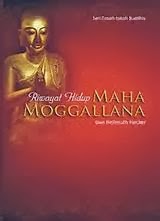
Dhr. Seven (ed.), Wisdom Quarterly; Hellmuth Hecker, Maha-Moggallana, The Wheel Publication No. 263/264 (Buddhist Publication Society), German original Wissen und Wandel (magazine, XXII, 9/10), Bradford Griffith and Robert Bussewitz (transcribers) DharmaNet
The Buddha and his black chief male disciple, diverse representations (Wisdom Quarterly)
   
The Buddha may have had as many as 80,000 monastic human disciples (savakas, "hearers") during his 45 years of teaching with countless more devas who were able to attain liberating insight. But he only singled out four "chief disciples," two monks (Great Moggallāna and Sariputra) and two nuns (Uppalavanna and Khema). Great Moggallana had very dark black skin described as being the "color of a rain cloud." He was not African, of course, but Dravidian, from a wealthy and privileged Brahmin family in ancient north India. He may have been Indo-Ariyan nevertheless with very dark skin, usually depicted as blue as is customary in India. It is explained in Sri Lankan commentaries as being due to the residual effects of weighty past karma. But whatever the case, he was joyfully welcomed by the Buddha, ordained, and immediately singled out as a chief disciple. His special ability was helping bring new monks to full enlightenment after the Buddha attracted them to the Dharma and Sariputra aided them to stream entry (the first stage of enlightenment). Presumably, Upalavanna and Khema helped the Buddha in the same way with nuns. Great Moggallana was also singled out as "foremost in psychic powers." There are many stories of his putting them to good use, which is interesting because the Buddha -- who also possessed great supernormal abilities -- saw danger in them and normally discouraged their display.
 
3. Finding the Teaching
Without knowing anything of the Buddha, Great Moggallana (born as Kolita) and Sariputra (born as Upatissa) gave up their life as wandering ascetics and, after many years, returned to their home country of Magadha. This happened not long after the Buddha had delivered his first sutra setting in motion the Wheel of the Dharma at Benares (Varanasi, India).
 
But the two friends still had not given up hope, and they decided now to search separately, for doubling their chances. They agreed among themselves that if one first learned about a convincing path to liberation (the deathless, nirvana), he would quickly inform the other.
 
Black Ven. Sivali (109060883@N02/flickr)
At that time, when both were about 40 years old, the Buddha had sent out the first batch of enlightened missionary disciples, 61 in number, to proclaim the Teaching (Dharma) for the well-being and happiness of humans and devas. The Buddha himself had gone to Rajagaha, the capital of Magadha, where the great king of Magadha soon became his follower and donated the Bamboo Grove Monastery (Jetavana). At that monastery the Buddha was residing when Kolita and Upatissa returned to Rajagaha, staying at their teacher Sanjaya's place.

One day Upatissa went to town while Kolita stayed back at their dwelling. Kolita saw his friend returning. Never had he seen him like that: his entire being seemed to be transformed, his appearance was buoyant and radiant. Eagerly Kolita asked him:

"Your features are serene, dear friend, and your complexion is bright and clear. Did it happen that you have found the road to enlightenement, the path to liberation from all suffering?"
 
Upatissa replied: "It is so, dear friend, the path to the deathless has been found!" He then reported how it happened....
 
Of things arisen from conditions
the Wayfarer the condition told
and what is their cessation,
that, too, the Great Ascetic proclaimed.
 
When Upatissa heard this stanza, the vision of Truth (the "Dharma-eye") arose in him on the spot, and the very same happened to Kolita when he listened to the stanza retold by his friend. He, too, realized: Whatever arises is bound to pass away.

The realization that was evoked by this stanza, may be called a truly mystical event. For us, these four lines do not contain an explanation explicit enough for a full understanding. The deeper and wider meaning of the stanza reveals itself only to those who have trained themselves [and can discern the Four Noble Truths in it] for a long time in wisdom and renunciation and have reflected long upon the impermanent and thed eathless, the conditioned and the unconditioned.....
  
After Kolita listened to that powerful stanza, he asked at once where the Great Ascetic, the Perfected One, the Buddha was staying. Hearing that he was dwelling nearby at the Bamboo Grove Monastery, he wished to go there immediately....

4. The Struggle for Realization
The Buddha teaching monastic disciples, bas relief, Songkla, Thailand, rooftop pyramid
 
Now the two friends, at the head of the 250 fellow ascetics, approached the Bamboo Grove. There the Buddha was just teaching Dharma to his disciples. And when he saw the two friends approaching, the Enlightened One said: "Here, disciples, they are coming, the two friends Kolita and Upatissa. They will be my chief (male) disciples, a blessed pair!"

Having arrived, all respectfully saluted the Buddha, raising their folded palms to the forehead and bowing at the feet of the meditation Master. Then the two friends spoke: "May we be permitted, O venerable sir, to obtain under the Blessed One the going-forth and the full admission?"

Then the Blessed One responded: "Come, monks! Well proclaimed is the Teaching. Live now the life of purity for making an end of suffering!" These brief words served to bestow ordination on the two friends and their following.
 
From then on Upatissa was called Sariputta ("the son of Sari," his mother) and Kolita was called Maha-Moggallana ("the Great One of the Moggallana clan") to distinguish him from other Buddhist monks from that same clan.
 
After all of them had obtained ordination, the Buddha addressed the 250 disciples and explained to them the Teaching in such a way that before long they attained to the first stage of enlightenment, stream-entry, and in due course became fully enlightened. Sariputra and Great Moggallana, however, went into solitude, but this time separate from each other.
 
Sariputta remained in the vicinity of Rajagaha and went to meditate in a cave called "Bear's Den." From there he walked to the city for his alms, which afforded him the opportunity to listen often to the Buddha's discourses. What he had heard he independently worked over on his own and methodically penetrated to a clear understanding of the mind and its laws. He needed 14 days to reach full enlightenment, the utter destruction of all defilement (asavas).
 
Great Moggallana, however, for reasons not known to us, chose as his abode the forests near the village of Kallavalaputta in Magadha. With great zeal, he meditated there while sitting or walking up and down. But in these efforts, he was often overcome by sleepiness. Though he did not wish to fall asleep, he was unable to keep his body erect and his head upright. There were times when he had to keep his eyes open even by force of will.

The tropical heat, the strain of long years of a wandering life, and the inner tensions he had gone through perhaps explain how now, at the end of his quest, his body reacted with fatigue.
 
But the Awakened One, with a great teacher's care for his disciples, did not lose sight of him. With his supernormal vision he perceived the difficulties of the new monk, and by magic power he appeared before him. When Moggallana saw the Buddha standing before him, a good part of his fatigue had already vanished. Now the Awakened One asked him:

"Are you nodding, Moggallana, are you nodding?"
  
"Yes, venerable sir."

1. "Well then, Moggallana, at whatever thought drowsiness befalls you, to that thought you should not give attention and not dwell on that thought. Then, by doing so, it is possible that your drowsiness will vanish. (The Buddha gave many more step-by-step instructions for staying awake). More 

"Nay, not for this that you may slumber long,
Comes the night, in starry garlands wreathed.
For vigils by the wise this night is here." 
Theragatha, Verse 193 (trans. by C.A.F. Rhys Davids)

Monday, 13 January 2014

Orange County fails to convict its killer cops

"Ask Mister Republican Man" (Tom Tomorrow/thismodernworld.com)


Pro-Kelly Thomas demonstration (AmberJamie)
As further proof that police cannot be held accountable by our biased (in)justice system: Two of the gang of five murderous Orange County officers who assaulted, threatened, held down, repeatedly beat, Tasered, and finally murdered a helpless, white, mentally disabled, homeless man (Kelly Thomas) were acquitted today.
Jay Cicinelli and Manuel Ramo (OCR)
Plans to try a third officer involved in the gang killing are being aborted. Former Fullerton PD Officer Manuel Ramos was the first active duty officer to ever be charged with murder in the line of duty. With his acquittal -- even after many protests by concerned citizens and the victim's father, Ron Thomas, a former police officer who advocated for his dead son. Were it not for the father's advocacy, the case would have likely been swept under the rug. It is likely no charges would have ever been brought against him or fellow killers (former Officer Jay Cicinelli and Officer Joseph Wolfe) beyond the Office of Internal Affairs in the Department (where they were slapped on the backs in the locker room and called macho by fellow cops for killing a hapless, schizophrenic "bum").
 
Kelly Thomas after police gang beating (FF)
Even right wing radio hosts thought this beating and murder was excessive by their pro-police standards of vigilante justice. This is to say nothing of the police killings of Latins around Disneyland and other ongoing abuses in Anahiemstan, like police shootings at Occupy sites.

apd
Welcome to Anaheimstan: the police state around "the Happiest Place on Earth"
 
Equality before the cops?
Chase Madar ("Afraid in America," PasadenaWeekly.com, 12-17-13)
apd protest new
 Anaheim, Orange County protests over police killings spark unrest
 
It will surprise no one that Americans are treated unequally by the police. Law enforcement picks on kids more than adults, the gay more than the straight, Muslims more than Methodists (a lot more than Methodists), antiwar activists more than cowering conformists.

Above all, our punitive police state targets the poor more than the wealthy and blacks and Latinos more than white people.

A case in point: After the 1999 massacre at Columbine High School, a police presence -- including surveillance cameras and metal detectors -- was ratcheted up at schools around the country, particularly in urban areas with largely working-class black and Latin students. It was all to “protect” the kids, it was said.

But at Columbine itself, no metal detector was installed and no heavy police presence intruded on students, no lock downs, no extra guards. The reason was simple. At that high school in the Colorado suburb of Littleton, the mostly well-heeled white families did not want their kids treated like potential felons.
 
And they had the status and political power to get their way and protect the civil rights of their children. But communities without such clout were less able protect their children from police, less able to push back against the encroachments of police state powers-that-be and their plans. More