Showing posts with label afghanistan. Show all posts

Friday, 8 August 2014

"The Kill Team" U.S. in Afghanistan (film)


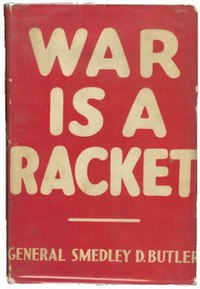
Why do we as Americans kill around the world? We join "kill teams" and commit atrocities and, rarely, we get prosecuted for it. Why does our government do it to us, leading us to our worst potential as human beings? It is -- as revealed by the high ranking U.S. military man Smedley Butler -- because WAR IS A RACKET!

WARNING: Graphic photos and candid discussion of killing not in warfare but for amusement!

Cover(The Young Turks) Ben Mankiewicz, Wes Clark Jr., and Michael Shure discuss a new report in Rolling Stone magazine about a "rogue" U.S. military Kill Team in Afghanistan that sought out and murdered helpless civilians for fun and terrorist glory. At Minute 2:37 the American soldiers seem to have done more to this child than murdered him: homosexual rape is indicated by removed trousers and blood stains. Do Americans really commit war crimes and crimes against humanity? Do they really chop off fingers (Angulimala- and War on Vietnam-style) and keep them as "trophies" of their murders? Do American soldiers develop PTSD? Moral injuries? Savagery while hypocritically calling innocent Afghans trying to defend themselves and their families against another brutal invasion "barbarians"?

Thursday, 24 July 2014

The Buddhist art of Pakistan (Lahore Museum)

Dhr. Seven, Ashley Wells, CC Liu, Wisdom Quarterly; Team No Limit Creativity, Business Consultants (NLC360.com, facebook); LahoreMuseum.org (VIRTUAL TOUR)
Lahore Museum exhibits (lahoremuseum.org/No Limit Creativity/NLC360.com)
Lahore Museum Virtual Tour (No Limit Creativity, business consultants, NLC360.com)
 
The Lahore Museum (لاہور میوزیم لاہور عجائب گھر) was originally established in 1865-66 on the site of the hall of the 1864 Punjab Exhibition (Government of Pakistan).
 
Maitreya, 5th cent. BCE (MOW)
It was shifted in 1894 to its present site on The Mall in Lahore, in the Punjab region of India (which 1947's Partition became the country of Pakistan due to upheavals created by British colonial rule).

Rudyard Kipling's father, John Lockwood Kipling, was one of the earliest and most famous curators of the museum. Over 250,000 visitors were registered in 2005. The current building complex that houses the Lahore Museum was designed by the well-known architect Sir Ganga Ram.

Gandhara Buddhist art (WQ)
The Museum is the biggest museum in the new country and full of exquisite Gandhara (Greco-Indian fusion) art. Many rooms have been under repair for a long time, and others still show a rather old-fashioned and often rudimentary display of objects, with captions only in Urdu (the local language).

There are important relics from the Indus Valley Civilization (Indus River Valley), Ghandara and Greco-Bactrian periods as well as some Tibetan and Nepalese work on display. The museum has a number of Greco-Buddhist sculptures, Mughal and Pahari paintings on display. The Fasting Buddha from the Ghandara period is one of the most famous objects of the museum. More

What was Gandhāra?
Gandhāra (Sanskrit गन्धार, Pashto ګندارا‎, Urdu گندھارا‎) was an ancient kingdom in the Swat and Kabul river valleys and the Pothohar Plateau [that border modern Iran in the southwest in the province of Seistan-Balochistan west of ancient Mohenjo-daro].

These are in the modern-day states of northern Pakistan and northeastern Afghanistan (Gandhara Civilization). Its main cities were Purushapura (modern Peshawar), literally meaning "City of Men" (Encyclopædia Britannica: Gandhara) and Takshashila (modern Taxila). More
 
Lahore Museum: A Gallery of Our Culture, Guided Tour cover (library.tcdc.or.th)
View virtual tour properly using Flash Player Version 9.0.28 or later (NLC360.com).
First images of the Buddha, Gandhara, Lahore Museum, Pakistan (Bijapuri Ed Sentner/flickr)

Friday, 27 June 2014

The First Images of the Buddha (photos)

Dhr. Seven, Amber Larson (eds.), Wisdom Quarterly; Editorial (dawn.com, 6-27-14); Wiki
The first anthropomorphic representations of the Buddha were Gandhara art (Boonlieng)
Priceless Buddhist treasures were intercepted while being smuggled out of Pakistan, part of Pashtun Afghanistan, in the region of ancient Gandhara, India (BigStory.AP org)
  
[Breaking the] Fasting Buddha
Kashmir on the Pakistan side (Vivek Aryan)
(Dawn) Truly is it said, reality is stranger than fiction -- especially here in Pakistan. Since 1894, when it was donated upon being discovered, the Gandhara-era statue of the "Fasting Buddha" has been considered the jewel of the Lahore Museum.

Museum Maitreya Buddha
Images of it adorn postcards and newsreels, and proud [Muslim] citizens make it a point to take visitors to see it as an indication that whatever else the country may be, a cultural wasteland it is not.

This statue, priceless in terms of historical significance, has for a long time had a crack on the left arm. Investigations by this paper [dawn.com], upon receiving a tip-off, have confirmed an unbelievable story:

Back in April, 2012, the crack widened while being cleaned and the statue was given over to the museum laboratory’s tender ministrations. But instead of the scientific, delicate, and professional handling that an artifact of this stature demands, an attempt was made to fix it by applying the common adhesive epoxy, which remains [shockingly] evident on the statue’s surface and has caused irreparable harm.

Where in the world is Pakistan? It only came into existence in 1947 after the colonial British Partition of India. Along with Afghanistan, it was formerly Gandhara, India. Then the U.S. started meddling; now we bomb it secretly.
 
One of the priceless Afghan treasures of Mes Aynak
The trail of destruction isn’t hard to trace, given the standards at the moment: The current lab technician worked earlier as a driver and gallery attendant, while the lab "conservationist" used to be a peon.
 
What can be made of this but the utter disregard Pakistanis tend to show towards history and culture? This is hardly the only example of this mindset. It turns out that 2012 was an inauspicious year for Gandhara-era [Buddhist] artifacts. That summer, the police intercepted a large consignment of such relics that had apparently been about to be smuggled out of the country [see photo of looted Buddhist art above].

Gandhara is full of earliest Buddhist treasures
But during the recovery process, the police ended up damaging many of them, unprepared perhaps for their weight and certainly unmindful of their value. In the case of the Lahore Museum, the qualified chemist employed at the lab was retired in 2009. No replacement has been found. This is unsurprising, given the importance attached to archaeology and history in the country.

Afghan Buddhist monastery statue 700 AD (Greco-Buddhist art of Gandhara)
First Buddhas, Gandhara
(Wiki) Greco-Buddhist art is the artistic manifestation of Greco-Buddhism, a cultural syncretism between the Classical Greek culture and Buddhism, which developed over a period of close to 1000 years in Central Asia, between the conquests of Alexander the Great in the 4th century BC, and the destructive Islamic conquests of the 7th century AD. Greco-Buddhist art is characterized by the strong idealistic realism and sensuous description of Hellenistic art and the FIRST representations of the Buddha in human form...

Future Buddha Maitreya, Gandhara-style, Greco-Indian Buddhist fusion art of Afghanistan, Pakistan, ancient India, San Francisco Asian Art Museum (Boonlieng/flickr.com)

 
Ancient Greece (in India and Persia)
Kushan Maitreya, Greco-India
Bactria was under direct Greek control for more than two centuries from the conquests of Alexander the Great in 332 BC to the end of the Greco-Bactrian kingdom around 125 BC. The art of Bactria was almost perfectly Hellenistic as shown by the archaeological remains of Greco-Bactrian cities such as Alexandria on the Oxus (Ai-Khanoum), or the numismatic art of the Greco-Bactrian kings, often considered as the best of the Hellenistic world, and including the largest silver and gold coins ever minted by the Greeks.
 
When Buddhism expanded in Central Asia from the 1st century AD, Bactria saw the results of the Greco-Buddhist syncretism arrive on its territory from India, and a new blend of sculptural representation remained until the Islamic invasions.
 
The most striking of these realizations are the Buddhas of Bamiyan. They tend to vary between the 5th and the 9th century AD. Their style is strongly inspired by Hellenistic culture. More

Western China
"Heroic gesture of the Bodhisattva," the Buddha-to-be, 6th-7th century terracotta, Tumshuq (Xinjiang) where the Chinese empire extended from the Far East into Central Asia, the Land of Buddhism and the Buddha (wiki).
 
[WISDOM QUARTERLY EDITORIAL: Buddhism made it to ancient "Greece," the Hellenistic world as a vast empire encroaching into India and Persia, before it ever arrived in China. It co-originated in Afghanistan (the Buddha's likely birthplace according to Dr. Ranajit Pal) and "India" (the Kingdom of Magadha to be specific as there was no unified India at that time), where the Buddha had traveled to establish the Teaching and the first monastic Community, which was soon augmented by many Shakyan princes and princesses, relatives of the Buddha from the area of Gandhara, Afghanistan, Indo-Pakistan, Taxila (Takkashila), Indo-Iran, and lands (the modern "stans") likely under the influence of the capital of Kapilavastu, the Buddha's hometown, the kingdom he would have inherited somewhere between modern Bamiyan and Kabul, once a fabulously rich and cosmopolitan crossroads on the Silk Route.]
  • BUST: The original representation of the Buddha in gray schist, currently dated to 2nd-3rd century CE showing Hellenistic influences characteristic of the Gandhara art of Afghanistan and Northwest Pakistan (British Museum/Britannica.com)
Maitreya in USA (Boonlieng)
The art of the Tarim Basin, also called Serindian art, is the art that developed from the 2nd through the 11th century AD in Serindia or Xinjiang, the extreme western region of China that forms part of Central Asia. It derives from the art of the Gandhara and clearly combines Indian traditions with Greek and Roman influences.
 
Buddhist missionaries travelling on the Silk Road introduced this art, along with Buddhism itself, into Serindia, where it mixed with Chinese and Persian influences.

Tuesday, 17 June 2014

"The Last Magazine" - corporate media (video)

Amber Larson, Seth Auberon, Wisdom Quarterly; Amy Goodman, Aaron Mate (democracynow)


A conscience will cost you in the Army
June 17th marks the first anniversary of the [assassination] of investigative journalist Michael Hastings. Just 33 years old, Hastings died in a [mysterious] car crash at a time when he was considered of one of the country’s most daring young reporters.
 
His dispatches from Iraq and Afghanistan unveiled the hidden realities of war. His 2010 Rolling Stone article on General Stanley McChrystal, the U.S. commander in Afghanistan, sparked a political controversy after McChrystal and his aides were quoted making disparaging remarks about top administration officials.

The article exposed longstanding government discord over the U.S. War on Afghanistan’s direction and led to McChrystal’s firing. One year after his death, Hastings’ reporting has made waves once again.
 
In 2012, Hastings wrote a major investigation for Rolling Stone on the American prisoner of war, Army Sergeant Bowe Bergdhal. At the time, Hastings thought it was the most important story of his career. 
 
But it has only recently earned widespread attention after Bergdahl’s release in an exchange for five "Taliban" members sparked a political firestorm. In his report, Hastings revealed Berghdal was profoundly disillusioned with the War on Afghanistan and may have walked away from his base (as he and others regularly did) as a result. With Berghdal still silent as he recovers from five years in Taliban captivity and torture, Hastings’ article remains the definitive account of the young soldier’s story.

Today another major work from Michael Hastings is upon us: The Last Magazine, a posthumous novel and scathing satire of the corporate news media based on Hastings’ time at Newsweek. Democracy Now! are joined by Hastings’ widow, Elise Jordan, who brought the book to life after coming across the manuscript following her husband’s death. More

Monday, 9 June 2014

The Buddha and King P. (sutra)

G.P. Malalasekera (Dictionary of Pali Names), Dhr. Seven, Amber Larson, CC Liu (eds.), Wisdom Quarterly, as taught to us by the noble Czech-born scholar-monk Ven. Dhammadipa
The Buddha as a king Maitreya Jampa, Boudhanath, Kathmandu, Nepal (fedMin/flickr)
 
Once, far to the west of Magadha (India), there was a discontented royal. From a distance he befriended an Indian king. They had never met, but they grew close as they exchanged gifts, and news, and outlooks on the world.
 
King Pukkusāti lived west of the Indus river in modern Taxila, Pakistan (which until 1948 was India next to Afghanistan). His friend was the Buddha's famous royal patron, King Bimbisara, who ruled Magadha.

Gold Buddha, Bodh Gaya, India (Chandrasekaran)
King Pukkusati heard of the Buddha's teachings and was so moved that he determined to begin meditating in his private quarters. His success in achieving the absorptions led him to renounce, then he was overcome with a longing to meet the Buddha.

He cut his hair and beard and became a wandering ascetic (shramana), like Prince Siddhartha had. And like Siddhartha, he crossed the Indus river into India. Before he could reach the Buddha, however, he stopped for the night and was given lodging in a potter's shed at the house of Bhaggava the potter in Rājagaha, the capital of King Bimbisara's kingdom. 

Buddha, Taxila Museum (Amir Taj)
The Buddha knew he was coming and arrived at the guest quarters in the potter's house after the king. The Buddha asked to be allowed to share it, and Pukkusāti -- having no idea that this was the Buddha -- readily agreed. They sat together for some time meditating in silence. The Buddha was impressed at the king's ability to meditate so deeply, apparently entering the absorptions.

When he emerged and was still meditating, the Buddha taught him the Dhātu-vibhanga Sutra (hear it below). The former king, now a wandering ascetic, immediately recognized that this could only be his professed teacher, the Buddha. At the end of the sutra, having had a noble attainment, he begged his forgiveness for not having paid him due honor when they met.

He then beseeched the Buddha to confer on him the higher ordination of a fully gone forth Buddhist monastic. The Buddha said yes and sent him to procure a proper alms bowl and saffron robe. On the way, however, Pukkusāti was gored to death by a mad cow.

When this seeming tragedy was reported to the Buddha, he explained that Pukkusāti was a non-returner and had therefore been spontaneously reborn [i.e., immediately, without the intervention of parents, but based instead solely on the power of karma] in the Pure Abodes (MN.iii.237 47).
  • The Pure Abodes are five special planes of existence in Buddhist cosmology (see graphic below). They are only open to non-returners, that is, those who have attained the third stage of enlightenment but pass away before full enlightenment. If one were fully enlightened, there would be no rebirth or disappointment (dukkha) at all. These unique planes from which there is no falling back, unlike all other "heavenly" worlds within the sensual, fine-material, and immaterial spheres. The heavens (sagga) are not immaterial planes. Most are composed of subtle material form, four are formless, and six are sensual within our own sphere the Kama Loka. (See graphic below for full listing of all these worlds).
In this context, Pukkusāti is spoken of as a "son or offspring of good family," "nobly born" (kulaputta, iii.238); see also J.iv.180 and DhA.ii.35.

Buddhist treasures being smuggled out of formerly Buddhist Pakistan and parts of Pashtun-dominated Afghanistan, which together once formed Gandhara, India, on the frontiers of ancient Shakya territory, the Buddha's hometown (BigStory.AP.org).
  
Sutra explanation
Derived from the Commentary
Indo-Greek Buddha coin (as.miami.edu)
In his comments on the Dhātuvibhanga Sutra, the great Buddhist commentator Buddhaghosa gives a long account of Pukkusāti (MA.ii.979 ff.). Compare it to the story of King Tissa of Roruva (ThagA.i.199ff.).
 
King Pukkusāti had been the king of Takkasilā (Taxila), a contemporary of King Bimbisāra (himself a stream enterer) of about the same age. A friendly al)liance was established between the two kings through merchants who traveled between their countries for purposes of trade.

Over time, although the two kings had never seen each other, there grew between them a deep bond of affection. King Pukkusāti once sent King Bimbisāra a gift of eight priceless garments in lacquered boxes. This gift was accepted at a special meeting of the entire court. King Bimbisāra wishing to return the favor but having nothing to match of a material nature, sent what he considered most precious:
 
He conceived of the idea of acquainting King Pukkusāti with the knowledge that there had appeared in the world of Three Jewels (ratanāni): the Buddha (Teacher), the Dharma (Teaching), and the Sangha (the intensively Taught). 

So he had inscribed on a golden plate, four cubits long and a span in breadth, descriptions of these Three Jewels and of various tenets of the Buddha's Dharma -- such as the Four Foundations of Mindfulness (satipatthānā), the Noble Eightfold Path, and the 37 Requisites of Enlightenment.
 
This plate was placed in the innermost of several special caskets made of various precious materials and was taken in procession on the back of the state elephant to the frontier of King Bimbisira's kingdom. Similar honors were paid to it by the chiefs of other clan territories (janapadas rather than "countries") all the way along the route to Takkasilā.

Pukkusati's probable route: Afghan border policeman, Gosha district, Nangarhar, Pakistan border May 2, 2013 (Reuters/VOANews.com)
 
When King Pukkusāti, in the solitude of his inner chamber, read the inscriptions on the plate, he was filled with boundless joy so much so that he decided to renounce the throne and the world.
 
He cut off his long hair and beard, donned fine robes like the coarse ones used by wandering ascetics of the day, and left the palace alone amid the lamentations of his subjects. They loved him and wanted him to say and lead them.
 
The Buddha (dharmadeshana)
He traveled the 192 leagues to the wealthy city of Sāvatthi, passing the gates of Jetavana, "Jeta's Grove," the famous Buddhist monastery where the Buddha frequently resided. But having understood from King Bimbisāra's letter that the Buddha lived in King Bimbisara's capital, Rājagaha, at Vulture's Peak monastery, he neglected to inquire if the Buddha was Jetavana. He continued his travels onward 45 leagues farther to Rājagaha, only to find that the Buddha was all the while residing in Sāvatthi.

As it was then evening, he sought lodging in Bhaggava's house. The Buddha, with his divine eye, saw what was in store for Pukkusāti. So traveling on foot from Sāvatthi, he reached Bhaggava's house at sundown. He awaited his opportunity to engage Pukkusāti in talk after a long period of meditation, which was fortuitous because it made the former king's mind and heart malleable and trainable.

When the Buddha taught him the "Analysis of the Elements Discourse" (Dhātu-vibhanga Sutra) -- which deals with the six major elements of earth, water, fire, air, space, and consciousness -- he was able to intuitively grasp and benefit from it, becoming a stream enterer then a non-returner very soon reborn fully enlightened.

"Analysis of the Elements Sutra" (Dhātuvibhanga Sutta). Meditate on this with headphones, pausing as needed, as the Buddha guides Pukkusati through the deepest levels of meditation, beyond the four material and four immaterial meditative absorptions (jhanas). Hearing this, Pukkusati was enlightened and became a non-returner, who was reborn in the Pure Abodes, where he attained nirvana without ever having to return from that world (MN 140).

After his untimely death -- which is explained in the Commentary as not being a natural or accidental occurrence -- Pukkusāti was reborn in a Pure Abode (suddhavasa) called the Avihā world where, together with six others, he became an arhat at the moment of his rebirth (see S.i.35, 60, for the names of the others and the remarkable story that led to this unusual immediate enlightenment).
Mad cow? The "cow" that killed Pukkusāti is explained, as so often happens in these strange situations, as having been a yakkhinī who was reborn a cow in 100 times. In her final rebirth as a cow, she killed, in addition to Pukkusāti, Bāhiya Dāruciriya (Bahiya "of the Barkcloth," famous in the sutras for becoming enlightened after hearing the briefest teaching of the Buddha), Tambadāthika, and Suppabuddha the leper (DhA.ii.35).
What is so remarkable about Pukkhusāti and the others who attained when reborn in the Aviha world is that they were some of the seven monks who, in the time of Kassapa Buddha, decided to abstain from eating until they should attain arhatship. They went to live on the top of a mountain and kicked down the ladder that had used to climb up to the top on.

The senior ascetic attained arhatship, the second became a non-returner, but the remaining five died of starvation -- after refusing the others' offers of food to sustain them in their practice. But they were proud and had made no such agreement to accept alms from those who had succeeded while fasting. The five were reborn in the Tusita world, a very exalted plane of existence.

In this age they became, respectively, Pukkusāti, Kumāra Kassapa, Bāhiya Dārucīriya, Dabba Mallaputta, and Sabhiya (Ap.ii.473; DhA.ii.212; UdA.81; but see MA.i.335, where only three are mentioned (Pukkusāti, Bāhiya Dārucīriya, and Kassapa).

Friday, 23 May 2014

Juicy summer Dharma reads

Amber Larson, Dhr. Seven, Crystal Quintero, Wisdom Quarterly (SUMMER READING)
"Peace is within; do not seek it without" - the Buddha (Vinita Jaynt/pinterest.com)

Juicy Dharma reads for the beach over the long Memorial Day weekend (thedailybeast.com)

 
Young, rich Prince Siddhartha (Buddha-to-be)
This weekend is the unofficial launch of summer in the U.S.

It would be fun to read some good trash with a half-hundred shades of nonsense and salacious... but that gets old fast.

Where's the substance I want? Where's the long term profit. Cheap thrills are not only not that cheap, they aren't that thrilling.

Snakes as sex symbols for Eves?
We have to wonder if the story of the Bodhisattva, when reborn as Siddhartha in the faraway frontier of ancient India, wasn't a kind of bodice ripper of its time.

Handsome, gallant prince has a harem ("dancing girls and all-female musicians and palace guards"), plays sports like archery and proto-polo (Persian chowgan or some kinder version of buzz kashi or kokspar with an un-taxidermically-treated leather "ball"), rides a white pony horse named Kanthaka, does feats of strength, learns great royal skills from Brahmin tutors, wears flowing gowns of the greatest Kasi fabric, and enjoys more riches than he can comfortably get his head around. Where?

Prince Siddhartha in the upper floors of his seasonal palace guarded by women and filled with "dancing" girls and female musicians and a surfeit of luxurious foods and other delights.

Playing with the boys in feats of strength in Central Asia -- proto-polo with a "pigskin" made of lamb, equestrian skill for warriors in need of nomadic endurance (wiki/army.mil)
    
Indus Valley Civilization and Kapilavast
Imagine a cosmopolitan crossroads on the Silk Road, travelers and magicians going from the Far East to the West and paradises beyond India and Asia.

Was that the Terai of Nepal? Not likely, but that's what the colonial British books say. Afghanistan is a better candidate, Sanskrit-speaking Gandhara and the remnants of the once great Indus Valley Civilization (romanticized "distant lands" between Egypt and India) and what remained of it. India's influence extended all the way to Iran (which later became Zoroastrian and Sufi-inspired Persia before being overtaken by Islam).

Dance, dancing girls, dance!
Worlds to the west were pre-Christian, pre-Jewish, pre-Abrahamic described in the pejorative as "pagan." Full of shamans, traders, trailblazers, and Sumerian-Egyptian-Arabian-Bedouin post-Babylonians. Life could not have been easy, after the fall of so many great empires and city-states like Harrapa and Mohenjo-Daro.

The Path to Enlightenment, like the course of society as explained by the author-comedian Douglas Adams (Hitchhiker's Guide to the Galaxy BBC Radio series), goes through phases or stages of sophistication. How will we survive? How shall we eat? ...What's for lunch?

Read (pinterest.com)
So reading The Aphorisms and Back-Stories (Dhammapada), The Bodhisat Fables (Buddhist Birth Stories that inspired Aesop, according to British scholar and University of London Professor Rhys Davids), or The Lists (more) may do at first, then the stories (sutras, long discourses and apocryphal texts), then The Analyses (vibhanga), then The Commentaries, The Higher Teachings, but eventually what we need for nourishment is The Synthesis (Bhikkhu Bodhi, Pema Chodron, Ajahn Brahm, Sharon Salzberg, Ayya Khema, Caroline Davids, Joan Halifax, Islaine B. Horner, Ayya Tathaaloka (facebook)...

Thursday, 22 May 2014

Lipstick and Blood in Afghanistan

Crystal Quintero, CC Liu, Dhr. Seven, Amber Larson, Wisdom Quarterly; Uprisings; RAWA
New Skater'istan, formerly Buddhist Bamiyan, Afghanistan (zeroanthropology.net)
  
Lipstick in Afghanistan (amazon.com audio)
There was Greco-Buddhism and amazing art in Gandhara (Afghanistan). But that was a long time ago. Now there's war.
 
Roberta Gately’s lyrical and authentic debut novel -- inspired by her own experiences as a nurse in third world war zones -- is one woman’s moving story of offering help and finding hope in the last place she expected.

Gripped by haunting magazine images of starving refugees, Elsa has dreamed of becoming a nurse since she was a teenager. Of leaving her humble working-class Boston neighborhood to help people whose lives are far more difficult than her own.
 
The best lipsticks are unexpected and yummy
No one in her family has ever escaped poverty, but Elsa has a secret weapon: a tube of lipstick she found in her older sister’s bureau. Wearing it never fails to raise her spirits and cement her determination. With lipstick on, she can do anything -- even travel alone to war-torn Afghanistan in the wake of 9/11.

I will get us out of Af'
But violent nights as an ER nurse in South Boston could not prepare Elsa for the devastation she witnesses at the small medical clinic she runs in Bamiyan [the formerly Afghan Buddhist town with massive Buddha statues and a cave system that used to be a monastery along the foothills of the Himalayas, here called the Hindu Kush].
Buddhism in Afghanistan was one of the major religious movements during the pre-Islamic era. It was widespread south of the Hindu Kush mountains. Buddhism was thought to have first arrived in Afghanistan in 305 BCE when the Seleucid Empire made an alliance with the Indian Maurya Empire. But recent archeology revealed 2600-year-old Mes Aynak, a one square mile Buddhist monastery near a precious metal mine. The Buddha was from Afghanistan, and the Shakyan capital of Kapilavastu may have been somewhere between Bamiyan and Kabul (ranajitpal.com). Buddhism thrived until the time of the Ghaznavids in the 11th century.
Greco-Buddhist statues of Afghanistan and Indo-Pakistan, ancient Gandhara
 
Pakistan, parts of Afghanistan used to be India
As she struggles to prove herself to the Afghan doctors and local villagers, she begins a forbidden romance with her only confidant, a charming [American serial killer] Special Forces soldier.

Then, a tube of lipstick she finds in the aftermath of a tragic bus bombing leads her to another life-changing friendship. In her neighbor Parween, Elsa finds a kindred spirit, fiery and generous. 
 
Crossing Zero (invisiblehistory)
Together, the two women risk their lives to save friends and family from the worst excesses of the [CIA-Pakistani creation known ominously as the] Taliban. But when the war waging around them threatens their own survival, Elsa discovers her only hope is to unveil the warrior within.

Gately’s raw, intimate novel is an unforgettable tribute to the power of friendship and a reminder of the tragic costs of war. More + Audio

Bleeding Afghanistan: Washington, Warlords, and the Propaganda of Silence
See the reality: Revolutionary Association of the Women of Afghanistan (RAWA.org)

 
Afghan female (codepink.org)
This is in-depth research in a historical context. Sonali Kolhatkar and James Ingalls report on U.S. (CIA, MIC) policies in Afghanistan in the post-9/11 era.

Using declassified government documents and on-the-ground interviews with Afghan activists, journalists, lawyers, refugees, and students, Bleeding Afghanistan examines the connections between earlier U.S. training and arming of Afghan Mujahideen commanders and the subversion of Afghan democracy today. 

This book boldly points out the exploitation of Afghan women to justify war, which has been done by both conservatives and progressives. It analyzes uncritical mainstream media coverage of U.S. policies and examines the ways in which the U.S. benefits from being in Afghanistan even as the military seems to be "losing" the war. More
Exquisite examples of ancient Afghan Buddhist art, Gandhara-style (metmuseum.org)
The Battle for Afghanistan, William Dalrymple (New York Times book review)