Showing posts with label yoga. Show all posts

Tuesday, 19 August 2014

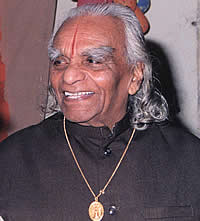
Famed yoga teacher BKS Iyengar dies at 95

Yogis Seven, Crystal Quintero, Wisdom Quarterly; BKSIyengar.com; BBC.com
If it were up to Iyengar, Lululemons would not be so tight or transparent.
.
Yogacharya B.K.S. Iyengar died today. He was a living legend who taught a modified form of yoga making the poses (asanas) more accessible and attainable to people in in the West and those with limitations. He himself, due to injuries, was limited. But he showed his teacher, Krishnamacharya, and fellow students that he could make something of this ancient science, something everyone could benefit from not just slender youthful ascetic males.
 
The Vedas teach yoga and health (Ayur-veda), how to live and eat well.

 .
Iyengar as a young man
The Iyengar style of yoga, because of its attention to detail and safety, became popular around the world. It is Hatha, bring together Sun and Moon principles together, with a gentle twist -- softened bends and rigor. It is gentle yoga of great precision. He found meaning in the yoga sutras, which are more aphorisms than discourses, by his practical search and regular practice. Therefore, he helped all to experience their wisdom. His certification of specialized teachers across the world was apparently lucrative enough to sustain him and this style making it quite respectable and the most common form of yoga found on college campuses.

We love Iyengar Yoga! It's so easy to do but so nitpicky. We just wanna have fun!
.
(BBC.com) Indian yoga guru BKS Iyengar has died in the western city of Pune, India, aged 95.

Mr. Iyengar was admitted to hospital last week and died early on Wednesday [Aug. 19, 2014] following kidney problems, doctors treating him said.

He was credited with his own brand of yoga and taught author Aldous Huxley and violinist Yehudi Menuhin, among other celebrities.

Iyengar Yoga is now taught in more than 70 countries, and the guru's books have been translated into 13 languages.

One of yoga's finest teachers, Mr. Iyengar practiced what he called an "art and science" for more than eight decades and ran one of India's top yoga schools in Pune.

He continued to practice -- "practice is my feast," he once told a correspondent -- in his old age and could still do the sirsasana -- or the headstand -- for half an hour until last year.

He used around 50 props, including ropes and mats, to align and stretch the body.

"When I stretch, I stretch in such a way that my awareness moves, and a gate of awareness finally opens," Mr. Iyengar told the Mint newspaper last year.

"When I still find some parts of my body that I have not found before, I tell myself, yes I am progressing scientifically... I don't stretch my body as if it is an object. I do yoga from the self towards the body, not the other way around.

When he first met Yehudi Menuhin, the violinist complained that he never had time to relax and never got a good night's sleep.

"Within one minute Iyengar had him snoring happily away. But Guruji did warn me: 'Relaxation doesn't mean yoga is a soft option. It's a disciplined subject -- a casual attempt only gains casual results,'" Mark Tully, former BBC correspondent in India, wrote after meeting Mr. Iyengar in 2001.

Saturday, 9 August 2014

U.S. Open of Surfing (U.S. "terrorism")

Pat Macpherson, Seth Auberon, Wisdom Quarterly;
us-open-of-surfing-cover_Luke-McGarry-Dustin-Ames.jpg
Surf Guide (illustration by Luke McGarry; cover design by Dustin Ames/OCWeekly)
.
Teen Allegedly Makes Threats Before U.S. Open of Surfing Begins; 45 78 Weekend Arrests
See update upping the number of arrests downtown during the U.S. Open of Surfing's opening weekend. 

Saltwater Buddha (Yogis)
Dude, I thought, like, man, surfing's totally a Buddhist sport, real California, you know, the waves, going with the flow, ying-yong, big Happy Buddha bellies, and just like chilling. Man, cops gotta harsh our mellow cause some kid's totally goofin' on 'em. HBPD needs to take a chill pill and not use this as some kinda excuse [pretext] to crack down on some major recreation and good times.

(July 28, 2014) It's unclear if a 16-year-old boy took OC Weekly's "Surf Bros Must Die" cover story literally, but Huntington Beach Police accuse him of making credible threats against the U.S. Open of Surfing via social media before a search of his home produced a handgun and a shotgun.
 
Lies of the Presstitute (Mainstream) Media
The alleged threats were posted Thursday, the kid was booked into juvie Friday night, the nine-day event opened Saturday morning, and by Sunday night police had made more than 45 78 more arrests, mostly for booze-related offenses. But no riots, so far...
According to Huntington Beach Police, they received word of the threats against the U.S. Open around noon Friday, and the initial information gathered made them seem credible. They aren't saying which social media platform the kid supposedly used, citing the ongoing investigation. More (p. 2)

Monday, 4 August 2014

Look at my cool YOGA tattoos! (video)

Yogis Crystal Quintero, Seven, Wisdom Quarterly; Vickie Howie (chakraboosters.com)

Maximize Potential for Love, Health, Money...
                                                         Chakra Boosters Healing Tattoos™ are the easiest way to move through blocks in any area of life.

Full set of seven tattoos
These temporary tattoos beautify body while boosting our seven main energy centers -- even during sleep! The vitality of these energy wheels -- called chakras -- are responsible for our wealth, sexuality, power, love life, personal expression, relationships, intuition, spirituality, and overall health. 

With these Chakra Boosters we can effortlessly and continuously improve key areas of our lives. Get some now.


How do they work?
Dr. Emoto water crystal (indicescibles)
Dr. Masaru Emoto’s water research shows why these tattoos work. The renowned Japanese researcher showed the world that when we put positive words on water, we change the molecular structure of it. Since humans are approximately 70% water, we can boost our body’s main energy centers by putting these beautiful, powerful, healing chakra tattoos right on the actual areas where each energy center. More

Why Affirmations may do more harm than good
Vicki Howie (M.A., International Life Coach, creator of Chakra Boosters Healing Tattoos, Hypnotherapist) shares a controversial perspective on affirmations: They can actually have a detrimental effect. To find out why and learn what to do instead, here's a short VIDEO to create a transformative turning point. Namaste

Sunday, 3 August 2014

Yoga, Meditation in Action: Seane Corn (video)

Yogi Seven, Crystal Quintero, Wisdom Quarterly; Krista Tippett, Trent Gilliss (onbeing.org)

 
American Yogini Seane Corn
Yoga has infiltrated law schools and strip malls, churches and hospitals. This 5,000-year-old spiritual technology is converging with 21st-century medical science and with many religious and philosophical perspectives.
 
Midwesterner Seane Corn ("Off the Mat Into the World") takes us inside the practicalities and power of yoga [mainly those limbs of an ancient eightfold practice focusing on physical postures and breath regulation]. Corn describes how it helps her face the darkness in herself and the world and how she’s come to see yoga as a form of body prayer. More
Exploring Mysteries, Encouraging a Love Affair with Life Parker Palmer pays homage with words of wisdom on "the savage and beautiful country that lies in between."
  
Living with Yoga: rehabilitation
Molested at 6-years-old, Corn made a gift of that experience -- not in spite of it -- by transforming the shame and darkness. She works with child prostitutes and sex trafficking here in the U.S. and in Buddhist countries like Cambodia. She went through a period of drug abuse, sex abuse, and other efforts to numb out and check out. But when she faced and actually dealt with and transformed the shadow, she was able to venture on the road to becoming whole.
  
VIDEO: Body Prayer
Trent Gilliss (onbeing.orgj)


Yoga from the Heart with Seane CornFor Seane Corn, yoga is much more than a practice in flexibility. It’s a way of applying spiritual lessons to real-world problems and personal issues. One way she channels her energy and love is through a practice she calls “body prayer,” as she shares in this video from Yoga from the Heart.

She shared this perspective about “body prayer” in the show, “Yoga, Meditation in Action”:
 
“I trust that if I do my yoga practice, I’m going to get stronger and more flexible. If I stay in alignment, if I don’t push, if I don’t force, then my body will organically open in time.

“I know that if I breathe deeply, I’ll oxygenate my body. It has an influence on my nervous system. These things are fixed and I know to be true.

“But I also recognize that it’s a mystical practice, and you can use your body as an expression of your devotion. So the way that you place your hands, the ways that you step a foot forward or back, everything is done as an offering. I offer the movements to someone I love or to the healing of the planet.

 
Hope I can do yoga like Seane during this war
“And so if I’m moving from a state of love and my heart is open to that connection between myself and another person or myself and the universe, it becomes an active form of prayer, of meditation, of grace.

“And when you’re offering your practice as a gift, as I was in that particular DVD, as I do often, I was offering to my dad who’s very ill. And so when I have an intention behind what I’m doing, then it becomes so fluid. Because if I fall out of a pose I’m not going to swear, I’m not going to get disappointed or frustrated. 

1
“I’m going to realize that this is my offering, and I don’t want to offer that energy to my father. I only want to offer him my love. And so I let my body reflect that. And when you link the body with the breath, when my focus is solely on getting the pose to embrace the breath that I’m actualizing, then the practice, it’s almost in slow motion.

“It has a sense of effortlessness. When people can connect to that, it takes the pressure off of trying to do it perfectly. It just becomes a real expression of their own heart.

“Sometimes it’s graceful and elegant, other times it’s kind of funky and abstract, but it’s authentic to who the person is. It’s their own poetry.” More

This week inspired a lesson from Ralph Waldo Emerson, a poetic reflection on being more than doing from Parker Palmer, a precious moment that will make you smile, and a peculiar story about a lockpicker that will make you think.

Friday, 1 August 2014

Entheogenic use of Cannabis and Yoga

Pat Macpherson, Seth Auberon, CC Liu (eds.), Wisdom Quarterly (Wikipedia edits)
Sadhus: India's Mystic Holy Men (Dolf Hartsuiker). Reviewed at hermitary.com.

An entheogen ("generating the divine within") refers to substances or practices used in a spiritual, religious, shamanic, or sacred context, whether natural or human made, to expand consciousness. Checking out is abuse, but tuning in may be searching (WQ).

.
What, man? I'm cool. I can maintain.
Cannabis (street name Mary Jane) has been used in an entheogenic ("generating the divine within") context in India since the Vedic period dating back to approximately 1500 BCE but perhaps as far back as 2000 BCE.
 
WARNING: Avoid intoxicants (in accord with fifth precept, see below). Wisdom Quarterly advocates only the healing use of plants and exercise, not their abuse. Hemp is a miracle; weed is not. Not high-THC, but high-CBD content, is medicinal.
 
There are several references in Greek mythology to a powerful drug that eliminated anguish and sorrow. Herodotus wrote about early ceremonial practices by the Scythians [some argue that the Buddha's family, the Shakyans, were in fact the Scythians], thought to have occurred from the 5th to 2nd century BCE.
Spiritual endeavors are not about partying.
Itinerant Hindu sadhus (revered full-time spiritual seekers) have used it in India for centuries (Edward Bloomquist. Marijuana: The Second Trip. California: Glencoe, 1971). And many yogis look like it, which is not to their credit or benefit, with their dreadlocks (jata), droopy countenances, and failure at spiritual attainments.
  • The goal of the Eightfold Path of Yoga, according to Patanjali in the Yoga Sutras, is the stilling of the mind, the vrittis. What does this have to do with Buddhism? Patanjali's whole system of exposition and language (hybrid Sanskrit) would not have been possible without Buddhism:
Patanjali's "eightfold path" of yoga
The factors of the Path to enlightenment
Vyasa's Yogabhashya, the commentary to the Yoga Sutras, and Vacaspati Misra's subcommentary state directly that the samadhi techniques [right concentration] are directly borrowed from Buddhism's meditative absorptions [the Noble Eightfold Path defines samma samadhi as the first four jhanas], with the addition of the mystical and divine interpretations of mental absorption.1
 
Even if you get blissed out, remember to breathe! Maty Ezraty teaching (lansingyoga.com)
 
According to David Gordon White, the language of the Yoga Sutras is often closer to "Buddhist Hybrid Sanskrit, the Sanskrit of the early Mahayana Buddhist scriptures, than to the classical Sanskrit of other Hindu scriptures.2 According to Karel Werner,
Patanjali's [yoga] system is unthinkable without Buddhism. As far as its terminology goes there is much in the Yoga Sutras that reminds us of Buddhist formulations from the Pāli Canon and even more so from the Sarvāstivāda Abhidharma and from Sautrāntika."3
Uma's dad Robert (nymag.com)
American Buddhist and Dalai Lama translator Prof. Robert Thurman writes that Patañjali was influenced by the success of the Buddhist monastic system to formulate his own matrix for the version of thought he considered [Vedic] orthodox.4

However, it is also to be noted that the Yoga Sutras, especially the fourth segment of the Kaivalya Pada, contains several polemical verses critical of [some] Buddhism, particularly the [philosophy of the] Vijñānavāda (Yogacara, "Yoga Practice") school of Vasubandhu.5
 
Ancient and modern India and Nepal
Sick hippies, intellectuals, and sell outs
The earliest known reports regarding the sacred status of cannabis in India and Nepal come from the Atharva Veda estimated to have been written sometime around 2000-1400 BC,6 which mentions cannabis as one of the "five sacred plants."7
 
There are three types of cannabis used in India and Nepal. The first, bhang, consists of the leaves and plant tops of the cannabis plant. It is usually consumed as an infusion in beverage form and varies in strength according to how much cannabis is used in the preparation.

The second, ganja, consisting of the leaves and the plant tops, is smoked.

The third, called charas or hashish, consists of the resinous buds and/or extracted resin from the leaves of the plant. Typically, bhang is the most commonly used form of cannabis in religious festivals.
 
Maybe it's called "pot" because it makes couch potato's pot bellies crave potato chips or called "dope" because... well, it isn't making Bud any wiser. If beer is "liquid ignorance," dope may be its gaseous form. Moreover, CBD is more useful than THC.

  • “After years of [pot] growers aiming to boost THC percentages in their crops, many growers have switched to focusing on producing CBD-rich strains because of the increasing demand by medical users” - WQ (ProjectCBD.com)
Marijuana in modern Hinduism
Aghori yogi ritually drinking sacred bhang from human skull cup with Shiva behind.
 
During the Indian and Nepalese (particularly in the Terai and Hilly regions) festival of Holi, people consume bhang, which contains cannabis flowers.8,9

According to one description, when the amrita ("elixir of life") was produced from the churning of the ocean by the devas and the asuras, Shiva created cannabis from his own body to purify the elixir (leading to cannabis' epithet, angaja, or "body-born").

Yogi dozing off on nails (petermalakoff.com)
Another account suggests that the cannabis plant sprang up when a drop of the elixir dropped on the ground. Therefore, cannabis is used by would be Hindu sages due to its association with the mythical elixir and Shiva. Wise drinking of bhang, according to religious rites, is believed to cleanse karma, unite one with Shiva, and avoid the miseries of hell in future lives. [It may well have the opposite effect depending on what one does, the karma one engages in, while intoxicated.]
 
It is also believed to have medicinal benefits. In contrast, foolish drinking of bhang without rites, which is considered bad karma.10 Although cannabis was regarded as illegal and designated a Schedule 1 drug (no redeeming value), many Nepalese people consume it during festivals (like Shivaratri), which the government tolerates to some extent, and also for personal and recreational purposes.

Buddhism and pot
I'm totally into Buddhism, yoga, veg food. I just use this as like medicine, man. - Yeah, right!
.
In Buddhism, the Fifth Precept is to "abstain from wines, liquors, and intoxicants that occasion heedlessness."

How this applies to cannabis is variously interpreted. Cannabis and some other psychoactive plants are specifically prescribed in the Tibetan Mahākāla Tantra for medicinal purposes.

However, Tantra is an esoteric teaching -- a questionable blending of Hinduism and Buddhism -- not generally accepted by most other forms of either Buddhism or Hinduism.11 More

FOOTNOTES
Meditate for health and to end all suffering.
1. John David, The Yoga System of Patanjali with commentary Yogabhashya attributed to Veda Vyasa and Tattva Vaicharadi by Vacaspati Misra. Harvard Univ. Press, 1914.
2. White 2014, p.10.
3. Karel Werner, The Yogi and the Mystic, Routledge, 1994, p.27.
4. Robert Thurman, "The Central Philosophy of Tibet." Princeton Univ. Press, 1984, p.34.

5. John Nicol Farquhar, An Outline of the Religious Literature of India, p.132. 
6. Courtwright, David (2001). Forces of Habit: Drugs and the Making of the Modern World. Harvard Univ. Press. p.39.
7. Touw, Mia. "The religious and medicinal uses of Cannabis in China, India and Tibet". J Psychoactive Drugs 13 (1).
8. Report of the Indian Hemp Drugs Commission. Simla, India: Government Central Printing House. 1894. Chapter IX: Social and Religious Customs.
9. "The History of the Intoxicant Use of Marijuana". National Commission of Marijuana and Drug Abuse.
11. Stablein WG. The Mahākālatantra: A Theory of Ritual Blessings and Tantric Medicine. Doctoral Dissertation, Columbia Univ. 1976. pp.21-2,80,255-6,36,286,5.

Saturday, 26 July 2014

Visiting a peaceful forest monastery

Amber Larson (ed.), Wisdom Quarterly; Courtney (lansingyoga.com); Elizabeth J. Harris
27altar
All photos of Dhammasala Forest Monastery by Courtney (lansingyoga.com)
Small forest dwelling.
This small meditation hut (kuti) stands alone in the forest for peace and quiet.

 
Courtney
I visited a Theravada Buddhist temple and forest monastery called Wat Dhammasala for the first time yesterday in Perry, Michigan. I brought along my 18-year-old cousin, but other than that the only soul we came across was a fluffy, white dog named Yim.
.
Yim
When I stepped out of my car the first thing to hit me was the vibrant solitude that I’ve always loved about the woods.

I could hear bells chiming from the roof of the temple, birds conversing with one another casually, the hum of bees, and the rustling of a million green leaves.

Everything smelled clean, and even though the sky was grey when we first arrived, all I saw were the vibrantly green leaves. More+PHOTOS
  • Yogini Courtney is the Web Editor of LansingYoga.com and a yoga instructor in the Lansing, Michigan area, who graduated in 2011 with a double major in journalism and digital media arts and technology.
Detachment and Compassion in Early Buddhism
Elizabeth J. Harris (Bodhi Leaves 141/Buddhist Publication Society/accesstoinsight.org)
The garden
To people looking at Buddhism through the medium of English, the practice of compassion and detachment can appear incompatible, especially for those who consider themselves to be socially and politically engaged.
 
In contemporary usage, compassion brings to mind outward-moving concern for others, while detachment suggests aloofness and withdrawal from the world.

Yet Buddhism recommends both as admirable and necessary qualities to be cultivated. This raises questions such as the following:
  • If compassion means to relieve suffering in a positive way, and detachment to remain aloof from the world, how can the two be practiced together?
  • Does detachment in Buddhism imply lack of concern for humanity?
  • Is the concept of compassion in Buddhism too passive, connected only with the inward-looking eye of meditation, or can it create real change in society?
Altar
An altar at Wat Dhammasala, Michigan
It is certainly possible to draw sentences from Buddhist writers that seem to support a rejection of outward concern for others. For example, [the early Western translator] Edward Conze has written, "The Yogin [self-controlled meditator] can only come into contact with the unconditioned [nirvana] when he [or she] brushes aside anything which is conditioned" (Edward Conze, Buddhist Thought in India, 1960, Ch.5).

Similarly, G.S.P. Misra writes, "In the final analysis, all actions [karma] are to be put to cessation... The Buddha speaks of happiness involved in non-action [the acts of an arhat, a full enlightened person, are not called karma but kriya], which he further says is an integral part of the Right Way or samma-patipada (G.S.P. Misra, Development of Buddhist Ethics, p. 44.)
 
Taken in isolation and out of context, these remarks can give the impression that the path to nirvana implies developing a lack of concern towards everything in samsara (the cycle of existence, rebirth, and suffering). But is this inference sound? I would argue that it is not.
 
This is an issue that touches on the whole question of transferring concepts across linguistic barriers, in this case [the exclusively Buddhist language] Pali and [the catchall universal language of commerce, culture, and empire] English. It calls not only for an understanding of how the concepts are used within the framework of the Pali Buddhist texts, but also for an awareness of how the English terms used in translation function and whether they are adequate.

Inevitably, a dialogical approach between two linguistic frameworks is necessary.
 
Detachment
garden snake
What's that, Mr. Garden Snake? An offer?
Viveka and viraga are the two Pali words that have been translated as "detachment." The two, however, are not synonyms. The primary meaning of viveka is separation, aloofness, seclusion. Often physical withdrawal is implied. The later commentarial tradition, however, identifies three forms of viveka:
  1. physical withdrawal (kaya-viveka)
  2. mental withdrawal (citta-viveka)
  3. withdrawal from the roots of distress, disappointment, suffering (upadhi-viveka).
Kaya-viveka, as a chosen way of life, was not uncommon during the time of the historical Buddha. To withdraw or pull back from the household life, to renounce (give up interest in or control of) possessions, and adopt a solitary mendicancy was a recognized path.

The formation of the Buddhist monastic Sangha (community) was grounded in the belief that going forth from home to homelessness could aid in intensive, concentrated spiritual effort. Yet to equate the renunciation the Buddha encouraged with a physical withdrawal, which either punished the body or completely rejected human contact,  would be a mistake.
  • [Renunciation does not actually mean giving things up, so much as letting go of being controlled by them, to let go and let things be. This is much easier to do if one actually lets go, but even letting go of them physically does not mean we have really let go.]
The Buddha made it clear that the detachment of a noble disciple (ariya savaka) -- the detachment connected with the path -- was not essentially a physical act of withdrawal, let alone austerity.

Kaya-viveka was valuable only if seen as a means to the inner purging and mental transformation connected with the abandoning or destruction of craving. This is illustrated in the Udumbarika Sihanada Sutta in which the Buddha claims that the asceticism of a recluse who clings to solitude could lead to pride, carelessness, attention-seeking, and hypocrisy if not linked to the cultivation of moral virtues and the effort to gain insight through meditation (DN 25).
  
A further insight is given in the Nivapa Sutta, which weaves a lengthy story around the relationship of four herds of deer with a certain crop, representing sensual pleasure, sown by the hunter (the "tempter" Mara) to ensnare the deer.

The sign that welcomed us.
The sign that welcoming visitors
Both the ascetics who crave for pleasure and those who deny themselves any enjoyment in an extreme way are destroyed. Referring to the latter, the Buddha says: 
Because their bodies were extremely emaciated, their strength and energy diminished, freedom of mind diminished; because freedom of mind diminished, they went back to the very crop sown by Mara -- the material things of this world (MN 156).
 
The message of the sutra is that ascetic withdrawal can reduce the heart/mind's ability to discern. It can also lead to the repression of mental tendencies rather than to their rooting out and destruction.
 
The detachment of which Buddhism speaks, therefore, is not an extreme turning away from what normally nourishes the human body. Neither is it a closing of the eyes to all beauty, as is clear from the following:

"Delightful, reverend Ananda, is the Gosinga sal grove. It is a clear moonlit night; the sal trees are in full blossom. It seems deva-like scents are being wafted around... (MN 156).
 
This expression of delight is uttered by Sariputra, the Buddha's chief male disciple foremost in wisdom, an arhat, on meeting some fellow monks one night.
 
Temple
The temple or wat
One must look away from external acts and towards the area of inner attitudes and motivation for a true understanding of the role of detachment in Buddhism. Physical withdrawal is only justified if it is linked to inner purification of virtue and meditation.

In this light, citta-viveka and upadhi-viveka become necessary subdivisions to bring out the full implications of detachment within Buddhist spiritual practice. Upadhi-viveka, as withdrawal from the roots of suffering, links up with viraga, the second word used within Buddhism to denote detachment.
 
Viraga literally means the absence of lust/craving (raga) -- the absence of sense desire, lust, the craving for endless existence, as well as the craving for annihilation [all three are wrong views based on ignorance of the Three Characteristics of Existence]. It denotes non-attachment to the usual objects of raga, such as material forms or addictive pleasures of the senses.

Non-attachment is an important term here if the Pali is to be meaningful to English speakers. It is far more appropriate than "detachment" because of the negative connotations "detachment" possesses in English.

new friend

 
Raga is closely related to clinging, grasping (upadana) which, within the causal chain binding human beings to repeated births, grows from craving (tanha) and results in bhava -- the continued samsaric wandering in search of fulfillment, pleasure, meaning, and an end. The English word "non-attachment" suggests a way of looking at both of them.
 
The Buddhist texts refer to four strands of clinging and grasping: 
  1. clinging to sense pleasures
  2. clinging to views
  3. clinging to rules and rituals (as if they could ever in and of themselves result in enlightenment),
  4. clinging to doctrines of self.
All of these can also be described as forms of raga or desire. To abandon them or destroy their power over the human psyche, attachment to them is transformed into non-attachment. Non-attachment or non-clinging would therefore flow from the awareness that... More

Yoga training and 2015 trip to India

Editors, Wisdom Quarterly; Jeanne Heileman (Yogaworks.com/Larchmont)
Come and see the wonders of North India with Jeanne Heileman (internationalyoga.com)

Yoga instructors Jeanne Heileman and Sarah Ezrin, YogaWorks, Larchmont More info
.
YogaWorks trip to India with Jeanne Heileman
This free event is the perfect way to find out more about what makes the YogaWorks method, and YogaWorks Teacher Training, the gold standard for yoga in the U.S. and beyond. The session begins with a free hour class taught in the YogaWorks method followed by a information session led by the trainer. This session is highly recommended for students considering our teacher training, as well as serious students of yoga who are curious as to what taking a teacher training involves and how to take their yoga practice to the next level. Space is limited; RSVP recommended to hold a spot. There will also be a presentation on the upcoming trip to India. More


YogaWorks, Larchmont
Just east of Hollywood, California Larchmont Village has as a casual feel to it, the main street lively with foot traffic. Smack in the middle of the bustle sits Center for Yoga, a peaceful, homey studio steeped in history. Originally founded in 1967 by Ganga White (of White Lotus fame), Center for Yoga was the first yoga studio to open in Los Angeles. Maty Ezraty, one of the original YogaWorks founders, worked as a manager at the Center before moving on to open her own studio on Montana Avenue.
 
Spanning two floors, this charming space has three yoga rooms including a rope wall and a giant main room with high ceilings and a life-size Buddha. True to its classical roots, the studio attracts many devoted yoga students from the Los Angeles area. They come for advanced Mysore style Ashtanga and Vinyasa Flow Classes. Beginners also have a wide variety of Level 1 classes to choose from, like YogaWorks signature and Iyengar.

Enjoy a FREE WEEK of unlimited yoga, meditation, and exercise at YogaWorks
Join us on our trip to see the wonders of India, January 2015 (internationalyoga.com)