Showing posts with label Japanese. Show all posts

Thursday, 21 August 2014

Zen monks risk death on extraordinary journey

The Monks Risking Death On An Extraordinary Journey (Produced by ABC Australia. Ref - 2471)
The lionized Bodhidharma
The "Journeyman PicturesMarathon Monks" of Japan undertake a perilous journey to "enlightenment" (satori, which is not enlightenment in Zen or kenshō but only an "epiphany") -- choosing suicide if they fail to complete the journey, and often dying en route. 

The world's greatest athletes may well live on top of a sacred mountain in Japan. As part of their spiritual training, the monks run 84 km every day for over three months.
 
"First Day of Zen Garden School" (Dan Piraro/bizarrocomics.com)
 
Genshin Fujinami runs through the forest for 17 hours every day. His straw sandals offer him little protection from the venomous snakes and jagged rocks. His feet are blistered and bruised.

But if he stops, he would be obliged to immediately kill himself (in a foolish act of hari kari or honor killing to save face).

What endogenous drugs are created by asceticism?
"You must think positively," he explains. "I cannot allow myself to think, 'What if?'" The grueling Kaihygo is the conclusion of seven years of training. He must also go nine days without food, water, or sleep. If he completes the quest, he will become a living "saint."

But only 46 monks have completed it in the last four centuries, and fewer and fewer people are attempting it.

[These are the ascetic extremes the Buddha warned about, self-mortification, the clinging to rites and rituals as if they could ever lead to actual enlightenment. The way to enlightenment is calm-and-insight (systematic contemplation founded on profound concentration), nothing more, nothing less.]

"Japanese culture is gradually dying away," Fujinami laments. The monks may have a wonderful history, but their future is one of uncertainty.
  
Journeyman Pictures is an independent source for the world's most powerful films, exploring the burning issues of the day. It brings out stories from the world's top producers, with new content coming in all the time. Its channel has outstanding and controversial journalism covering almost all global subjects imaginable.

Wednesday, 30 July 2014

"Monkey Mind" in Meditation

Michael Carr; CC Liu, Pat Macpherson, Seth Auberon, Wisdom Quarterly (Wiki edit)
What's monkey mind? Hold on a second, I'll look on Wisdom Quarterly (Huffington Post).
.
Obsessed with sexy distractions (Uhohbro).
Monkey mind (or mind monkey) comes from the Chinese word xinyuan and the Sino-Japanese shin'en (心猿), literally, "heart-/mind-monkey").

It is a Buddhist term meaning "restless, unsettled, capricious, whimsical, fanciful, inconstant, confused, indecisive, uncontrollable." In addition to Buddhist writings -- including Chinese Chan and Japanese Zen (two Mahayana sects giving their pronunciations of the Pali term jhan'a and the Sanskrit dhyan'a), Consciousness-Only, Pure Land, and Shingon -- this "monkey mind" psychological metaphor was adopted in Taoism, Neo-Confucianism, poetry, drama, and literature.

"Mind-monkey" occurs in two reversible four-character idioms with yima or iba (意馬), literally, "thought-/will-horse," most frequently used in Chinese xinyuanyima (心猿意馬) and Japanese ibashin'en (意馬心猿).

The "Monkey King" Sun Wukong in the Journey to the West personifies the mind-monkey. Note that much of the following summarizes Michael Carr ("'Mind-Monkey' Metaphors in Chinese and Japanese Dictionaries," International Journal of Lexicography 1993, 6.3:149-180). 

Linguistic and cultural background
Mind monkey piggy backs on horse idea (Tang Dynasty)
"Mind-monkey" (心猿) is an animal metaphor. Some figures of speech are cross-linguistically common, verging upon being linguistic universals.

Many languages use "monkey" or "ape" words to mean "mimic," for instance, Italian scimmiottare "to mock, to mimic" and scimmia "monkey, ape," Japanese sarumane (猿真似), literally, "monkey imitation," "copycat, superficial imitation," and the English monkey see, monkey do or to ape. Other animal metaphors have culture-specific meanings. Compare English chickenhearted as "cowardly, timid," "easily frightened" and Chinese jixin (雞心), literally, "chicken heart," "heart-shaped, cordate."
 
The four morphological elements of Chinese xinyuanyima or Japanese shin'en'iba are xin or shin (心) "heart, mind", yi or i (意) "thought," yuan or en (猿) "monkey," and ma or ba (馬) "horse."

The 心 "heart, mind" and 意 "idea, will"
Mr. Simian! - No, I just meant a pony ride on the "will horse," not us horsing around!
.
The psychological components of the "mind-monkey will-horse" metaphor are Chinese xin or Sino-Japanese shin or kokoro () "heart, mind, feelings, affections, center" and yi or i () "thought, idea, opinion, sentiment, will, wish, meaning."

This Chinese character 心 was graphically simplified from an original pictogram of a heart and 意 "thought, think" is an ideogram combining 心 under yin () "sound, tone, voice" denoting "sound in the mind, thought, idea."
 
In Chinese Buddhism and Japanese Buddhism, xin/shin (心) "heart, mind" generally translates Sanskrit citta "mind, process of mind, state of mind, consciousness" and yi/i (意) translates Sanskrit manas "the mental organ, deliberation."
 
Some Buddhist authors have used 心 and 意 interchangeably for "mind, cognition, thought." Compare these Digital Dictionary of Buddhism glosses:
  • 心 "Spirit, motive, sense. The mind as the seat of intelligence, mentality, idea. (Sanskrit citta)... Thought, intellect, feeling (Sanskrit mānasa)"
  • 意 "Thought, intellect (Sanskrit manas, Tibetan yid), the mind, (Sanskrit citta, Tibetan sems)."
For example, take the Buddhist word Chinese xin-yi-shi or Japanese shin-i-shiki (心意識), literally, "mind, thought, and cognition" that compounds three near-synonyms.
 
The Abhidharma theory uses this word as a general term for "mind, mentality." But Yogacara's theory of Eight Consciousnesses distinguishes xin/shin (心) "store consciousness," yi/i (意) "manas consciousness," and shi/shiki (識) "six object-contingent consciousnesses."
 
Xinyuanyima (心猿意馬), literally, "mind-monkey idea-horse," "distracted, indecisive, restless" is comparable with some other Chinese collocations:
  • xinmanyizu (心滿意足) "heart-full mind-complete," "perfectly content, fully satisfied."
  • xinhuiyilan (心灰意懶) "heart-ashes mind-sluggish," "disheartened, discouraged, hopeless" (or xinhuiyileng (心灰意冷) with leng "cold, frosty."
  • xinhuangyiluan (心慌意亂) "heart-flustered mind-disordered," "alarmed and hysterical, perturbed."
  • xinfanyiluan (心煩意亂) "heart-vexed mind-disordered," "terribly upset, confused and worried"...
"Mind-monkey" in English
Prozac (fluoride) calcifies the pineal gland
Monkey mind and mind monkey both occur in English usage, originally as translations of xinyuan or shin'en and later as culturally-independent images. Carr concludes:
Xinyuan-yima (心猿意馬) "monkey of the heart/mind and horse of the ideas/will" has been a successful metaphor. What began 1500 years ago as a Buddhist import evolved into a standard Chinese and Japanese literary phrase.
Rosenthal (1989:361) says a proverb's success "'depends on certain imponderables," particularly rhythm and phrasing. Of the two animals in this metaphor, the "monkey" phrase was stronger than the "horse" because xinyuan "mind-monkey" was occasionally used alone (e.g., Wuzhenpian) and it had more viable variants (e.g., qingyuan 情猿 "emotion-monkey" in Ci'en zhuan).
The "mental-monkey" choice of words aptly reflects restlessness, curiosity, and mimicry associated with this animal. Dudbridge (1970:168) explains how "the random, uncontrollable movements of the monkey symbolise the waywardness of the naive human mind before it achieves a composure which only Buddhist discipline can effect" (1993:166). More

    Monday, 28 July 2014

    Monk who brought Zen Buddhism to US dies

    Ashley Wells, CC Liu, Wisdom Quarterly; Los Angeles Times (latimes.com)
    Zen Buddhist teacher Joshu Sasaki Roshi, a leading figure in Zen Buddhism in America whose legacy was later complicated by allegations of sexual abuse, has died. He was 107.
     
    Roshi died Sunday afternoon at Cedars-Sinai Medical Center, said Gento Steve Krieger, head monk at Rinzai-ji, also known as the Cimarron Zen Center, in Jefferson Park. He died of complications of old age, Krieger said.
     
    Roshi arrived in Los Angeles more than 50 years ago and was among a wave of Japanese teachers to tailor Zen Buddhism teachings to Westerners. He once pledged to students that he would not die “until Zen is born in America.”
     
    “He was a Zen master,” Krieger said. “I don’t know anybody else who lives that completely and that fully. When you meet somebody like that, it changes your opinion of what a human being is.”
     
    He opened dozens of Zen centers, including one on Mt. Baldy known for its rigorous training regimen.
     
    Decades later, allegations from dozens of former students that he had sexually abused them...More

    Friday, 11 July 2014

    Obon means ghosts and remembering the dead

    Ashley Wells, CC Liu, Wisdom Quarterly; Japanese-city.com; NHBT

    I went into the sanctuary and could feel the ancestors around me (rpv-team/flickr).

    What is Obon?
    Animist, Buddhist, Pagan, and Catholic Mexican-Americans in Los Angeles may have the Day of the Dead (just after all ironic, nominal Christians celebrate Halloween).

    But Japanese Buddhist and Shinto practitioners have much the same thing in this month's Obon Festival, which is being celebrated concurrently with the unrelated Lotus Festival and commencement of the annual Rains Retreat just a few miles apart.

    Obon is an annual Buddhist event for commemorating one's ancestors. It is believed that each year during Obon, the ancestors' spirits return to this world in order to visit their relatives.
     
    Traditionally, lanterns are hung in front of houses to guide the ancestors' spirits, Obon dances (bon odori) are performed, graves are visited, and food offerings are made at house altars and temples
     
    At the end of Obon, floating lanterns are put into rivers, lakes and seas in order to guide the spirits back into their world. The customs followed vary strongly from region to region.

    Obon is observed from the 13th to the 15th day of the 7th month of the year, which is July according to the solar calendar. However, since the 7th month of the year roughly coincides with August rather than July according to the formerly used lunar calendar, Obon is still observed in mid August in many regions of Japan, while it is observed in mid July in other regions. 
     
    The Obon week in mid August is one of Japan's three major holiday seasons, accompanied by intensive domestic and international travel activities and increased accommodation rates. In recent years, travel activity in mid August.
    • Event Location: Nishi Hongwanji Buddhist Temple
    • 815 First Street, Los Angeles, CA 90012
    • Obon Festival + Bon Odori Schedule: http://bit.ly/bLkTf
    Japanese Obon Festival and Bon Odori Schedule

      Friday, 4 April 2014

      ZEN: The Buddha's Birthday (Sunday, April 6)

      Wisdom Quarterly; Jeff Albrizze (PasaDharma.org); Zen Center Los Angeles
      ZCLA Gateless Gate entrance, residential area near Wilshire district (Wisdom Quarterly)
       
      Boy mesmerized by baby Siddhartha (ZCLA)
      Join in celebrating the birth of the Buddha, and all of the baby future buddhas, in the Zen Center garden. A small arbor house decorated with flowers will be erected, and Dokai Dickenson will officiate the special service. Afterwards, the Birth Story of the Buddha and his first steps in the world will be told.
       
      Birth of the Bodhisattva
      Everyone is invited to bring a small bouquet of flowers as an offering for the service. Children, friends, and family are all welcome. The Sunday schedule will include a chanting service, sitting meditation (zazen), and a celebration of the Buddha’s birthday, followed by a light lunch. Plan on arriving at ZCLA by 8:15 am to get a parking space and be ready for the Sunday schedule:
      • 8:30am-9:00am Chanting Service – The Gate of Sweet Nectar (please bring a can of food for the altar offering to help local needy families)
      • 9:00-9:35 Zazen (silent seated meditation)
      • 9:35-9:45 Kinhin (walking meditation)
      • 9:45-10:20 Zazen (silent seated meditation)
      • 11:00-12 noon Buddha’s Birthday Celebration in the garden
      • 12:15-12:45 Snack
      Lunch during sesshin, ZCLA dining hall, main building next to gift shop (zencenter.org)
       
      If driving, make sure to arrive at ZCLA early, as parking is at a premium. Attend any or all of the activities, and leave at any of the activity change breaks, or stay until the end (about 12:45 pm) for lunch.

      Please wear loose, comfortable clothing, preferably dark in color, with no distracting colors or logos. Please refrain from wearing excessive jewelry, perfume, or cologne. Participation is FREE. Donations at the Center are accepted. The ZCLA bookstore will be open for books, incense, and meditation cushions.

      Zen Center of Los Angeles 
      Secondary rear meeting room (WQ)
      The Center was founded in 1967 by Taizan Maezumi Roshi. ZCLA Buddha Essence Temple has provided the teachings and practice of Zen Buddhism to all who come and go through its temple gate. Its mission is to know the self, maintain the precepts, and serve others. It serves by providing the Dharma, training, and transmission of Soto Zen Buddhism. Its vision is an "enlightened world" in which suffering is transcended, all beings live in harmony, everyone has enough, deep wisdom is realized, and compassion flows unhindered.

      The Center affirms its intention to honor diversity and actively welcome all people, regardless of religion, age, ethnicity, gender, physical or mental ability, race, sexual orientation, or socio-economic background.

      ZCLA observes a daily schedule of zazen, Buddhist services, and mindful work. The Center's programs include introductory classes, sesshin, workshops, and training periods, as well as face-to-face meetings with Abbot Wendy Egyoku Nakao and other Center teachers. The practice of zazen and koan training is in the Maezumi-Glassman lineage.

      Tuesday, 11 March 2014

      Fukushima disaster: 3rd Anniversary (video)

      Editors, Wisdom Quarterly; John Lear, host David Ruben (C2C); DemocracyNow.org
      Fukushima disaster, Japan, March 11, 2011. 50 million people were almost evacuated, but it was easier to lie about the danger of three failed reactors instead (caravantomidnight.com)
       
      Fukushima memorial (Dandemura/flickr)
      According to retired airline captain John Lear -- (whose father invented the Lear Jet), a former CIA-pilot and current whistleblower, who appeared on Coast to Coast on March 1, 2014 -- the tsunami and subsequent Fukushima-Daiichi Nuclear Power Plant disaster (Daini) was done on purpose.
       
      Fukushima disaster, TEPCO (rt.com)
      Japan had hired Israel to run this and other plants for it. But when Israel discovered that Japan was selling refined nuclear byproducts (weapons grade fissionable material, presumably), to punish Japan, Israel detonated a nuclear blast strategically to cause a massive tsunami, which led to the destruction of the plant and a massive nuclear fallout not only for the island but for the ocean and entire planet.

      Kukushima in 2012 (uprisingradio.org)
      (More and more one can see what drunken, racist, spouse-abusing Hollywood insider Mel Gibson was talking about when he yelled in a very candid and drunken rant about the state of Israel, a boon for the CIA in the Middle East, and its role in many of the world's conflicts).

      "The tsunami that hit the Fukushima-Daiichi Nuclear Power Plant was caused by an atomic bomb set off by Israelis," Lear stated. Lear implicated Israel's Mossad (spy ring) in the John F. Kennedy assassination and attributed Hurricane Katrrina's destruction of New Orleans to HAARP guided by the U.S. military-industrial complex.
      Former-Japanese PM talks about  how Fukushima meltdown was worse than Chernobyl

      (DemocracyNow.org) Three years ago today (March 11) a massive earthquake triggered [by a nuclear detonation by Israel triggered] a devastating tsunami that struck Japan’s northeast coast. It resulted in an unprecedented nuclear crisis: a triple meltdown at the Fukushima-Daiichi nuclear power station. 

      As Japan marks the anniversary with continued uncertainty around Fukushima’s long-term impact, Democracy Now was joined by Naota Kan, Japan’s Prime Minister at the time (2011). It’s rare that a sitting world leader changes his position completely, but that’s what Kan has done. 
       
      What does radiation do to human body?
      He explains how he came to oppose nuclear power while still in office, as he weighed Tokyo’s evacuation: "It’s impossible to totally prevent any kind of accident or disaster happening at the nuclear power plants," Kan says. "And so, the one way to prevent this from happening, to prevent the risk of having to evacuate such huge amounts of people, 50 million people, and for the purpose, for the benefit of the lives of our people, and even the economy of Japan, I came to change [my] position, that the only way to do this was to totally get rid of the nuclear power plants."

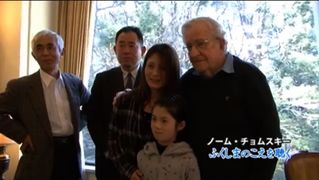
      Chomsky_japan
      Chomsky: from Hiroshima to Fukushima, Vietnam to Fallujah, state power harms all

        Tuesday, 25 February 2014

        Japan used nuke, secret documents reveal

        Pfc. Sandoval, Pat Macpherson, Ashley Wells, Wisdom Quarterly; Douglas Dietrich (dougleasdietrich.com), Host John B. Wells (facebook.com) (CoastToCoastAM.com)
        Nuclear blast to stop military opponent? (How to Survive/secretsofsurvival.com)
        Japanese/Shinto folklore is full of supernatural beings from the Kami Kitsune Okami Realm.
           
        War crimes: US kills millions
        Indian textbooks say "Japan nuked US," which may have happened. According to whistleblowing renegade military historian Douglas Dietrich, Japan built and used them against the Russian military. What other history were we never meant to know?

        There is a great deal not told to the American public about World War II and subsequent military conflicts our government (CIA, military-industrial complex, Pentagon, Department of War/Defense, NSC, NSA).

        China and Japan at odds
        As a Defense Department research librarian at the Presidio Military Base in San Francisco, historian Douglas Dietrich was responsible for destroying (incinerating) highly classified materials on critical historical topics such as Pearl Harbor.

        Earth's absorbed many nuclear blasts
        These documents served as a source for some of the data he gathered and reveals. "There's no denying that the world is far different than what we've come to understand. Everyone looks on WW II as this good war, this fairy tale war, with a big bang ending," but it really was more like Vietnam with aspects lingering for years after 1945, Dietrich explains, noting that a peace treaty with Japan was not signed until 1951. 
         
        At the end of WW II, the United States had 27 million citizens in uniform: The entire country was militarized, and the military did not want to lose their power and control. So they kept it going with false pretexts for wars in Korea and Vietnam [as well as Cambodia and Laos and elsewhere], and the continuation of the draft, Dietrich revealed.
         
        Jewish Oblast flag rather than a gay rainbow
        Dietrich contends that the Japanese developed nuclear bombs (aided by Jewish scientists they had helped resettle in a Jewish state, the Jewish Autonomous Oblast, before the creation of modern Israel). After Nagasaki, they used these nuclear weapons to stop the Soviets in what is now the Korean demilitarized zone.

        If the Japanese had developed and detonated atomic bombs, or other nuclear weapons, against the Russian Army, is it so farfetched that they repelled US military forces to defend themselves or to win a war of aggression? Pearl Harbor was allowed to happened, even invited, as a trap Japanese pilots realized too late. 

        Fukushima fallout now affecting everyone
        Far from a "surprise attack," it was used as a pretext for American involvement in the WW II and other secret attacks and counterattacks since then. For instance, the tsunami and Fukushima Daiichi nuclear disaster was threatened by US officials, according to the Japanese who did not believe Americans had developed such technology (HAARP) to manipulate weather and cause quakes remotely to follow through on their threats.
        U.S. killers led by Satanic leadership?
        Not only the U.S. and the Japanese but the Germans, too. Nazis had developed a nuclear bomb and fired an atomic warhead in Estonia "that stopped the Soviets cold; a mushroom cloud that was a full kilometer in diameter with continuous internalization of combustion led to electronic interference with instruments all the way back in London," Dietrich reveals from secret documents he was hired to destroy for the military.

        For Satan
        Commenting on why the American public has never learned of these nuclear bombings, Dietrich explains that we are only "told enough of the truth to uphold the lie." He also revealed Emperor Hirohito's usage of biological weapons and submarines. He began his expose on the Presidio military base by revealing that child molestation, sexual abuse, and Satanism took place when he worked there in the 1980s.
        • Audio of Dietrich's interview follow in next post:
          The American military-industrial complex and its aiders and abettors committed atrocities against civilian noncombatants on a scale never before imagined (at least not since invaders attacked ancient India's Indus Valley Civilization with alien technology).