Showing posts with label five precepts. Show all posts

Friday, 1 August 2014

Entheogenic use of Cannabis and Yoga

Pat Macpherson, Seth Auberon, CC Liu (eds.), Wisdom Quarterly (Wikipedia edits)
Sadhus: India's Mystic Holy Men (Dolf Hartsuiker). Reviewed at hermitary.com.

An entheogen ("generating the divine within") refers to substances or practices used in a spiritual, religious, shamanic, or sacred context, whether natural or human made, to expand consciousness. Checking out is abuse, but tuning in may be searching (WQ).

.
What, man? I'm cool. I can maintain.
Cannabis (street name Mary Jane) has been used in an entheogenic ("generating the divine within") context in India since the Vedic period dating back to approximately 1500 BCE but perhaps as far back as 2000 BCE.
 
WARNING: Avoid intoxicants (in accord with fifth precept, see below). Wisdom Quarterly advocates only the healing use of plants and exercise, not their abuse. Hemp is a miracle; weed is not. Not high-THC, but high-CBD content, is medicinal.
 
There are several references in Greek mythology to a powerful drug that eliminated anguish and sorrow. Herodotus wrote about early ceremonial practices by the Scythians [some argue that the Buddha's family, the Shakyans, were in fact the Scythians], thought to have occurred from the 5th to 2nd century BCE.
Spiritual endeavors are not about partying.
Itinerant Hindu sadhus (revered full-time spiritual seekers) have used it in India for centuries (Edward Bloomquist. Marijuana: The Second Trip. California: Glencoe, 1971). And many yogis look like it, which is not to their credit or benefit, with their dreadlocks (jata), droopy countenances, and failure at spiritual attainments.
  • The goal of the Eightfold Path of Yoga, according to Patanjali in the Yoga Sutras, is the stilling of the mind, the vrittis. What does this have to do with Buddhism? Patanjali's whole system of exposition and language (hybrid Sanskrit) would not have been possible without Buddhism:
Patanjali's "eightfold path" of yoga
The factors of the Path to enlightenment
Vyasa's Yogabhashya, the commentary to the Yoga Sutras, and Vacaspati Misra's subcommentary state directly that the samadhi techniques [right concentration] are directly borrowed from Buddhism's meditative absorptions [the Noble Eightfold Path defines samma samadhi as the first four jhanas], with the addition of the mystical and divine interpretations of mental absorption.1
 
Even if you get blissed out, remember to breathe! Maty Ezraty teaching (lansingyoga.com)
 
According to David Gordon White, the language of the Yoga Sutras is often closer to "Buddhist Hybrid Sanskrit, the Sanskrit of the early Mahayana Buddhist scriptures, than to the classical Sanskrit of other Hindu scriptures.2 According to Karel Werner,
Patanjali's [yoga] system is unthinkable without Buddhism. As far as its terminology goes there is much in the Yoga Sutras that reminds us of Buddhist formulations from the Pāli Canon and even more so from the Sarvāstivāda Abhidharma and from Sautrāntika."3
Uma's dad Robert (nymag.com)
American Buddhist and Dalai Lama translator Prof. Robert Thurman writes that Patañjali was influenced by the success of the Buddhist monastic system to formulate his own matrix for the version of thought he considered [Vedic] orthodox.4

However, it is also to be noted that the Yoga Sutras, especially the fourth segment of the Kaivalya Pada, contains several polemical verses critical of [some] Buddhism, particularly the [philosophy of the] Vijñānavāda (Yogacara, "Yoga Practice") school of Vasubandhu.5
 
Ancient and modern India and Nepal
Sick hippies, intellectuals, and sell outs
The earliest known reports regarding the sacred status of cannabis in India and Nepal come from the Atharva Veda estimated to have been written sometime around 2000-1400 BC,6 which mentions cannabis as one of the "five sacred plants."7
 
There are three types of cannabis used in India and Nepal. The first, bhang, consists of the leaves and plant tops of the cannabis plant. It is usually consumed as an infusion in beverage form and varies in strength according to how much cannabis is used in the preparation.

The second, ganja, consisting of the leaves and the plant tops, is smoked.

The third, called charas or hashish, consists of the resinous buds and/or extracted resin from the leaves of the plant. Typically, bhang is the most commonly used form of cannabis in religious festivals.
 
Maybe it's called "pot" because it makes couch potato's pot bellies crave potato chips or called "dope" because... well, it isn't making Bud any wiser. If beer is "liquid ignorance," dope may be its gaseous form. Moreover, CBD is more useful than THC.

  • “After years of [pot] growers aiming to boost THC percentages in their crops, many growers have switched to focusing on producing CBD-rich strains because of the increasing demand by medical users” - WQ (ProjectCBD.com)
Marijuana in modern Hinduism
Aghori yogi ritually drinking sacred bhang from human skull cup with Shiva behind.
 
During the Indian and Nepalese (particularly in the Terai and Hilly regions) festival of Holi, people consume bhang, which contains cannabis flowers.8,9

According to one description, when the amrita ("elixir of life") was produced from the churning of the ocean by the devas and the asuras, Shiva created cannabis from his own body to purify the elixir (leading to cannabis' epithet, angaja, or "body-born").

Yogi dozing off on nails (petermalakoff.com)
Another account suggests that the cannabis plant sprang up when a drop of the elixir dropped on the ground. Therefore, cannabis is used by would be Hindu sages due to its association with the mythical elixir and Shiva. Wise drinking of bhang, according to religious rites, is believed to cleanse karma, unite one with Shiva, and avoid the miseries of hell in future lives. [It may well have the opposite effect depending on what one does, the karma one engages in, while intoxicated.]
 
It is also believed to have medicinal benefits. In contrast, foolish drinking of bhang without rites, which is considered bad karma.10 Although cannabis was regarded as illegal and designated a Schedule 1 drug (no redeeming value), many Nepalese people consume it during festivals (like Shivaratri), which the government tolerates to some extent, and also for personal and recreational purposes.

Buddhism and pot
I'm totally into Buddhism, yoga, veg food. I just use this as like medicine, man. - Yeah, right!
.
In Buddhism, the Fifth Precept is to "abstain from wines, liquors, and intoxicants that occasion heedlessness."

How this applies to cannabis is variously interpreted. Cannabis and some other psychoactive plants are specifically prescribed in the Tibetan Mahākāla Tantra for medicinal purposes.

However, Tantra is an esoteric teaching -- a questionable blending of Hinduism and Buddhism -- not generally accepted by most other forms of either Buddhism or Hinduism.11 More

FOOTNOTES
Meditate for health and to end all suffering.
1. John David, The Yoga System of Patanjali with commentary Yogabhashya attributed to Veda Vyasa and Tattva Vaicharadi by Vacaspati Misra. Harvard Univ. Press, 1914.
2. White 2014, p.10.
3. Karel Werner, The Yogi and the Mystic, Routledge, 1994, p.27.
4. Robert Thurman, "The Central Philosophy of Tibet." Princeton Univ. Press, 1984, p.34.

5. John Nicol Farquhar, An Outline of the Religious Literature of India, p.132. 
6. Courtwright, David (2001). Forces of Habit: Drugs and the Making of the Modern World. Harvard Univ. Press. p.39.
7. Touw, Mia. "The religious and medicinal uses of Cannabis in China, India and Tibet". J Psychoactive Drugs 13 (1).
8. Report of the Indian Hemp Drugs Commission. Simla, India: Government Central Printing House. 1894. Chapter IX: Social and Religious Customs.
9. "The History of the Intoxicant Use of Marijuana". National Commission of Marijuana and Drug Abuse.
11. Stablein WG. The Mahākālatantra: A Theory of Ritual Blessings and Tantric Medicine. Doctoral Dissertation, Columbia Univ. 1976. pp.21-2,80,255-6,36,286,5.

Sunday, 8 June 2014

College: "affirmative sexual consent" (audio)

CC Liu, Seven, Amber Larson, Pat Macpherson, Wisdom Quarterly; AirTalk (scpr.org, May 30, 2014); Savannah Badalich (Huffington Post), Michael Slate Show (KPFK.org), Sunsara Taylor

Two weeks into my 2nd year at UCLA, I was sexually assaulted by a friend and fellow Bruin during a student government retreat. I was a director within the group... More
Huffington Post? It was sold to a conglomerate (Tom Tomorrow/thismodernworld.org)
.
FEMEN says no to patriarchy and sexism
The California Senate passed a bill Thursday, which requires colleges to incorporate an "affirmative consent standard" when investigating sexual assault [from rape to harassment] complaints.
 
It's an outrage! Not in my India! (AJ)
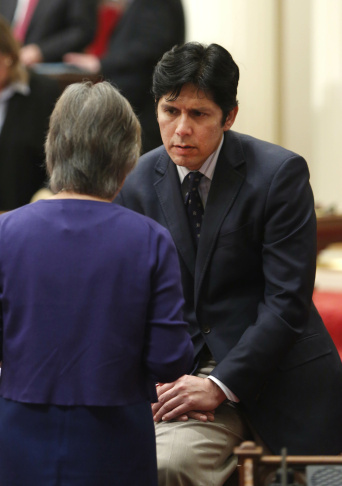
State lawmakers say college campuses need a cultural change to prevent sexual assaults. Senators Kevin de Leon (D-Los Angeles) and Hannah-Beth Jackson (D-Santa Barbara) -- co-authors of SB 967 -- say sexual relations between students should not leave room for ambiguity.
 
California Lawmaker FBI
Sen. Kevin de Leon, D-LA (AP)
We know that "No means no [and only yes means yes]," but is there more than one way to give consent to sex? Is this bill primarily about spurring a new attitude toward sex for college students? How would complainants prove they never said yes, and vice versa? LISTEN (17:09)

Guests: Kevin de Leόn, (D-Los Angeles) California Senator who co-authored SB 967 and Mark Hathaway, private defense attorney in LA, whose practice includes students and others accused of sexual misconduct.

Tuesday, 25 March 2014

Why are more women drinking? (video)

Amber Larson, Dhr. Seven, Ashley Wells, Wisdom Quarterly; Elizabeth Aguilera (KPCC Health Reporter), host Larry Mantle, AirTalk (scpr.org); Seth Macfarlane (Family Guy, American Dad)
Drain bramage, schmrain damage, if a man can get a DUI, I want one, too! (cracked.com)
Drunk without a real-friend's protection (see sutra below). Oh, alcohol! (cracked.com)
  
Women are drinking more despite the risks
Yum, it's liquid ignorance.
Women in the U.S. are consuming more alcohol than they have in decades past, and they face greater health risks for doing so. 
 
For one, a woman's body has fewer enzymes for breaking down alcohol [a poison from the fermentation (i.e., decomposition) process] and less water weight to diffuse its effects. This means women are at greater risk for liver damage and disease.

(Quagmire/Family Guy) "OMG, but you know you love it," your friends will say. And you have to wonder why you keep "dating" the same types of guys. No one has sympathy for a lush.
 
JAPAN-FRANCE-WINE
To self-sabotage! (Yoshikazu Tsuno/AFP)
Researchers also say drinking increases a woman's chances of getting breast cancer, as studies have shown that alcohol can raise estrogen levels. They also say that the way women are drinking today -- binge drinking, foregoing meals -- is cause for medical concern.

Experts say the rise in "risky drinking" is due to increased social acceptability [from shows like "Sex and the City"], gender "equality" [or the illusion of striving for it], culture and even a preference for hard liquor over beer.

WARNING: Potential trigger as Carrie & Co. do another "Ladies' Night"!

Women are also being arrested [and being sent to prison which, after all, is "equality," too] at an increasing rate for driving under the influence.

A recent report by KPCC analyzing 20 years of California DMV records shows a significant increase in the number of women being arrested for driving under the influence.
 
The DMV reports that women made up about 24 percent of DUI arrests statewide in 2011, the last year statistics are available. That's an increase over the 11 percent of DUI arrests in 1989.

WARNING: Sexually suggestive with cartoonish alcohol consumption!
 
Anything Goes!
What's behind this increase in alcohol consumption among women? Should more be done to educate women [who are already highly educated and at some level well aware of the hazards and pitfalls] about the dangers of alcohol? 

I didn't mean for that to happen. - Another drink?
[Or, like other successful campaigns, do emotions have to be brought into play with emotional appeals, better behavioral models and ideas of what's "cool" and acceptable. Are you a mom, do you drink and drive? Are you single, do you have sex with people you would not have otherwise? Are you a student, do you see a future vomiting in a toilet? Yum! Party on!] LISTEN (16:37)
SUTRA: Drinking Buddies: With "friends" like that...
Dhr. Seven, Amber Larson, Wisdom Quarterly
Health is wealth, and here's how to lose both.
In the Advice to Householders Discourse (Sigalovada Sutra, DN 31), the Buddha explains the "Six Channels for Dissipating Wealth."
 
These include drinking alcohol (indulging in intoxicants which occasion heedlessness), roaming the streets at all hours, bad diversions, gambling, associating with the foolish, and idleness.
 
The Buddha goes further to explain why these lead to ruin. Each has six miserable consequences. Alcohol leads to: (1) loss of wealth, (2) increase in quarrels, (3) susceptibility to disease, (4) loss of reputation, (5) indecent exposure, and (6) weakened intellect.
 
When roaming the streets at all hours (usually due to drinking), we are: unprotected and unguarded, as is our family and property, and we are suspected of crimes, subject to false rumors, and we encounter many troubles.
 
What's wrong with "unsavory shows"? We remain restless and agitated, wondering: Where is there dancing, singing, music, recitals, and this and that distraction? We never find inner peace or enlightenment -- even though that's what we say we're searching for. (Entertainment is not wrong in and of itself, only that it takes us away from our quest and leads to financial ruin).
 
Let's go underage drink! If it's good enough for adults...
What's wrong with gambling? Isn't it just a pleasant pastime to help Las Vegas' economy? The Buddha explains in detail, but here is the biggest one: associating with "the foolish." Any gambler, any wastrel, any drunkard, any cheater, any swindler, any violent person -- in brief,, any "fool" (bala) -- is one's associate and comp. And with friends like that, who needs enemies?

"Idle hands are the devil's helper," grandma says: Addiction to laying around (with the hangover blues) means we are not inclined to put forth effort to get anything done, instead making excuses: "It’s too cold! It’s too hot! It’s too late! It’s too early! I’m too hungry! I’m too full!" Living like this, we leave many (karmically) profitable things left undone. Wealth is left unacquired, and savings dwindle away.
 
These are just some of the ways of losing money and losing our health the Buddha explained and warned about 25 centuries ago. More

    Monday, 10 March 2014

    Sexually aggressive, not because HE's drunk

    Ashley Wells, Pat Macpherson, CC Liu, Wisdom Quarterly; "If he's sexually aggressive in bars, it's not because he's drunk
    She's probably not thinking that she wants that guy to grab her.
    She's probably not thinking that she wants that guy to grab her (Iurii Davydov/iStockphoto).

    Who let the dawg out? - Rrrrr, woof!
    Young women are often the targets of aggression when they are out in bars, but the problem isn't that guys are too drunk to know better.

    Instead, men are preying on women who have had too much to drink.
     
    When researchers at the University of Toronto and the University of Washington observed young people's behaviors in bars, they found that the man's aggressiveness did NOT match his level of intoxication. There was no relationship.
     
    Instead, men targeted WOMEN who were intoxicated.
     
    We're young and wild, and we love to party (drink) in nightclubs with no panties.
     
    The researchers hired and trained 140 young adults to go into bars in the Toronto area and note every incident of aggression that they saw. They found that 25 percent of all incidents involved sexual aggression. And 90 percent of the victims of sexual aggression were women being harassed by men.
     
    Violating the fifth precept (iStock/npr.org)
    Almost all of the aggression was physical, with about two-thirds of the aggressors physically touching women without consent. About 17 percent threatened contact. And 9 percent verbally harassed their targets.
     
    Men may perceive intoxicated women either as more amenable to advances or as easier targets who are less able to rebuff them because they don't have their wits about them, the researchers say.

    "There's no reason that women should be touched against their will," says Kate Graham, the study's lead researcher and a senior scientist at the Centre for Addiction and Mental Health at the Univ. of Toronto. Women wouldn't accept that kind of behavior at school or on the street, she notes, but it seems to get a pass in bars, she tells Shots [Health News from NPR].
     
    No means yes...but yes means maybe.
    The study was published online last Monday in Alcoholism: Clinical & Experimental Research.
     
    The researchers also wanted to look into whether unwanted sexual advances were intentional, or just a matter of misperception. This study points to the former, Dr. Graham explains.
     
    "If you walk through a bar and grab a woman's breasts and then disappear into the crowd, that's probably not a misunderstanding," she says. "You don't actually think that she wants you to do that."
     
    And fact that men were more likely to take advantage of intoxicated women shows that most of these incidents aren't well intentioned, Dr. Graham says.
     
    And the bar staff rarely stepped in and stopped the sexual aggression. "There should be training for staff on how to intervene," Dr. Graham says. "If [a bar] wants to have female patrons, they ought to make it more female friendly."
     
    I want a divorce. She went to a bar and came home drunk.
    Efforts have been launched in Washington, DC and around the country to do just that. They provide bar staff with free training on how to respond when they see sexual harassment.
     
    The research was observational, so it doesn't let us know what either the aggressors or their victims felt. And since the observations were made in public places in or around bars, the study doesn't tell us much about sexual assault or rape that might occur out of public view or after women leave the bar.
     
    But the takeaway, Dr. Graham says, is that "people should stop believing that [Robin Thicke] song. The lines really aren't that blurred." Comments?

    Friday, 17 January 2014

    The First Precept: abstain from killing (sutra)

    Amber Larson, Dhr. Seven, CC Liu (eds.), Wisdom Quarterly; Ven. Abbot Thanissaro, Metta Forest Monastery, San Diego, California, "Getting the Message" from Purity of Heart
    Man viciously attacked by bull after lightly taunting the animal and gently inserting knives into its back while attempting to slaughter him for the crowd's blood lust and amusement (Gustavo Cuevas/i.cdn.turner.com)
     
    You'd kill her, but would you -- y'know -- her?
    "What is unskillful (unwholesome, karmically unprofitable)?
    1. Taking life (killing) is unskillful,
    2. taking what is not given... 
    3. sexual misconduct... 
    4. perjury...
    5. abusive speech...
    6. divisiveness... 
    7. idle chatter is unskillful. 
    8. Greed... 
    9. ill will... 
    10. wrong view is unskillful.
    "These (ten) things are unskillful... What is skillful (wholesome, karmically profitable)? Refraining
    1. from taking life...
    2. from taking what is not given...
    3. from sexual misconduct...
    4. from perjury...
    5. from abusive speech...
    6. from divisiveness...
    7. from idle chatter...
    8. from covetousness... 
    9. from ill will... 
    10. from wrong view is skillful. 
    "These things are skillful." — MN 9
    The result of our cruelty rarely comes so quickly.
    Killing is NEVER skillful. Stealing... holding a wrong view is never skillful. When asked if there were any killing he approved of, the Buddha answered that there was only one: anger.

    [That is to say, one should destroy the root motivation, the underlying intention -- which is aversion -- to harm or destroy living beings.]
     
    In no recorded instance did the Buddha approve of killing any living being. Once when a Buddhist monk went to an executioner and told the man to kill his victims compassionately -- that is, with one blow, rather than torturing them by multiple strikes -- the Buddha expelled that monk from the Order (Sangha) on the grounds that even the recommendation to kill compassionately is nevertheless a recommendation to kill -- something this Dharma never condones.
    • [Similarly, according to the monastic rules (vinaya), if one eats meat from an animal one sees, hears, or so much as suspects was killed for one's benefit, or to make an offering to one, is a violation on the grounds that it is tacit approval of killing. Moreover, if one recommends or speaks in praise of abortion or suicide or euthanasia, and life is taken as a result, one is guilty of killing and expelled from the Order. Why? Killing is weighty karma, very bad karma, and the Buddha went to great lengths to make this known. In ancient India he was known as a karma-vadin, a teacher of the consequences of physical, verbal, and mental action.]
    Kill. Kill. Kill. And make us rich (BBC).
    If a monastic were ever physically attacked, the Buddha allowed for that person to strike back in self-defense, but never with the intention of killing an assailant. 
     
    As the Buddha taught monastics, "Even if highway robbers were to dismember one savagely, limb by limb, with a two-handled saw, anyone who would allow one's heart to become hateful and angry on account of it would not be following my Teaching. Even then one should train oneself: 

    Even reviled dictator could act kindly (iln).
    "'Our minds will not be affected, and we will not give vent to hateful words. Instead, we will remain sympathetic, with a mind/heart full of compassion [perhaps for the results they will one day face for their karma], and free of hate. 

    "'We will pervade even these bandits with a consciousness imbued with good will. And beginning with them we will continue to pervade the world in all quarters with a consciousness imbued with good will -- abundant, expansive, immeasurable, free from hostility, and free from ill will.' That is how one should train oneself." — ("The Parable of the Saw," MN 21)

    The Parable of the Saw
    Acharya Buddharakkhita (Positive Response) edited by Wisdom Quarterly
    The Buddha, Gandhara/Afghanistan (Boonlieng/flickr)
    "Meditators, even if bandits were to savagely sever you, limb by limb, with a double-handled saw, even then, whoever harbors ill will at heart would not be upholding my Teaching

    "Meditators, even in such a situation, train yourselves: 'Neither shall our minds be affected by this, nor for this matter shall we give vent to hateful words, but we shall remain full of concern and pity (mudita, sympathy, compassion), with a mind of love (mettā, friendliness), and we shall not give in to hatred. On the contrary, we shall live projecting thoughts (feelings) of universal love to those very persons, making them as well as the whole world the objects of our thoughts of universal love -- thoughts that have grown great, exalted, and measureless. 

    "We shall dwell radiating these thoughts void of hostility and ill will.' It is in this way, meditators, that one should train oneself.
     
    "Meditators, if one should keep this instruction on the Parable of the Saw constantly in mind, do you see any mode of speech, subtle or gross, that you could not endure?"
     
    "No, venerable sir."
     
    "Therefore, meditators, one should keep this instruction on the Parable of the Saw constantly in mind. That will conduce to the well-being and happiness of all for long indeed."
     
    That is what the Blessed One said. Delighted, those meditators acclaimed the Teaching (Dharma) of the Blessed One.
    • COMMENTARY: How could the Buddha say such a pie-in-the-sky thing? First, when one realizes that ultimately there is no self, no ego, nothing to cling to, it is possible to behave in a universal way. But more down to earth, this instruction follows the Buddha's advice to his disciples to endure the abusive speech of others. Why should they endure it? The Buddha says one should even endure being painfully tortured and murdered without becoming angry -- which only harms the angry one. This being the case, keeping this instruction in mind, how hard would it be to endure mere words? It would be easy, the audience responds. Therefore, keep this instruction in mind.

    Tuesday, 14 January 2014

    The Fifth Precept: to abstain from drugs (sutra)

    Amber Larson, Ashley Wells, Dhr. Seven (eds.), Wisdom Quarterly translation based on "The Five Precepts" (pañca-sila), AccessToInsight.org (AN 8.39)
    The Buddhist Wheel of the Liberating Dharma (kadampa.org)
      
    Buddha mudra, Thailand (Ponz666/flickr)
    There are five basic training rules observed by all practicing lay Buddhists.
     
    The precepts are often recollected after going for guidance to the Three Jewels: Buddha (the Enlightened), Dharma (Teachings that lead to enlightenment), and (noble community called the) Sangha (those who have successfully followed the Buddha and Dharma to the ultimate goal of enlightenment).  

    Five Precepts
    1. I undertake the precept to refrain from destroying living creatures.
    2. I undertake the precept to refrain from taking what is not given.
    3. I undertake the precept to refrain from sexual misconduct.
    4. I undertake the precept to refrain from false speech.
    5. I undertake the precept to refrain from intoxicants which lead to carelessness.
     
    Five Faultless Gifts
    I will enjoy peace of mind and freedom.
    "There are five great gifts -- original, ancient, traditional, long standing, unadulterated from the beginning -- that are not to be faulted now, that are never to be faulted, that are upheld by wise spiritual recluses and Brahmin priests. What are they?
     
    "A disciple of the noble ones, abandoning the taking of life, abstains from taking life. In doing so, one gives to limitless numbers of beings freedom from danger, freedom from animosity, freedom from oppression. In giving freedom to limitless numbers of beings, one gains a share of limitless freedom from danger, freedom from animosity, and freedom from oppression. This is the first gift...
     
    "Furthermore, abandoning taking what is not given (stealing), a disciple of the noble ones abstains from taking what is not given....
     
    "Furthermore, abandoning sexual misconduct, a disciple of the noble ones abstains from sexual misconduct....
     
    "Furthermore, abandoning false speech, a disciple of the noble ones abstains from false speech....
     
    Careless in Colarado (Brennan Linsley/AP)
    "Furthermore, abandoning the use of intoxicants, a disciple of the noble ones abstains from taking intoxicants. In doing so, one gives to limitless numbers of beings freedom from danger, freedom from animosity, freedom from oppression. In giving freedom one gains a share in limitless freedom from danger, freedom from animosity, and freedom from oppression. This is the fifth great gift -- original, ancient, traditional, long standing, unadulterated from the beginning -- that is not to be faulted now, that is never to be faulted, that is upheld by wise spiritual recluses and Brahmin priests."

    Radical Therapy:
    Buddhist Precepts in the Modern World
    Prof. Lily de Silva (Buddhist Publication Society)
    The Buddha rises above all obstalces (Buddhisam)
    The Five Precepts are the basic Buddhist code of virtue, undertaken daily by lay Buddhists along with Going for Guidance to the Three Gems. Virtue is regarded as the indispensable foundation of a life in line with the Dharma.
     
    The Five Precepts consist of five training rules of abstinence: (1) from killing, (2) from stealing, (3) from sexual misconduct, (4) from false speech, and (5) from intoxicants.
     
    The Five Precepts are designed to [give freedom from remorse as they] discipline and purify the three avenues of human action -- body, speech, and mind.

    The Buddha rediscovered the Path then taught it.
    Abstaining from killing, stealing, and sexual misconduct disciplines bodily action. Abstaining from false speech disciplines verbal action. ("False" speech is not a nice way of saying not lying; it refers to abstaining from perjury, slander, harsh/abusive speech, and frivolous talk).
     
    The dual discipline of body and speech has a healthy effect on the purity of mind, although complete mental purity can only be brought about by "bringing it into being" (bhavana, mental culture, cultivation, self-development, or meditation).
     
    The fifth precept -- abstaining from using intoxicants -- attempts to safeguard the mental faculty from degenerating through toxicity or a bad habit. A person under the influence has little control over oneself. So one is easily tempted to carelessly transgress the four other precepts as well. More

    The ancient Five Precepts, Lumbini, Nepal (tripadvisor.com)