Showing posts with label death. Show all posts

Tuesday, 19 August 2014

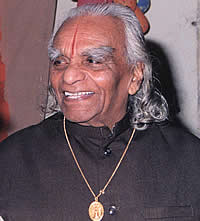
Famed yoga teacher BKS Iyengar dies at 95

Yogis Seven, Crystal Quintero, Wisdom Quarterly; BKSIyengar.com; BBC.com
If it were up to Iyengar, Lululemons would not be so tight or transparent.
.
Yogacharya B.K.S. Iyengar died today. He was a living legend who taught a modified form of yoga making the poses (asanas) more accessible and attainable to people in in the West and those with limitations. He himself, due to injuries, was limited. But he showed his teacher, Krishnamacharya, and fellow students that he could make something of this ancient science, something everyone could benefit from not just slender youthful ascetic males.
 
The Vedas teach yoga and health (Ayur-veda), how to live and eat well.

 .
Iyengar as a young man
The Iyengar style of yoga, because of its attention to detail and safety, became popular around the world. It is Hatha, bring together Sun and Moon principles together, with a gentle twist -- softened bends and rigor. It is gentle yoga of great precision. He found meaning in the yoga sutras, which are more aphorisms than discourses, by his practical search and regular practice. Therefore, he helped all to experience their wisdom. His certification of specialized teachers across the world was apparently lucrative enough to sustain him and this style making it quite respectable and the most common form of yoga found on college campuses.

We love Iyengar Yoga! It's so easy to do but so nitpicky. We just wanna have fun!
.
(BBC.com) Indian yoga guru BKS Iyengar has died in the western city of Pune, India, aged 95.

Mr. Iyengar was admitted to hospital last week and died early on Wednesday [Aug. 19, 2014] following kidney problems, doctors treating him said.

He was credited with his own brand of yoga and taught author Aldous Huxley and violinist Yehudi Menuhin, among other celebrities.

Iyengar Yoga is now taught in more than 70 countries, and the guru's books have been translated into 13 languages.

One of yoga's finest teachers, Mr. Iyengar practiced what he called an "art and science" for more than eight decades and ran one of India's top yoga schools in Pune.

He continued to practice -- "practice is my feast," he once told a correspondent -- in his old age and could still do the sirsasana -- or the headstand -- for half an hour until last year.

He used around 50 props, including ropes and mats, to align and stretch the body.

"When I stretch, I stretch in such a way that my awareness moves, and a gate of awareness finally opens," Mr. Iyengar told the Mint newspaper last year.

"When I still find some parts of my body that I have not found before, I tell myself, yes I am progressing scientifically... I don't stretch my body as if it is an object. I do yoga from the self towards the body, not the other way around.

When he first met Yehudi Menuhin, the violinist complained that he never had time to relax and never got a good night's sleep.

"Within one minute Iyengar had him snoring happily away. But Guruji did warn me: 'Relaxation doesn't mean yoga is a soft option. It's a disciplined subject -- a casual attempt only gains casual results,'" Mark Tully, former BBC correspondent in India, wrote after meeting Mr. Iyengar in 2001.

Monday, 4 August 2014

Climate Chaos: Landslides kill in Nepal and L.A.

They're all dead? So, what, I load this thing then press it against my head? (Jos Martin/flickr)

As a consequence of climate chaos -- brought about by geoengineering, weather modification, and the military-industrial complex's aerosol dispersion/chemtrail programs now extended worldwide -- Nepal and Los Angeles have been flooded by unexpected rain bursts. The downpours, following periods of drought conditions that kill off supportive vegetation that usually holds the ground in place, caused landslides that buried many alive and led to control efforts.

Scores of people lost in landslide
Rural North Nepal, Pangboche Khombu (wiki)
There was no chance of finding any of the more than 150 people believed to have been buried by a massive landslide in northern Nepal, an official said.

Rescuers had recovered only eight bodies since the landslide early Saturday blocked a mountain river, causing the water to form a lake that was threatening to burst and sweep several villages. Rainfall Sunday hampered search attempts.

"We have no chance of fiding any of the missing people alive under this pile of debris," said Yadav Prasad Loirala, who heads the government's Department of Natural Disaster Management. "We have names of 159 people who ar3e believed to be missing and buried, but there could be even more people."

Mt. Baldy (L.A.'s own Everest) hit by flooding
A worker clears the road after a flash flood swept across Valley of the Falls Drive on Sunday in Forest Falls. (Micah Escamilla/PasadenaStarNews.com)
  
Heavy rains in Southern California bring flash floods, mudslides, closures
Truck sits in mud after flash flood swept LA
Northern foothills of Los Angeles - A thunderstorm that lasted only about an hour and dropped more than 4 inches of rain Sunday [after sprinkling on Saturday night] from Glendora to Oak Glen and Angeles Crest Highway near Wrightwood.

It caused flash floods, mudslides, evacuations, washed away cars, created massive debris flows that choked roadways, stranded residents and campers, and caused at least four people to be rescued from surging floodwaters, law and fire enforcement agencies said.
 
The storm’s fury did the most damage in the Mt. Baldy area and the community of Forest Falls in San Bernardino County.
 
In the Angeles National Forest, a rock slide covered all lanes of the Angeles Crest Highway at mile marker 66 near Little Jimmy Road west of Wrightwood around 4:15 pm, and a smaller slide was reported a few minutes later on San Gabriel Canyon Road at Crystal Lake Road above Glendora, according to the California Highway Patrol.
 
A slide near the Mt. Baldy Fire Station, reported at 5:18 pm, closed Mt. Baldy Road, the CHP reported.
 
The National Weather Service issued a flash flood warning through 7:00 pm Sunday in the eastern San Gabriel Mountains.
 
Four to five people and dog became stranded by raging floodwater and were unable to reach their vehicle, Sgt. Rebecca Rodriguez of the Los Angeles County Sheriff’s San Dimas Station said. They were airlifted to safety by a sheriff’s helicopter about 5:30 pm, she said.
 
An overturned vehicle was found near the intersection of Bear Creek and Mt. Baldy roads, but no one was inside, Rodriguez said.
 
In San Bernardino County, flash flooding washed out parts of Forest’s Falls main road, causing evacuations, and one resident had to be saved by swift water rescuers, authorities said. More

Climate Chaos: Geoengineering and Weather Manipulation
Rob Simone, Dane Wigington, Scott Stevens (coasttocoastam.com)
One Killed, Thousands Stranded Clean up crews are clearing debris, trying to reach those stranded by sudden Southern California storms yesterday.
.
Climate engineering, also referred to as geoengineering, is the deliberate and large-scale intervention in the Earth’s climatic system.
 
Host Rob Simone welcomed two experts on Saturday night, Dane Wigington and Scott Stevens, for a discussion on how the Earth's weather systems are being deliberately manipulated and used to disrupt the world's climate, rain patterns, snowfall, seasons, ability to grow food, and more.
 
Beyond the damage that tampering with the atmosphere has on the environment, Wigington declares that weather manipulation, conducted by the military-industrial complex (MIC) via clandestine programs such as HAARP and chemtrail spraying, also constitutes an "all out assault on life on Earth."

The weather is being used as a weapon by U.S. MIC (thelivingmoon.com)
.
To that end, he contends that the rise in deaths caused by respiratory illnesses as well as the explosion in both autism and Alzheimer's disease coincide with the emergence of chemtrail contamination.
 
You're destroying my world (Clarke)
On a broader level, Wigington suggests that natural disasters, such as hurricanes, typhoons, and earthquakes, are being created by programs like HAARP as a way of allowing the United States to gain a foothold in foreign territories under the cover of "humanitarian" relief. But this is actually covert war. He points to Buddhist Thailand refusing to let the U.S. build an airbase in their country in 2011 then subsequently being afflicted/attacked with record flooding shortly thereafter. (The same happened with much worse consequences for Buddhist Japan, which was threatened then hit with quakes, a tsunami, and the subsequent nuclear disaster at Fukushima.

In addition, Wigington theorizes that Middle East nations are subjected to intense droughts as a means of destabilizing unfriendly-to-the-West regimes the U.S./MIC wishes to topple. "This whole situation is such a tangled web of corruption and insanity," he laments, noting that those who control the weather are using their power and knowledge to benefit financially from the hardships they create.

Joining the program in the second half , meteorologist Scott Stevens talked about the origins of secret weather modification and the agenda behind it. According to Stevens, the desire to control the weather arose in the Soviet Union at the advent of the Cold War as the Russians were desperate to gain a military advantage over the U.S. This experimenting with geoengineering, Stevens explains, culminated in the mid-1970's where the U.S. experienced bizarre weather conditions such as snow in Miami.
 
Based on Stevens' research, the U.S. Army revealed this secret weather war to Pres. Reagan in 1984, which resulted in the creation of the U.S.'s Strategic Defense Initiative as well as America's entering the dirty game of geoengineering.
 
Shuttle shoot down using weather

Stevens also claims that the disasters that befell the Challenger and Columbia space shuttles were not  accidents. What were they instead? "They were shoot downs," spawned from the ongoing international battle for control of the environment. Stevens alleges that, at the time of the Challenger launch, there were Soviet ships off the coast of Cape Canaveral that insisted on being in the area for reasons that remain unknown.
 
However, he added, "72 seconds later, they blew the O-ring, and we lost the shuttle." Regarding the Columbia re-entry explosion, he cites an explosive photograph taken by an amateur astronomer that shows a "right-angled, corkscrew lightning strike" that intercepted the path of the shuttle and caused it to disintegrate. Listen 

Tuesday, 8 April 2014

Losing Zen Buddhist activist Matthiessen (NPR)

Pat Macpherson, CC Liu, Wisdom Quarterly; Weekend Edition Sunday (NPR, April 6, 2014)
Bhumi/Gaia is a precious thing, nurturing and full of intelligence (NASA/colourbox.com)

 
Zen (counterpointpress.com)
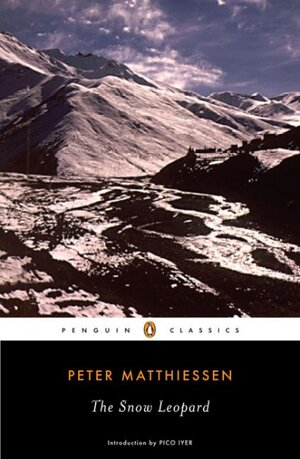
Author Peter Muryo Matthiessen has died in New York at the age of 86 from acute myeloid leukemia. He was a novelist and naturalist, who wrote 33 books, among his best-known being The Snow Leopard and the novels Far Tortuga and At Play in the Fields of the Lord, which was made into a Hollywood film.

He is the only writer to ever win the National Book Award in the categories of Fiction (for Shadow Country) and General Nonfiction (for The Snow Leopard, which also won for Contemporary Thought). 
 
The Snow LeopardHe was also a political activist, a Buddhist teacher, co-founder of The Paris Review and, briefly, a spy.
 
In his first nonfiction book, Matthiessen staked out the territory he would revisit the rest of his life -- the destruction of nature and natural peoples at the hands of humankind. Wilderness in America, published in 1959, is a history of the extinction of animal and bird species in North America:
Species appear, and left behind by a changing earth, they disappear forever, and there is a certain solace in the inexorable. But until man, the highest predator, evolved, the process of extinction was a slow one. No species but man, so far as is known, unaided by circumstance or climactic change, has ever extinguished another.
Wilderness in America led to a series of assignments from The New Yorker that in turn led to a series of books....
 
Matthiessen traveled to New Guinea in 1961 with Michael Rockefeller, who disappeared and may have been the victim of headhunters (or so the legend goes). He wrote about trips to Africa, the Himalayas, South America, and Antarctica. 
But he said he never intended to write nonfiction. "Fiction is my first love, and that's the way I began," he said. "And frankly, when I began nonfiction, I did it for money."
 
Shadow CountryMcKay Jenkins, the author of The Peter Matthiessen Reader and several nature books, says that's astonishing. "That's kind of like Babe Ruth wanting to be remembered as a pitcher," Jenkins says. "Matthiessen is held in such high regard as a nonfiction writer by nonfiction writers that they sometimes say, 'How is it possible that this guy can be such a virtuoso fiction writer, and give his equally substantial body of nonfiction work such short shrift?' Because all the rest of us are trying to do what we can to mimic his nonfiction work."
 
Matthiessen was remarkable in a lot of ways. He was born in Manhattan in 1927 to a wealthy family. After a stint in the Navy, he attended Yale, where he began writing short stories -- and where one of his professors recruited him into the CIA [like someone somewhere did Barry Obama, Johnny Kerry, Bush Sr., Karl(yle) Rove, Dick Cheney...and the even the fleeing Dalai Lama. The Company gets around.]

In 1953, Matthiessen co-founded what would become one of the most important literary magazines of the 20th Century, The Paris Review. But he did it as a cover for his CIA activities -- the only adventure in his long life that he said he ever regretted.
 
"I was a spy," he said. "When I went in there, it was the end of the Cold War -- Russia was a great menace out there in the distance. It was considered very patriotic to join the CIA. I didn't know my politics were going to veer leftward, and that I would really come to despise the CIA."
 
Matthiessen's politics led to a lifelong career as an activist. He wrote books about union [American farmworker] organizer Cesar Chavez, the American Indian Movement...
 
After Matthiessen's second wife, Deborah, died of cancer in 1972, he embraced Zen Buddhism and eventually became a priest and teacher. In his 1978 book, The Snow Leopard, Matthiessen wrote about a spiritual journey in the remote mountains of Nepal, and the impossibility of capturing experience in words:
The sun is round. I ring with life, and the mountains ring, and when I can hear it, there is a ringing that we share. I understand all this, not in my mind, but in my heart, knowing how meaningless it is to try to capture what cannot be expressed, knowing that mere words will remain when I read it all again, another day. LISTEN
Peter Muryo Matthiessen [was] a two-time winner of the National Book Award, a longtime Zen practitioner, and Bernie Glassman’s first Dharma successor. He [was] an active Zen teacher in Sagaponack, New York.

Tuesday, 18 February 2014

Satanic teen girl goes on killing spree (video)

Ashley Wells, Pat Macpherson, Dhr. Seven, Pfc. Sandoval, Wisdom Quarterly; Newsrender.com; The Associated Press; NJ.com; The Daily Item; Slayer; Dimmu Borgir
In court, the beautiful yakshini (ogress) Miranda Barbour, 19, is tired of killing (AP).


I have a swastika neck tattoo.
"KILL AGAIN" (Slayer): "Lurking in a dismal fog/ Hungry for your blood/ Seeking harmless victims/ Satisfy my need.// Schizophrenic lunatic/ Uncontrolled desire/ Rape and ravage lady fair/ Pledged to die// [CHORUS:] No apparent motive/ Kill and kill again/ Survive my brutal thrashing/ I'll hunt you till the end/ My life's a constant battle/ The rage of many men/ Homicidal maniac!// Trapped in mortal solitude/ Lift the gleaming blade/ Slice the flesh to shreds/ Watch the blood flow free// Hatred growing stronger/ None survive my wrath/ Suffer from the throbbing pain/ Yield your life to me.../ Chorus// Unrelenting need to kill/ Death upon you now/ Anxiously awaiting/ Next in line!"
 
 
Teen Killing Spree: less than 100 victims
Why? Miranda Barbour was molested since the age of 4 by her stepfather. Thanks, "dad."
 
Admittedly, maybe I got carried away.
SUNBURY - A Pennsylvania teen charged along with her newlywed husband with killing a man they met through Craigslist admitted to more slayings.

In a jailhouse interview with a newspaper, she said she has killed less than [100] other people across the country [and remembers where 22 of the bodies are buried]. Police claim they are investigating.
 
In an interview with The Daily Item in Sunbury, Pennsylvania, 19-year-old Miranda Dean now Mrs. Elytte Barbour [who says she began killing at age 13 as part of a Satanic cult] said she wants to plead guilty to killing Troy LaFerrara in November. 

Yakshi, Guimet Museum
She also said in the interview she has killed at least 22 other people from Alaska to North Carolina in the last six years as part of her involvement in a Satanic cult.
"I feel it is time to get all of this out. I don't care if people believe me. I just want to get it out," Barbour told the newspaper for a story published Saturday night. More


Satanic: Dimmu Borgir "Blood Hunger Doctrine" (Death Cult Armageddon)
A Buddhist "ogress" (yakshini)
Wisdom Quarterly (Wikipedia edit)
Hey, S happens when you work for Satan and fellow cult members who later deny you.

Yakkhas, Ventiane, Laos (Lucille Cottin/flickr)
What is a yakkha? In some lists (e.g., PvA. 45, 55) they range immediately above ghosts (petas); in fact, some of the happier ghosts are called yakkhas. Elsewhere (e.g., A.ii.38) they rank, in progressive order, between humans (manussā) and low ranking messenger-angels or fairies (gandhabbā). They are of many different kinds: spirits, ogres, dryads, ghosts, spooks. In the early records yakkha, like nāgā, as an appellative, was anything but depreciative. Thus, not only is Sakka, King of the Devas, referred to as a yakkha (M.i.252; J.iv.4; DA.i.264), but even the Buddha is spoken of as one in poetic diction (M.i.386). Many gods (devas), such as Kakudha, are so addressed (S.i.54). More

Yakshi, 3rd cent. BC, Patna Museum
Yakshinis (Sanskrit याक्षिणि, Pali yakkhini) are mythical beings in Hindu, Buddhist, and Jain mythology.
 
A yakshini is the female counterpart of the male yakkha/yaksha (ogre, demon, monster). They both attend on Kubera, the Hindu god of wealth, who rules in the mythical Himalayan kingdom of Alaka [Buddhist Alavaka/Alavi?] They look after treasure hidden in the Earth and resemble fairies. Yakshinis are often depicted as beautiful and voluptuous, with wide hips, narrow waists, broad shoulders, and exaggerated, spherical breasts.
 
In the Uddamareshvara Tantra, 36 yakshinis are described, including their mantras and ritual prescriptions. A similar list of yakshas and yakshinis is given in the Tantraraja Tantra, where it says that these beings are givers of whatever is desired. Although they are usually benevolent, there are also yakshinis with malevolent characteristics in Indian folklore.
 
The list of 36 yakshinis given in the Uddamareshvara Tantra runs as follows:
  1. Vichitra (The Strange One)
  2. Vibhrama (The Amorous One)
  3. Hamsi (Swan)
  4. Bhishani (The Terrifying)
  5. Janaranjika (The People Entertainer)
  6. Vishala (The Large Eyed)
  7. Madhana (Lustful)... More
(EA) Slayer, "Praise of Death," The Ritz, New York, 1986

1 in 4 Americans don't know Earth revolves around Sun
(NEWSER) To put the brightest possible spin on this story is to say that three-quarters of Americans are fully aware that the Earth revolves around the sun. The downside, of course, is that means 1 in 4 are in the dark about what Discovery calls "probably the most basic question in science." The National Science Foundation asked that question and nine others of 2,200 Americans, with the average score on the quiz coming in at 6.5, reports Phys.org. Some other results noted by NPR: 
  • 39% answered correctly that "the universe began with a huge explosion."
  • Fewer than half -- 48% -- agreed that "human beings...developed from earlier species of animals." More

Thursday, 16 January 2014

"I want to kill!" - This American Life (audio)

Wisdom Quarterly; "Adam," Sarah Koenig, Ira Glass, ThisAmericanLife.comJan. 10, 2014
"No apparent motive, just kill and kill again/Survive my brutal thrashing, I'll hunt you to the end. My life's a constant battle, the rage of many men. Homicidal maniac!" - Slayer "Kill Again"

 
Adam is a killer, and he knows it. He went to kill in Afghanistan -- with bloodlust inculcated in him by American military training during bootcamp. He is the first person to honestly speak about it. Fortunately, he did it on public radio.
 
SHOW 515: Good Guys
Lots of men think of themselves as "good guys." But what does it actually take to be one, to be a truly good guy?

In 2009, a U.S. soldier ("Adam") contacted "This American Life." He offered to send audio dispatches from his military deployment in Afghanistan.
 
He wanted to do a story about what it is really like to go to war and to kill. What he learned when he was over there as a soldier [in the service of America's military-industrial complex] was way more personal and honest than anyone expected.
 
Even Adam had not planned to say as much as he did about how he was trained in bootcamp to WANT and look forward to killing people. He began as an older liberal among young, closed minded, gung ho killers.
 
War crimes, dishonor, moral injury, suicide
Although Sarah Koenig claims Adam never did get to kill anyone, it is clear he did: He killed by shooting humans he was invading, violating, and terrorizing. He shot alongside other Americans and saw targeted victims die but without being able to be sure that it was due to his gunfire.
  • PLAY AUDIO
  • WARNING: Story may not be appropriate for children.
More than gang killings, Adam called in airstrikes that got many people killed. He lusted after killing unarmed prisoners in his custody. He thought of executing them and shooting noncombatant civilians for no reason other than he had the power to. But he resisted like most other soldiers because he and they feared repercussions if they were caught killing without justification. It was fear of reprisal rather than respect for life that kept him and his fellow soldiers from killing more men, women, and children.
 
Now that he is back in America, he looks forward to being given an excuse to kill someone stateside. He needs a kill under his belt, which is not anything he discusses with VA doctors. He does not consider himself exceptional or psychopathic. In fact, he is sure other veterans kill and like it. Like other soldiers, he has discussed these facts with them. But they ordinarily never talk about it outside of the military. Producer Sarah Koenig explains (20 mins). WAR

Saturday, 23 November 2013

The nun Khema, Foremost in Wisdom (sutra)

Dhr. Seven and Amber Larson, CC Liu, Wisdom Quarterly translation based on Ven. Thanissaro (aka Geoffrey DeGraff, Abbot of Wat Metta), Khema Sutta (SN 44.1)
Venerable Khema, the Buddha's chief female disciple (-William/flickr.com)
 
First Buddhist Women (Susan Murcott)
On one occasion the Blessed One was residing near the city of Savatthi at Jeta's Grove in the millionaire's monastery. At that time the nun Khema [the Buddha's chief female disciple, "foremost in wisdom"], wandering on tour among the Kosalan peopple, had taken up her residence between Savatthi and Saketa at Toranavatthu

Then King Pasenadi Kosala, while traveling from Saketa to Savatthi, took up a one-night residence between Savatthi and Saketa at Toranavatthu. He addressed a certain man, "Come, now, my good man. Find out if in Toranavatthu there is any Brahmin [priest] or wandering ascetic (shraman) I might visit today."
 
"As you wish, sire," the man replied. Having roamed all over Toranavatthu, he did not see any. However, he did see the nun Khema. And seeing her he went to King Pasenadi Kosala and reported: "Sire, in Toranavatthu there is no Brahmin or wandering ascetic of the sort your majesty might visit. But there is a [Buddhist] nun named Khema, a disciple of the Blessed One, worthy and rightly self-awakened.

Khema "foremost in wisdom"
"And of this lady this commendable report has spread: 'She is wise, competent, intelligent, learned, a fluent speaker, admirable in her ingenuity.' Let your majesty visit her."
 
King Pasenadi Kosala went to the nun Khema. When he arrived, he bowed and sat respectfully to one side. Sitting there he said: "Now then, lady, does the Tathagata [the "Wayfarer," the Buddha] exist after death?"
 
"This, great king, has not been declared by the Blessed One: 'The Tathagata exists after death.'"
 
"Well then, lady, does the Tathagata not exist after death?"
 
"Great king, this too has not been declared by the Blessed One: 'The Tathagata does not exist after death.'"
 
"Then does the Tathagata both exist and not exist after death?"

"This also has not been declared by the Blessed One: 'The Tathagata both exists and does not exist after death.'"
 
"Well then, does the Tathagata neither exist nor not exist after death?"
 
"This, too, has not been declared by the Blessed One: 'The Tathagata neither exists nor does not exist after death.'"
 
"Now, lady, when asked if the Tathagata exists after death, you [answer no to each of the four exhaustive options]. Now, what is the cause, what is the reason, why that has not been declared by the Blessed One?"
 
Khema, Buddha, and Uppalavanna? (BreenJones)
"Very well, then, great king, I will question you in return about this very same matter. Answer as you see fit. What do you think, great king: Do you have an accountant or actuary or mathematician who can count the grains of sand in the river Ganges as 'so many grains of sand,' or 'so many hundreds of grains of sand,' or 'so many thousands of grains of sand,' or 'so many hundreds of thousands of grains of sand'?"
 
"No, lady."
 
"Then do you have an accountant or calculator or mathematician who can count the water in the great ocean as 'so many buckets of water,' or 'so many hundreds of buckets of water,' or 'so many thousands of buckets of water,' or 'so many hundreds of thousands of buckets of water'?"
 
"No, lady. But why is that? The great ocean is deep, boundless, hard to fathom!"
 
"Even so, great king, any physical form by which one describing the Tathagata would describe him -- that the Tathagata has abandoned, its root destroyed, made like a palmyra stump, deprived of the conditions of development, not destined for future rearising. Freed from the classification of form, great king, the Tathagata is deep, boundless, hard to fathom, like the ocean. 

Modern Theravada "ten precept nun" dressed in white in Burma (As1974/flickr.com)
 
"'The Tathagata exists after death' does not apply. 'The Tathagata does not exist after death does not apply. 'The Tathagata both exists and does not exist after death' does not apply. 'The Tathagata neither exists nor does not exist after death' does not apply.
 
"Any feeling... Any perception... Any mental formation...

"Any consciousness [form, feeling, perception, formation, and consciousness are the Five Aggregates of Clinging unenlightened beings cling to and regard as self] by which one describing the Tathagata would describe him -- that the Tathagata has abandoned, its root destroyed, made like a palmyra stump, deprived of the conditions of development, not destined for future rearising. 

"Freed from the classification of consciousness, great king, the Tathagata is deep, boundless, hard to fathom, like the ocean. 'The Tathagata exists after death' does not apply. 'The Tathagata does not exist after death' does not apply. 'The Tathagata both exists and does not exist after death' does not apply. 'The Tathagata neither exists nor does not exist after death' does not apply."
  • The Commentary and Sub-commentary try to go further than this discourse and to describe the Liberated One's indescribability. To paraphrase: He is freed from the classification of form [and the other aggregates] because for him there will be no rearising [rebirth] of form and so on in the future, after passing into final nirvana. In addition, he is deep in terms of the depth of his character and the depth of his qualities. As for any description in terms of "a being" which might be used in relation to someone with such deep qualities, when one sees the inapplicability of the description "being," owing to the (future) non-rearising of the Five Aggregates of Clinging, one sees that none of the four statements with regard to the Tathagata are invalid after passing into final nirvana. [Wayfarer is an early English translation of the term Tathagata, which means "welcome one" and "well gone one," sometimes translated in Mahayana Buddhism as "Thus Come One." He is gone-and-going, after having arisen and arrived. He is a welcome teacher of freedom destined for complete freedom.] This explanation, which borrows from Sister Vajira's verse in SN 5.10, misses an important point raised in SN 22.36 and SN 23.2. In SN 22.36 the Buddha states that one is measured and classified by what one is obsessed with or clinging to. If one is not obsessed with anything and no longer clinging even unconsciously, then one is not measured or classified by it in the here and now. In SN 23.2 the Buddha points out that the term "being" or "becoming" (bhava) applies only where there is craving and passion [rooted in ignorance/unenlightenment and therefore leading to the future rearising of a rebirth-linking consciousness, which entails rebirth in samsara yet again for the umpteenth time]. The Tathagata, freed from craving and passion, is indescribable in the present, even though he obviously still functions in the present. SN 22.86 elaborates on this point in great detail. Another problem raised by the Commentary's explanation for this brief discourse is how it would define the Tathagata's qualities and character, for what are they composed of aside from the aggregates.
Then King Pasenadi Kosala, delighting in and approving of the nun Khema's words, got up from his seat, bowed, and -- respectfully keeping her to his right -- departed.
 
Asking the Buddha
A great Indian king (maha raja) meets the Buddha.
At another time he went to the Blessed One. When he arrived, he bowed, and sat respectfully to one side. Sitting there [he asked the Buddha the same four questions asked of the nun Khema, and he received precisely the same responses and analogies. Then he exclaimed:]
 
"Amazing, venerable sir! It is astounding how the meaning and phrasing of the teacher and disciple agree, coincide, and do not diverge from one another with regard to the supreme teaching! 
 
Recently, venerable sir, I visited the nun Khema. And when I arrived I asked her regarding this matter, and she answered me with the same words, the very same phrasing as the Blessed One. Amazing, venerable sir! It is astounding how the meaning and phrasing of the teacher and disciple agree, coincide, and do not diverge from one another with regard to the supreme teaching!
 
"Now, venerable sir, we must go. Our duties are many, and many are our responsibilities."
 
"Then do as you see fit, great king."
 
So King Pasenadi Kosala, delighting in and approving of the Blessed One's words, got up from his seat, bowed, -- respectfully keeping the Blessed One to his right -- departed.