Showing posts with label Indo-Iranian. Show all posts

Friday, 23 May 2014

Juicy summer Dharma reads

Amber Larson, Dhr. Seven, Crystal Quintero, Wisdom Quarterly (SUMMER READING)
"Peace is within; do not seek it without" - the Buddha (Vinita Jaynt/pinterest.com)

Juicy Dharma reads for the beach over the long Memorial Day weekend (thedailybeast.com)

 
Young, rich Prince Siddhartha (Buddha-to-be)
This weekend is the unofficial launch of summer in the U.S.

It would be fun to read some good trash with a half-hundred shades of nonsense and salacious... but that gets old fast.

Where's the substance I want? Where's the long term profit. Cheap thrills are not only not that cheap, they aren't that thrilling.

Snakes as sex symbols for Eves?
We have to wonder if the story of the Bodhisattva, when reborn as Siddhartha in the faraway frontier of ancient India, wasn't a kind of bodice ripper of its time.

Handsome, gallant prince has a harem ("dancing girls and all-female musicians and palace guards"), plays sports like archery and proto-polo (Persian chowgan or some kinder version of buzz kashi or kokspar with an un-taxidermically-treated leather "ball"), rides a white pony horse named Kanthaka, does feats of strength, learns great royal skills from Brahmin tutors, wears flowing gowns of the greatest Kasi fabric, and enjoys more riches than he can comfortably get his head around. Where?

Prince Siddhartha in the upper floors of his seasonal palace guarded by women and filled with "dancing" girls and female musicians and a surfeit of luxurious foods and other delights.

Playing with the boys in feats of strength in Central Asia -- proto-polo with a "pigskin" made of lamb, equestrian skill for warriors in need of nomadic endurance (wiki/army.mil)
    
Indus Valley Civilization and Kapilavast
Imagine a cosmopolitan crossroads on the Silk Road, travelers and magicians going from the Far East to the West and paradises beyond India and Asia.

Was that the Terai of Nepal? Not likely, but that's what the colonial British books say. Afghanistan is a better candidate, Sanskrit-speaking Gandhara and the remnants of the once great Indus Valley Civilization (romanticized "distant lands" between Egypt and India) and what remained of it. India's influence extended all the way to Iran (which later became Zoroastrian and Sufi-inspired Persia before being overtaken by Islam).

Dance, dancing girls, dance!
Worlds to the west were pre-Christian, pre-Jewish, pre-Abrahamic described in the pejorative as "pagan." Full of shamans, traders, trailblazers, and Sumerian-Egyptian-Arabian-Bedouin post-Babylonians. Life could not have been easy, after the fall of so many great empires and city-states like Harrapa and Mohenjo-Daro.

The Path to Enlightenment, like the course of society as explained by the author-comedian Douglas Adams (Hitchhiker's Guide to the Galaxy BBC Radio series), goes through phases or stages of sophistication. How will we survive? How shall we eat? ...What's for lunch?

Read (pinterest.com)
So reading The Aphorisms and Back-Stories (Dhammapada), The Bodhisat Fables (Buddhist Birth Stories that inspired Aesop, according to British scholar and University of London Professor Rhys Davids), or The Lists (more) may do at first, then the stories (sutras, long discourses,  and apocryphal texts), then The Analyses (vibhanga), then The Commentaries, The Higher Teachings, but eventually what we need for nourishment is The Synthesis (Bhikkhu Bodhi, Pema Chodron, Ajahn Brahm, Sharon Salzberg, Ayya Khema, Caroline Davids, Joan Halifax, Islaine B. Horner, Ayya Tathaaloka (facebook)...

Wednesday, 14 May 2014

"Persepolis" or Persepolis? (video)

Eds., Wisdom Quarterly; Marjane Satrapi ("Persepolis"); Discovery.com "Persepolis"

.
Ancient Persia
The remnants of a great empire
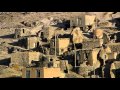
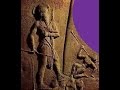
One of the most impressive settlements in the ancient world, Persepolis was destroyed and burned by invader Alexander the Great in 330 BCE. It lay forgotten for over 2,000 years. This documentary travels to modern Iran to bring Persepolis back to life and investigate the complexities of the Persian Empire that was responsible for creating this astonishing city.

The Spread of Buddhism from its origins in Afghanistan (Gandhara) and India (Magadha) to Iran, where two counter-movements arose in Zoroastrianism (Asuras, Parsis) and Islam (Muslims, Sufis) that then rolled into India and Buddhist strongholds in East and Far East Asia.
.
"Persepolis," Iran
WATCH FREE: FULL FILM NOW
Religion is mostly a horrible thing. "Persepolis" is the poignant story of a young girl in Iran during the Islamic Revolution.
 
It is through the eyes of precocious and outspoken 9-year-old Marjane that we see a people's hopes dashed as fundamentalists take power -- fomented by the West who is enriched in the process of creating a terrorist dictatorship to rob the resources of a nation -- forcing the veil on women and imprisoning thousands.
 
Ancient India used to include modern Iran
Clever and fearless, Majrane outsmarts the "social guardians" and discovers punk rock, ABBA (pop), and Iron Maiden (heavy metal). Yet, when her uncle is senselessly executed and as bombs fall around in the capital of Tehran during the Iran-Iraq war, the daily fear that permeates life in Iran is palpable.

As she gets older, Marjane's boldness causes her parents to worry over her continued safety. So at age 14, they make the difficult decision to send her abroad to school in Austria. Vulnerable and alone in a strange Western land, she endures the typical ordeals of a teenager.

Map of Buddhist Central Asia and India
In addition, Marjane has to combat being equated with the religious fundamentalism and extremism she fled her country to escape. Over time, she gains acceptance, and even experiences love. But after high school she finds herself alone and horribly homesick.

Though it means putting on the veil and living in a tyrannical/hypocritical society, Marjane decides to return to Iran to be close to her family.
 
Like Buddhist Asokan Edict: Cyrus Cylinder
After a difficult period of adjustment, she enters art school and marries, all the while continuing to speak out against the hypocrisy she witnesses. At age 24, she realizes that while she is deeply Iranian, she cannot live in Iran.

She then makes the heartbreaking decision to leave her homeland for France, optimistic about her future, shaped indelibly by her past.
 
(LY)  Discovery: Did the oldest civilization on Earth exist in Persia?

Persepolis' Marjane Satrapi's new film "The Voices"

Thursday, 10 April 2014

The Western Paradise (as Afghanistan)

Dhr. Seven, Ven. Chandananda Thero, Amber Larson, Wisdom Quarterly
The Buddha and Shakyans were from the "Middle Country," skirting borders East and West
The "West," the rich Silk Route crossroads of the ancient Shakyan territory (janapada headed by Kapilavastu), now Bamiyan, Afghanistan (Afghanistan Matters, Netherlands)
  
Chinese Mahayana Buddhists often speak of the "Great Western Paradise," a Pure Land (suddhavasa, "Pure Abode"), a mythical Atzlan or faraway Afghan land. They are likely referring to rebirth in the space-deva-worlds of the Four Great Sky Kings. But why the Western World? Was King Virūpakkha, Regent of the Dragons (nagas), who sits facing east, particularly inviting? Or was it the historical fact that the Dharma had come from the West -- from India, considered the "holy land" by Chinese Buddhists, who were cloistered in their great walled empire? Did it refer to a future when everyone would want to "go west" for economic advantage? We suggest that because the Buddha came from the West (Northwest India, Gandhara, Afghanistan), as seen from the East and Far East, it was to the West that one would naturally want to go.

The Buddha (SDhammika/Barakat)
The Buddha came from the West.

What is the meaning of this shocking statement? Surely, the Buddha came from the East! That is, indeed, true. But at that time the "West" was the lands and cultures west of India, which is what we now call the Sacred East.

The river that divided the once great empire of India (Maha Bharat) was not the Ganges, which runs southeast down from the Himalayas to the Bay of Bengal (now "Bangladesh" as a result of Partition in 1947).

The Sindhu of the Indus and Hindus (W)
The Indus/Sindhu river (fed by the now defunct Saraswati river, whose historical existence has now been confirmed by satellite data) came down from the Himalayas to the Arabian Sea to create a natural boundary between "West" and "East" in the Indian imagination. Siddhartha came from West to East and began teaching near the holy Indian city of Varanasi (Benares) on the Ganges.

MAP: Indus Valley Civilization
His extended family, however, got the message and began an almost simultaneous practice of the Dharma. His former wife (called Yasodhara, Bimba-devi, Rahula-mata) was already following as best she could eventually to become the fiercest enlightened disputant Bhadda kaccānā; his son (Rahula) would be the youngest to ordain; his cousins became great disciples; his father (Suddhodana) the king became enlightened; his mothers (Maya and Pajapati) were both helped, one in space, one on Earth, the latter becoming the world's first Buddhist nun; his half-sister (Sundari Nanda) and half-brother (Nanda) becoming enlightened disciples; his close cousin (Ananda) becoming his longtime attendant memorizing the sutras for all posterity; and other Shakyan princes and princesses also ordaining, creating a great need for massive Buddhist temple monastic complexes exactly like those found in Afghan archeological sites like Bamiyan, massive Mes Aynak ("Copper Well"), Tepe Narenj (near Kabul). 

The very first Buddhist temple complexes were likely built in Afghanistan and Indo-Pakistan (previously called Gandhara on the northwestern frontier of anything still called "India" at the time).

Moving over the western expanse beyond the remains of India (Afghanistan Matters/flickr)
 
The lands influenced by Vedic India extend back in time to the Indus Valley Civilization. They were to become India, Persia (particularly Seistan-Baluchistan), ancient Greek/Hellenized Bactria (the Greco-Bactrian Kingdom), and other empires (Shakyan, Sogdiana, Seleucid, etc.), what is now Central Asia and, by our American reckoning, parts of the geopolitical Middle East (Kurdistan, Iran, Afghanistan, a future-Pashtun'istan, and Hazar-istan in Buddhist Bamiyan, etc.), and lands formerly within the Soviet sphere of influence -- Tajikistan, Kazakhstan, Kyrgyzstan, Uzbekistan, Turkmenistan, and China (Uygur Xinjiang), and Pakistan/Baltistan (a country which didn't exist except as a state in India until 1947's Partition of India by the British). 

Gandhara-style Buddha
Imagining Kapilavastu or the Shakyan janapada (territory) in Nepal or India, as we customarily do, obscures the real and more amazing history of Buddhism. It conceals facts brought to light by ancient textual (e.g., the oldest Buddhist texts being from Gandhara/Afghanistan) and modern archeological evidence (e.g., the oldest Buddhist monasteries and art being from Gandhara/Afghanistan) and by critically reviewing haphazard and politically-influenced history concocted by early British and German Orientalists. 

(See Ranajit Pal, who makes the stronger claim that evidence for Nepal was intentionally falsified).
Chronicle-To-Be
The Sinhalese recension of the Anagatavamsa, translated into English for the first time, is one of several texts forming a genre of Buddhist apocalyptic literature.

It was generated by the [messianic] cult of Maitreya in South and Southeast Asia.
 
The marvels of Mes Aynak to be lost
It is a prophetic text revealing a rich religious imagination focused on the advent of the next-Buddha (not a "second coming" but a new person to fill the post) in a time when those who have long persevered in the religious quest will gain an opportunity to realize the highest spiritual attainment. More

Looking "West" from Mes Aynak ("Copper Well") stupa, a Buddhist burial mound encased in stone, Afghanistan, west of India (ranajitpal.com)
Looking farther "West" to the beyond to Eurasia, the Caucasus, and Europe after the vast expanses of Central Asia, ruins of Mes Aynak or "Copper Well" mine and Buddhist monastic complex archeological site (livescience.com).


Tuesday, 29 October 2013

Classical Buddhist art in San Francisco (photos)

Boonlieng Wongchaowart (photog); Wisdom Quarterly; Asian Art Museum of S.F.
The Buddha (levitating) alongside celestial space-devas and possibly from left to right: the Buddha's four chief disciples, the nun Khema, the monks Sariputra and Maha Moggallana, and the nun Uppalavanna (Boonlieng/flickr.com)
The future Buddha Maitreya (boonlieng/flickr.com)

Wednesday, 16 October 2013

Buddhism in ancient Greece (King Milinda)

Amber Larson and Dhr. Seven, Wisdom Quarterly, "The Questions of King Milinda" [Menander] (Miln), MilindapaƱha (as.miami.edu/phi/bio/Buddha/Milinda)
Ancient Greek influence expanded to ancient India's northwestern frontier (Indo-Greeks)
Greek King Menander I (Milinda) engages Ven. Nagasena on the Dharma in Bactria
 
Gold Greek Buddha coin (as.miami.edu)
Because of his Greek (Western) heritage, the king of Bactria asks many questions that occur to Westerners today, which makes this work particularly valuable to modern readers. These are not normally raised in an Indian (Eastern) context.

As a consequence of the conquest of the Persian empire, the Greeks gained control of Bactria -- modern Afghanistan -- together with northern India. The local Greek rulers managed to establish their independence from the Seleucid Empire, which first held control over the area. 
 
Greek rule of Bactria continued until about 165 BC when the Shakas destroyed the Bactrian kingdom. Greeks continued to rule, however, in southern Afghanistan and northwestern India (Gandhara) for another 150 years. The most important of these kings was Menander I, known as "Milinda" in Buddhist sources, who ruled about 115-90 BC. Buddhism had reached the area [due to early converts in the Shakya clan, the Buddha's extended family, which was likely from this wealthy frontier area along the Silk Road even as the Buddha taught far to the east in India (Afghanistan has Buddhist art and architecture such as monastic complexes and statues as old as Buddhism, such as Mes Aynak)]. In addition, missionaries [were sent out by the Buddha] and later by the Mauryan Emperor Ashoka more than a century earlier.

Buddhists in ancient Greece
Afghan Buddhist artifact from Mes Aynak, Afghanistan. This archaeological site is set to be destroyed by Chinese miners eager to extract mineral deposits (Jay Price/Getty Images/TheGuardian co uk)
  
Why did Ven. Nagasena go to Bactria? In the land of the Bactrian Greeks there was a city called Sagala, a great center of trade. Rivers and hills beautified it, delightful landscapes surrounded it, and it possessed many parks, gardens, woods, lakes, and lotus-ponds. Its king was Milinda, a man who was learned, experienced, intelligent, and competent. At the proper times he carefully observed all of the appropriate Brahminical rites with regard to things past, future, and present. As a disputant he was hard to assail, hard to overcome, and he was recognized as a prominent sectarian teacher.
 
One day a large company of enlightened disciples (arhats) of the Buddha living in a well-protected area in the Himalayas sent a messenger to Ven. Nagasena, who was then residing at Ashoka Park in Patna, asking him to come, as they wished to see him. Nagasena immediately complied by vanishing and miraculously appearing before them.
 
The arhats said to him: "That King Milinda, Nagasena, constantly harasses the Sangha (monastic order) with questions and counter-questions, with arguments and counter-arguments. Please go, Nagasena, and quench him!" 
 
"Save Mes Aynak" demonstration, UCLA/Westwood Federal Building, summer 2013 (WQ)
  
Nagasena replied: "Never mind one king, this King Milinda! If all of the kings of India would come to me with their questions, I could well dispose of them, and they would be no more trouble after that! You may go to Sagala without any fear whatsoever!" The elders (theras) went to Sagala, lighting up the city with their saffron robes, which shone like lamps, and bringing with them the fresh breeze of the sacred mountains.
 
Ven. Nagasena stayed at Sankheyya Hermitage together with a great number of monastics. King Milinda, accompanied by a large retinue of Greeks, went to him, greeted him in a friendly and courteous manner, and sat respectfully to one side. Nagasena returned these kind greetings, and his courtesy pleased the king's heart.

The king said, "Ven. Nagasena, will you converse with me?"

"Your majesty, if you will converse with me as the wise converse, I will, but if you converse with me as kings converse, I will not."

"Ven. Nagasena, how do the wise converse?"

"Your majesty, when the wise converse, whether they become entangled by their opponents’ arguments or extricate themselves, whether they or their opponents are convicted of error, whether their own superiority or that of their opponents’ is established, nothing in all this can make them angry. Thus, your majesty, do the wise converse."

"And how, venerable, do kings converse?"

"Your majesty, when kings converse, they advance a proposition, and whoever opposes it, they order that person’s punishment, saying, ‘Punish this person!’ Thus, your majesty, do kings converse."

"Venerable, I will converse as the wise converse, not as kings do. Let your worship converse in all confidence. Let your worship converse as unrestrainedly as if with another monastic, novice, lay disciple, or a keeper of the monastery grounds. Be unafraid!"

"Very well, your majesty," said the elder in assent. More