Showing posts with label Harvard. Show all posts

Wednesday, 11 June 2014

Placebo? Mind over Muscle at Harvard

Wisdom Quarterly; Alia Crum, Ellen Langer (Harvard), Psychological Science (18, 2: 165-171)
(Chauncey McDermott) Mind over matter: "You can do it, Duffy Moon!"

Mind-Set Matters: Exercise and the Placebo Effect
ABSTRACT—In a study testing whether the relationship between exercise and health is moderated by one’s mindset, 84 female room attendants working in seven different hotels were measured on physiological health variables affected by exercise. Those in the informed condition were told that the work they do (cleaning hotel rooms) is good exercise and satisfies the Surgeon General’s recommendations for an active lifestyle. Examples of how their work was exercise were provided. Subjects in the control group were not given this information. Although actual behavior did not change, 4 weeks after the intervention, the informed group perceived themselves to be getting significantly more exercise than before. As a result, compared with the control group, they showed a decrease in weight, blood pressure, body fat, waist-to-hip ratio, and body mass index. These results support the hypothesis that exercise affects health in part or in whole via the placebo effect.

Shhhh. These are just sugar pills.
The placebo effect is any effect that is not attributed to an actual pharmaceutical drug or remedy, but rather is attributed to the individual’s mind-set (mindless beliefs and expectations).

The therapeutic benefit of the placebo effect is so widely accepted that accounting for it has become a standard in clinical drug trials to distinguish pharmaceutical effects from the placebo effect and the placebo effect from other possible confounding factors, including spontaneous remission and the natural history of the condition (Benson & McCallie, 1979; Brody, 1980; Nesbitt Shanor, 1999; Spiro, 1986). Kirsh and Sapirstein (1998), in a meta-analysis of 2,318 clinical drug trials for antidepressant medication, found that [only] a quarter (25.16%) of the patients’ responses were due to the actual drug effect, another quarter (23.87%) were due to the natural history of depression, and half (50.97%) were due to the placebo effect.

Scholar Shelly Brown: "Bridging science and religion" (news.harvard.edu)
  
Powerful love medicine (glucose, FD&C red)
The placebo effect extends much further than medications or therapy: Subjects exposed to fake poison ivy developed real rashes (Blakeslee, 1998), people imbibing placebo caffeine experienced increased motor performance and heart rate (and other effects congruent with the subjects’ beliefs and not with the pharmacological effects of caffeine; Kirsch & Sapirstein, 1998), and patients given anesthesia and a fake knee operation experienced reduced pain and swelling in their ‘‘healed’’ tendons and ligaments (Blakeslee, 1998). More generally, studies suggest that 60 to 90% of drugs and other therapies prescribed by physicians depend on the placebo effect for their effectiveness (Benson & Freedman, 1996; Nesbitt Shanor, 1999).

The placebo effect does not have to involve inert pills or sham procedures. Symbols, beliefs, and expectations can elicit powerful physiological occurrences, both positive and negative (Hahn & Kleinman, 1983; Roberts, Kewman, & Mercie, 1993).

Prof. Ellen Langer, Harvard University
For example, the mere presence of a doctor increases patients’ blood pressure (the ‘‘white coat effect’’), reinterpreting pain in nonthreatening ways (e.g., as sensations) prompts patients to take fewer sedatives and leave the hospital sooner; and the health decline of cancer patients often has less to do with the actual course of the illness and more to do with their negative expectations regarding the disease (Langer, 1989).

EXERCISE AND THE PLACEBO EFFECT
As the most common health threats are now infectious rather than chronic, remedies have also changed. Doctors now prescribe behavioral changes such as exercise for chronic diseases like diabetes, heart disease, and even cancer. We wondered whether the well-known benefits of exercise are in whole or in part the result of the placebo effect. A positive finding would speak to the potentially powerful... More

Thursday, 5 June 2014

Why does she stay? "Trauma bonding" (TED)

Ashley Wells, CC Liu, Wisdom Quarterly; Leslie Morgan Steiner, TEDxRainier, 2013
 
Why domestic violence victims don't leave
TEDLeslie Morgan Steiner was in "crazy love" -- that is, madly in love with a man who routinely abused her, held a gun to her head, and threatened her life. Steiner, who graduated from Harvard and Morton Business School, tells the dark story of her relationship, correcting misconceptions many of us hold about victims of domestic violence. And she explains how we can all help break the silence.

"Every two minutes in the U.S. a woman is sexually assaulted." CODEPINK provides a space for women of all ages and backgrounds to come together to advance the movement for peace and justice. The CODEPINK community encourages creativity, humor, and the arts.
 
TED Talks is a daily video podcast of the best talks and performances from the TED Conference, where the world's leading thinkers and doers give the talk of their lives in 18 minutes (or less). Look for talks on Technology, Entertainment, and Design -- plus science, business, global issues, the arts, medicine, and much more. Find closed captions and translated subtitles in many languages at ted.com/translate.

Thursday, 22 May 2014

Grad Night and Intolerance (video)

Pat Macpherson, Crystal Quintero, Seth Auberon, Wisdom Quarterly; Matt Bai (news.yahoo)
"Die-in" San Francisco protest (IM)
America's college students are back and resting at home this week, which is a good thing, because during the long months away they seem to have gone completely out of their minds.
 
Last weekend, The New York Times' Jennifer Medina reported on the latest bizarre demand on campus: "trigger warnings" to let students know if the text [book] they're about to study will expose them to some version of misogyny or homophobia, so they aren't unexpectedly [re-]traumatized by visions of things that can never be unseen -- like, say, every novel written by a white man before 1960 [Hey, by the way, I'm a privileged white male, but never mind that].

The Harvard Commencement Speech
PC on overdrive: Ali G. (Sacha Baron Cohen aka Borat) gives commencement speech at America's most prestigious university in 2004.

That followed the public [sham]ings of several commencement speakers whose invitations had to be rescinded, including such evildoers as [Bush Era war criminal] former Secretary of State Condoleezza Rice, the International Monetary Fund's [bankster] Christine Lagarde, and [insider] Robert Birgeneau, the former chancellor of the University of California, Berkeley.

All of this has provoked a torrent of eloquent condemnation from pundits and academics, who worry that our elite universities, in the words of an editorial published in Monday’s Washington Post, are being "impoverished by intolerance."

One of Obama's alleged alma maters, Oxy
[This] is a reasonable concern, except that it misses the point. It's not the students' fault that they expect to laze around in a world of ideological comfort. It's totally ours.
 
There's nothing new about the basic tension between speech and sensitivity on campus. When I was at Tufts in the late '80s, at the height of what we called political correctness [PC], we argued fiercely about whether the military belonged on campus [ROTC] or whether certain faculty members were denied tenure because of their politics. But, by and large, we were primed to have the debate, not chill it. More

How we rule the world: Confessions of an Economic Hitman (John Perkins, Y Audiobooks)

Thursday, 15 May 2014

Brain zaps trigger lucid dreams (science)

Bahar Gholipour (LiveScience.com, May 11, 2014); Amber Larson (ed.), Wisdom Quarterly
What is a dream but an astral journey to Wyrd? (dreamingdog.multipy.com)
.
Dream Dancer (Josephine Wall)
Lucid dreams, in which people are aware of and can control their dreams, are rare.
 
But now scientists have found they can induce this [magical] state of mind in people by zapping their brains with a specific frequency of electricity.
 
"I never thought this would work," said study researcher Dr. John Allan Hobson, a psychiatrist and longtime sleep researcher at Harvard University. "But it looks like it does."
 
The Monroe Institute: Explore consciousness
 
The results showed that when the inexperienced dreamers were zapped with a current of 40 Hertz, 77 percent of the time these participants reported having what were described as lucid dreams.

"They were really excited," said study researcher Ursula Voss, of J.W. Goethe-University Frankfurt, who designed the experiments. "The dream reports were short, but long enough for them to report, 'Wow, all of the sudden I knew this was a dream, while I was dreaming.'
 
Dream waves
(Bruce Rolff/shutterstock/livescience.com)
A lucid dream can be thought of as an overlap between two states of consciousness -- the one that exists in normal dreaming, and the one during wakefulness, which involves higher levels of awareness and control.
 
"If I'm aware, if I'm self-reflective, if I'm thinking about myself, about my past and future, that's normally a waking function," Voss said.

In lucid dreaming, we transfer elements of waking consciousness into the dream, she said.
 
Such overlap is also reflected in the brain waves that researchers can detect using electroencephalography, or EEG... More
 
"Waking Life"
(Waking Life) Dreaming on purpose and with a conscious objective (by Richard Linklater)

Friday, 11 April 2014

Jesus was married, papyrus shows (video)

Ashley Wells, Pat Macpherson, CC Liu, Wisdom Quarterly; NPR; ABC News via Yahoo News
ABC News reporting on authentic papyrus referring to Jesus's wife (abcnews.com)
Gospel of Jesus's Wife: "Jesus said to them, 'my wife...' " and "she will be able to be my disciple" written in the Coptic language of Egypt, the fragment contains the phrases.
 
https://www.youtube.com/watch?v=UH5C8hWsXyo
In 2012 [a year of revelations], the discovery of a tattered papyrus fragment rocked the biblical studies community after some alleged its text proved that Jesus was married.
 
Now tests show the fragment is not only likely legitimate -- it's also very old.
 
The controversial fragment known as the "Gospel of Jesus's Wife" dates to between the sixth and ninth centuries, and could possibly date back as early as the second to fourth centuries, according to a newly published study in the Harvard Theological Review.

Of course my rabbi son was married
The fragment -- which contains the words, "Jesus said to them, 'my wife'" -- first came to light several years ago.
 
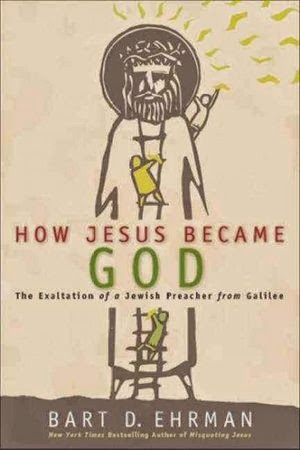
Harvard University Divinity Professor Karen L. King, who announced the fragment's existence at a conference in 2012 [declared by the Vatican to be "fake"..."probably" (NY Times)], was quick to point out that the fragment does not prove that Jesus had a wife. [See below as the eminent religious scholar Princeton University Professor of Religion Elaine Pagels weighs. See also as Bart D. Ehrman (author of How Jesus Became God: The Exaltation of a Jewish Preacher from Galilee), Mark Jordan, and King discuss the god's marriage.]
 
Jesus was not Nordic but African
"The main topic of the fragment is to affirm that women who are mothers and wives can be disciples of Jesus -- a topic that was hotly debated in early Christianity as celibate virginity increasingly became highly valued," King said in a statement.
 
The document first came to King's attention in 2011. She had it examined by Roger Bagnall, director of the Institute for the Study of the Ancient World at New York University. Bagnall's initial findings were that the fragment was ancient, which lead to more testing.
From Harvard University:

Wait, my lord God made love and everything?!
Over the past two years, extensive testing of the papyrus and the carbon ink, as well as analysis of the handwriting and grammar, all indicate that the existing material fragment dates to between the sixth and ninth centuries CE. None of the testing has produced any evidence that the fragment is a modern fabrication or forgery. More

Mary Magdalene's Secrets (Discovery and other new documentaries)

 
Prof. Elaine Pagels
Robert Siegel, All Things Considered (NPR.org, Sept. 19, 2012)
Revelations (timedoesnotrest)
When the existence of the papyrus was announced in 2012, another scholar of early Christian texts, Princeton's Elaine Pagels was on NPR to saying that the papyrus suggests that at the time it was written "apparently, there were stories going around that [Jesus] may have been" married.
 
More Revelations (Elaine Pagels)
"[It] may also suggest that Jesus is using a symbolic language as he is in other Gospels that we know of from the second century, like the Gospel of Thomas or the Gospel of Philip," Pagels told All Things Considered. LISTEN

Does it matter if Jesus was married?
(BDE) Professors Dr. Karen King, Dr. Bart Ehrman, and Dr. Mark Jordan address the question, "Does it matter if Jesus [St. Issa] was married?"

Thursday, 3 April 2014

Sexy "Obama Girls" turn on Barack (video)

Amber Larson, CC Liu, Ashley Wells, Wisdom QuarterlyCarey Wedler; Amber Lee Ettinger (RT America)Leah Kauffman; Amy Goodman and Denis Moynihan (democracynow.org)

(Carey Wedler/inrogue.co/facebook) Carey speaks for us on WHY at 0:55 and 2:45

B----, please! she said.
Tom Tomorrow (thismodernworld.com)


Before Obama became president, his message of "change" had many falling in love with the well-groomed CIA operative and Illinois senator. One busty individual, model Amber Lee Ettinger, became an instant Internet hit when she declared her "love" for the then-candidate. Ettinger's "Obama Girl" video went viral. But years of the commander-in-chief in office has her looking for a new crush. She joins RT America with more on why she has had a change of heart.


ht obama girl video thg 120905 wblog Obama Girl Returns, Kind Of
The voice behind Obama Girl, Leah Kauffman
A new Obama Girl video -- “Still Got a Crush on Obama” -- was released in 2012: If “Obama Girl” looked different but sounded exactly the same, that’s because Leah Kauffman -- the original singer and songwriter behind the 2008 “Crush on Obama” song and video -- actually stars in this one.  Last time Kauffman and partner Ben Relles, who is not involved with this new video, hired a [hot] model, Amber Lee Ettinger, to lip-synch the original song. But in 2012 Kauffman finally stepped up to take center-stage. VIDEO

Obama defends more NSA spying
China sees Obama girls, but not Xi's daughter
China sees Obama girls, but not Xi girl
THE HAGUE, Netherlands - Pres. Obama on Monday (March 24, 2014) defended U.S. surveillance programs as serving national security rather than [civil liberties or] commercial interests, in a wide-ranging meeting with his Chinese counterpart on the sidelines of a nuclear summit. More
Soft Dictator and new Pope
(Gwen Ifill/PBS NewsHour) Pres. Barry and Pope Francis met for the first time at Corporate Church HQ, the Vatican. The papal audience emphasized different points. Obama claims they focused on their shared interest in helping the poor, while Vatican officials emphasized areas where their views differ like birth control mandates.

Amy Goodman and Denis Moynihan (DemocracyNow.org)
Amys_column_default
Six years into the Obama administration, the president’s promise of “a new era of open government” seems just another grand promise, cynically broken. LISTEN


As colleges across the country, from Harvard to U of Mississippi, deal with (often unconscious but sometimes blatant) racism, a new film tackles the issue with comedy and satire: "Dear White People" follows a group of black students on a fictional Ivy League campus. One of the students hosts a campus radio show of the same name. It confronts racist stereotypes and dilemmas faced by students of color. Tensions come to a head when a group of mostly white students throw an African-American-themed party, wearing blackface and using watermelons and fake guns as props. More


Tuesday, 18 March 2014

Buddhist Brains: Meditation and Science (video)

Amber Larson, Wisdom Quarterly; Dr. Anne Harrington (hosted by the Center for the Study of Religion and Psychology at Boston University's Danielsen Institute)
(BU) Eastern Brains: Probing the Partnership Between Buddhism and and Brain Science
  
MRI brain scan of meditating monk (BBC)
Harvard University's Professor Anne Harrington (Ph.D., Oxford University) discusses the relationship between Tibetan Buddhism (Vajrayana) and the brain. The presentation was hosted by the Center for the Study of Religion and Psychology at Boston University's Danielsen Institute.
 
Want me to concentrate or bliss out? (MR)
She refers to the research of the University of Wisconsin's Dr. Richard Davidson on the brain functions of Buddhist monastics during long periods of meditation as well as American fascination with the Eastern-style of meditation of the human 1960s and 1970s counterculture.
 
She covers Transcendental Meditation (TM) and the Dalai Lama's first visit to the U.S. as well as why he was so important to the West's academic and scientific investigation of mystical meditative states.
  

Friday, 29 November 2013

Ebony and Ivy: University Slavery (video)

Ashley Wells, Wisdom Quarterly; Amy Goodman, DemocracyNow.org
This shocking conversation with Prof. Wilder continues in Part II. The extended interview with the MIT American history professor examines slaves in the nation’s elite schools.

Elite universities in America were built on slaves? An MIT professor and author of a new book, which has been 10 years in the making, examines how many major U.S. universities -- Harvard, Yale, Princeton, Brown, Dartmouth, Rutgers, Williams, and UNC, among others -- are drenched in the blood and sweat of Africans forcibly brought to the United States as slaves.

 
In Ebony & Ivy: Race, Slavery, and the Troubled History of America’s Universities," Massachusetts Institute of Technology (MIT) American history Professor Craig Steven Wilder reveals how the slave economy and higher education grew up together. 
 
"When you think about the colonial world, until the American Revolution, there is only one college in the South, William & Mary... The other eight colleges were all Northern schools. And they’re actually located in key sites, for the most part, of the merchant economy where the slave traders had come to power and rose as the financial and intellectual backers of new culture of the colonies," Wilder says. More


Continuing the conversation on slavery, Democracy Now! is joined by a woman who uncovered that her ancestors were the largest slave-trading family in U.S. history. Katrina Browne documented her roots in the film, "Traces of the Trade: A Story from the Deep North."

It reveals how her family, the DeWolfs based in Rhode Island, was once the largest slave-trading family in U.S. history. And it continued even after slavery was abolished by furnishing human slaves offshore, where it remained legal.

After the film aired on PBS in 2008, Browne went on to found the Tracing Center on Histories and Legacies of Slavery. More

Sunday, 3 November 2013

Moral Tribes: Emotion, Reason, Gap (forum)

CC Liu, Seth Auberon, Wisdom Quarterly; KPCC FM (scpr.org)
Dr. Joshua Greene, Harvard Moral Cognition Lab, talks about morally-based decision-making and the brain. Although matters of morality are abstract, there are ways of examining brains while we decide, allowing for the collection of data about brain activity in parallel with our decisions. In this way, we can better understand which brain circuits drive different types of decisions, particularly those involving moral judgment.

Why can't we come together on climate change? Should the rich pay higher taxes? Should they use their profits to help desperate strangers on the other side of the world? Do gays have a right to marry? Does a woman with an unwanted pregnancy have a right to choose? Is it wrong to eat animals because we care more about their taste than their pain?

On Thursday, Nov. 14th, explore how we make decisions about such questions as KPCC's science reporter Sanden Totten speaks with guest Dr. Joshua Greene, director of Harvard University's Moral Cognition Lab and author of Moral Tribes: Emotion, Reason, and the Gap Between Us and Them
 
Through a "Me vs. Us" and "Us vs. Them" lens, Dr. Greene takes a penetrating and entirely original look at the ways in which neuroscience and evolution guide our moral decision-making process.

(TED Talks) "Experience vs. Memory," Nobel laureate and founder of "behavioral economics" Prof. Kahneman reveals how our "experiencing selves" and our "remembering selves" perceive happiness differently. This new insight has profound implications for economics, public policy, and our own self-awareness. He is regarded as the world's most influential living psychologist.

In the tradition of Prof. Daniel Kahneman's Thinking, Fast and Slow, Moral Tribes deftly reveals the science behind our modern thinking and moral dilemmas and offers a new way of looking at and resolving seemingly irresolvable moral issues.