Showing posts with label vice. Show all posts

Saturday, 9 August 2014

The Buddhist Path as Therapy

Amber Larson and Seth Auberon (eds.), Wisdom Quarterly; Ven. Thanissaro, "Healing Power of the Precepts" (Noble Strategy); Mary Loftus (Psychology Today, Sept. 5, 2013); Sunny
Fairness or martyrdom? When virtue becomes a vice (Jeff Riedel/psychologytoday.com)
.
Virtue becomes a vice? (PT)
The Buddha was a kind of doctor [referred to in some sutras as a "master physician"], treating the spiritual ills of living beings [human and devas, also referred to as "the teacher of gods and humans].

The path of practice he taught was like a course of therapy for suffering (disappointed) hearts and minds. This way of understanding the Buddha and his teachings or Dharma dates back to the earliest texts, and yet it is also very current.

Buddhist meditation practice is often advertised as a form of healing, and quite a few psychotherapists now recommend that their patients try (mindfulness based) meditation as part of their treatment.
 
After several years of teaching and practicing meditation as "therapy," however, many of us have found that meditation on its own is not enough.

Psycho Mike (Suicidal T.)
In my own experience as a Western monk and abbot of Wat Forest Monastery in California (Thai Theravada), I have found that Western meditators tend to be afflicted more with a certain grimness and lack of self-esteem than any Asians I have ever taught.

Our psyches are so wounded by modern civilization that we tend to lack the resilience and persistence needed before concentration (serenity) and insight practices can be genuinely therapeutic.
 
Other teachers have noted this problem as well and, as a result, many of them have decided that the Buddhist path is insufficient for our particular needs. To make up for this insufficiency they have experimented with ways of supplementing meditation practice, combining it with such things as myth, poetry, psychotherapy, social activism, sweat lodges, mourning rituals, and even drumming.

The Buddha's full course
The problem, though, may not be that there is anything lacking in the Buddhist path, but that we simply haven't been following the Buddha's full course of therapy.
 
The Buddha's path consists not only of mindfulness, concentration, and insight practices, but also of virtue (sila), beginning with the Five Precepts. In fact, the precepts constitute the first and most basic step on the Buddhist path.
 
Balance? (Jeff Riedel/PT)
There is a tendency in the West to dismiss the Five Precepts as Sunday-school rules bound to old cultural norms that no longer apply to our modern society. But this misses the role the Buddha intended for them: They are part of a course of therapy for wounded minds/hearts. In particular, they are aimed at curing two ailments that underlie low self-esteem, regret and denial.
 
When our actions do not measure up to certain standards of behavior, we either regret the actions or, worse, engage in one of two kinds of denial -- either denying that our actions did in fact happen or denying that the standards of measurement are actually valid. These reactions are like wounds in the mind... More


(Sunny and the Sunliners) Self-esteem low? Depressed after a bad relationship? "It's Okay," says Sunny. "Ha, ha, ha/ It's all right/ I've been hurt before/ It's all right/ You don't love me anymore/ Maybe someday/ I'll find a way without you/ Ha, ha, ha/ Who am I kidding?/ It's okay/ Baby, I can see/ It's okay/ But, but would it make you happy?/ Maybe someday/ I'll find a way without you./Ha, ha, ha/ Someday, it won't be long/ You're gonna find yourself all alone/ It's okay/ Baby, I can say see/ It's okay/ I will set you free..."

Sunday, 8 June 2014

Addiction: Indonesia and Iboga (video)

VICE/HBO; Seven, Amber Larson, Seth Auberon (ATS), Wisdom Quarterly; Dr. Gabor Mate
The world's biggest Buddhist temple is in Borobudur, Indonesia. It is a mandala shaped like a pyramid topped by stupas or reliquaries and strange "bells" with Buddhas inside, similar to German Die Glocke time-travel technology from WW II (Wisdom Quarterly).

NICOTINE: Tobaccoland
Shamans can cure (I-M)
The dangers of smoking are no secret in the U.S., but in Indonesia, the tobacco industry goes virtually unregulated. The result? Over two-thirds of all males are smokers and tobacco (nicotine with sugar used in curing the leaves, a preservative that makes it much more addictive than in its natural form) addicts. It is commonplace for children as young as six to take up the habit and buy cigarettes legally. Tobacco is a $100 billion industry here, with TV and print ads everywhere. Investigating this phenomenon in Malang, VICE visits a clinic that promises cures to a plethora of modern ailments using tobacco and smoking -- with an intrepid correspondent getting the full "smoke-therapy" treatment.

IBOGA: Underground Heroin Clinic
Heroin is one of the most easy-to-become addicted to substances on Earth. While it cannot be said to be addictive itself, according to Dr. Gabor Mate, many susceptible individuals certainly do become addicts, utterly dependent on it even as it brings about their ruin. ["Addiction" is the interaction of susceptibility from childhood trauma and introduction of the substance to the nervous system, usually for self-soothing rituals]. Some people will do anything to kick the habit.

Enter Ibogaine -- a drug made out of the African iboga root (T. iboga), whose intense, entheogenic and hallucinogenic properties make it a Type-A felony drug (Schedule 1, regarded as having no medicinal or redeeming qualities by the Big Pharma-influenced medical industry as part of the "military-industrial pharmaceutical complex" that pushes artificial, for-profit chemicals and allopathic "treatments" rather than any actual cures).

Bamboo bridge and waterfall (sun-surfer.com)
But many swear iboga is the most effective way to kick heroin and other substance addictions like alcohol -- especially when combined with shamanic rituals that involves a human guide who enters into trance, interacts with the spirit world, does face painting, chanting, and engages in other traditional practices. VICE follows the journey of one heroin addict who travels to Mexico, where Ibogaine is legal, to finally quit drugs.

Monday, 2 June 2014

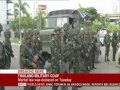
Military puts Buddhist Thailand on brink (video)


(BBC) 60 second background to the 2014 coup d'etat in Thailand as conservative Yellow Shirts gain upper hand over revolutionary Red Shirts by ousting the people's candidate, billionairess PM Yingluck Shinawatra, through the Thai court. Now the Yellow Shirt Royalists seem to have called in the military to enforce an economic system the majority is unhappy with.


Thailand's military detained former Prime Minister Yingluck Shinawatra on Friday in the latest development of the country's unraveling political crisis. The army, which is consolidating its grip on Thailand following Thursday's coup d'état, barred 155 prominent citizens from leaving the country.
ThumbnailBBC News: Thai coup, Andrew Sarchusa
Thumbnail(Arirang) Int'l leaders denounce coup
Thumbnail(ANN) Look at the Shinawatra family
ThumbnailMay 23: Day after Thai military's coup
ThumbnailLife after Thailand's Splendid Little Coup (Journeyman Pictures)

Friday, 23 May 2014

A Coup in Thailand?: Bangkok Rising (video)

 
Look, mom, I'm in a coup! (nytimes.com)
(VICE) For almost a decade, Buddhist Thailand has been trapped in a bloody conflict between Red Shirt supporters and Yellow Shirt opponents of the billionaire-tycoon-turned-politician Thaksin Shinawatra (and the subsequent Thai PM, his sister Yingluck Shinawatra).

Ousted Thai PM Yingluck Shinawatra
During his time as prime minister, Thaksin improved life for the poor and the working class.

But his autocratic tendencies and crony capitalism led his opponents, mainly made up of conservative royalists and the upper middle class, to rise up and overthrow him.

Thaksin was ousted in a military coup in 2006 for alleged abuse of power and corruption. Since then Thaksin's opponents -- widely known as the Yellow Shirts -- and his avid supporters, the Red Shirts, have taken turns instigating mass street protests to topple their opponents.

CNN/CIA coverage has been superficial
While attempting to clear her brother's name of corruption charges in November 2013, Thaksin's sister and Thailand's latest PM [ousted by the court two weeks ago] Yingluck Shinawatra triggered a new Yellow Shirt uprising that has so far killed a reported 23 people and injured hundreds.

Yingluck Shinawatra tried to diffuse the protests by dissolving Thailand's parliament and calling for new elections. But the Yellow Shirts, determined to overthrow her, began a shutdown of Bangkok on January 13th, bringing the Thai capital to a standstill.

Huh, what coup? This has happened before.
Since the election was annulled on March 31st, Red Shirts are mobilizing and intensifying their threats of starting a civil war.

VICE News was on the ground to capture Thailand's state of emergency as the long-running battle for the country is coming to a head.

There are other people, ethnic minorities like these beautiful mountain village girls from the north, often seen selling trinkets in Chiang Mai, Thailand's second-city (Max_Drukpa/flickr).
 
Commentary
We're Red Shirts, but we're tourists.
Who's right, who's wrong? It is easy to support the revolutionary Red Shirts. But the person they entrusted their future to may have been, could likely have been, a corrupt billionaire. He made all the right promises...as did Obama. These "populist" leaders say the right things. They don't follow through. They sell out their followers. Then the Red Shirts succeeded again by electing the fabulous Prime Minister Yingluck Shinawatra, sister of ousted and exiled PM Thaksin Shinawatra.

A People's Coup 2013 (nation.com)
But Yellow Shirts accused her of continuing her brother's populist/corrupt policies. Was she great, or was she a hypocrite? Should Thaksin been allowed back into the country, or had he offended the establishment too much? How could he, a billionaire tycoon, be the "people's hope"? He was the one making all the right promises, offering help to the poor. This is what so many would-be dictators begin by saying. Even if they are sincere, clandestine forces come in to convert or assassinate them. (Why is explained in John Perkin's Confessions of an Economic Hitman).
 
Surely the Shinawatras were a better alternative to the status quo -- but an even better option is what Red Shirts are actually fighting for: a citizens' committee to rule the country. The military will not stand for it. The military-industrial complex (government police+private corporations = military+industry) have a plan for that kind of talk: Game over, time out, military coup, police state, "I'm taking my ball and going home," as Cartman would put it.

People's Coup vs. Military Coup 
Thitinan Pongsudhirak (The Nation, Dec. 13, 2013)
Bangkok, Thailand protest rally for the people, Red Shirts vs. Yellow Shirts (AP).
.
Woman sells statues, talismans (Ska09/flickr)
Never has Thai politics degenerated so quickly from uneasy accommodation to outright insurrection.

It started a month ago [Nov. 2013] with broad-based opposition to an expansive amnesty legislation that would have absolved former Prime Minister Thaksin Shinawatra from convictions for corruption and abuse of power.

It ended up as a civilian putsch by anti-Thaksin forces, led by the Democrat Party and its erstwhile heavyweight MP Suthep Thaugsuban. On an anti-corruption crusade and intent on uprooting what they call the “Thaksin Regime,” these forces incorporate the royalist “Yellow Shirts” and other anti-Thaksin groups from recent years who constitute one side of Thailand’s polarization.

Whether they succeed in removing the government of PM Yingluck Shinawatra, Mr. Thaksin’s younger sister, from power and installing their own government will determine the direction of Thai democracy. More