Showing posts with label monks join protest. Show all posts

Tuesday, 1 July 2014

How to enter Buddhism

Ashley Wells, CC Liu, Wisdom Quarterly; Bhikkhu Khantipalo (Sydney, Australia), Lay Buddhist Practice: The Shrine Room, Uposatha Day, Rains Residence (BPS.lk/Access to Insight.org)
If one were to read only one book on Buddhism, it might be What the Buddha Taught
The Big Buddha, Lantau Island, Hong Kong, China (Clicksnap/flickr.com)
 
I just want Truth! Me, too! Me, too!
What can a lay Western Buddhist can do even though home is far from Buddhist lands, temples, and societies?
 
There are various daily and periodic events on the Buddhist calendar. But which items can be practiced by lay Buddhists without access to monastics, monasteries, temples, relic shrines (stupas), and so on?
 
Out of the rich traditions available in Buddhist countries, let's look at only three: the daily service chanted in honor of the Three Treasures (Buddha, Dharma, and Sangha) with some recollections and meditation; the lunar observance (uposatha) days with the Eight Precepts; and the Rains-Residence period of three months intensive practice. What is important is having some daily Dharma-practice.
 
Even where isolated Buddhists are fortunate enough to be near some Buddhist center, they will still benefit from these Buddhist practices, all of which are based on similar methods used in the East.
 
Meditation is hard to begin in isolation because there are many hindrances and sharks around, subtle and overt dangers to derail one's sincere efforts (National Geographic).
 
These days there are many books on Buddhism, some reliable, some speculative, so that a Buddhist living in a country where the religion is newly introduced is likely to have some difficulty in discerning what is really the teaching of the Buddha.

However, this difficulty can be overcome by the study of the original sources, the Pali canon. Of course, if the student can gain the help of some well learned and practiced Buddhist, one will understand Dharma more quickly and thoroughly.
 
One will also be able to practice more easily. For it is a great difficulty, even if one has a good acquaintance with the sutras (the discourses of the Buddha), to know how to practice their teaching.

Finding the heart of wisdom (Horus2004)
This is more a problem for Buddhists who have to acquire all of their knowledge of the Dharma from books. One hears people like this say, "I am a Buddhist, but what should I practice?" [Buddhism is a practice, not a "belief" system.]

Is it enough to answer this question with more or less abstract categories, saying for instance, "Well, I can practice the Noble Eightfold Path!"?

Journey to the Buddha (Cliksnap)
After all, what does it mean to practice it, and how? It is not easy to practice the Dharma in an alien environment where Buddhist monastics, residences (temple-monasteries called viharas), and monuments containing relics (also called stupas, cetiyas, pagodas, or dagobas) are absent.

In Buddhist lands where these and other signs of the Dharma are to be seen, the lay person has many aids to practice and has access to help when difficulties arise.

But elsewhere the layperson must rely on books. Leaving aside those that are misleading (frequently written by Western people who have never thoroughly trained themselves in any Buddhist tradition), which even if the most authentic sources are studied, still tend to be selective of the materials available so that it is possible to get one-sided views.

We made it to the top (Clicksnap)
Now it can be a good corrective to stay in a Buddhist country for some time and get to know how things are done, but not everyone has the opportunity to do this. Here then let's touch upon a few common Buddhist practices being as general as possible so that descriptions are not peculiar to the Buddhist country I know best, Thailand, but may be common to many Buddhist traditions:

Monday, 2 June 2014

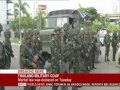
Military puts Buddhist Thailand on brink (video)


(BBC) 60 second background to the 2014 coup d'etat in Thailand as conservative Yellow Shirts gain upper hand over revolutionary Red Shirts by ousting the people's candidate, billionairess PM Yingluck Shinawatra, through the Thai court. Now the Yellow Shirt Royalists seem to have called in the military to enforce an economic system the majority is unhappy with.


Thailand's military detained former Prime Minister Yingluck Shinawatra on Friday in the latest development of the country's unraveling political crisis. The army, which is consolidating its grip on Thailand following Thursday's coup d'état, barred 155 prominent citizens from leaving the country.
ThumbnailBBC News: Thai coup, Andrew Sarchusa
Thumbnail(Arirang) Int'l leaders denounce coup
Thumbnail(ANN) Look at the Shinawatra family
ThumbnailMay 23: Day after Thai military's coup
ThumbnailLife after Thailand's Splendid Little Coup (Journeyman Pictures)

Wednesday, 7 May 2014

Victory in Thailand for anti-gov't Red Shirts!

Dhr. Seven, Pat Macpherson, Ashley Wells, Wisdom Quarterly (ANALYSIS); BBC.co.uk
Thailand court ousts PM Yingluck: Thailand's Constitutional Court orders Prime Minister Yingluck Shinawatra and several of her ministers to step down on abuse of power charges.
War on the streets of the Thai capital as Red Shirts agitate against political corruption in Buddhist Thailand alongside monks. Yellow Shirts are pro-corrupt gov't (Sakchai Lalit/AP).
Waving the red, white, and blue Thai flag during rally -- protests roar on as radical Red Shirts oppose conservative Yellow Shirts to change the system and clean up government (AP)
 
Monks protest as in the Saffron Revolution (R)
There has been a war on the streets of Bangkok for years as radical revolutionary Red Shirts agitate against political corruption in Theravada Buddhist Thailand. 

Even the monks frequently join in to oppose the Yingluck Shinawatra administration and the previous corrupt administration of her billionaire business mogul brother Thaksin Shinawatra.

Police State successfully resisted by Thais (W)
He was deposed by protesters fighting police and paramilitary forces in the street and went into self-imposed exile to avoid legal reprisals.

He then installed his sister, buying her election to the prime ministership but, allegedly, still pulling the strings and wielding political and business influence from afar.

The battle to oust Thailand's PM: Why has the prime minister been ordered to step down today? Find out the background to the crisis in this 60-second video (BBC.co.uk, May 7, 2014).

  
"Patriotic," conservative Yellow Shirts have been pro-corrupt government. The beloved king has allowed the matter to be resolved by the courts that today handed a victory to the Red Shirts by throwing her out of office. 

Red Shirts disrupt Thailand (BBC)
What does the court's decision mean?

It would be like the Occupy Movement waking up one day and realizing the third Bush/Cheney Administration (called the Obama Administration with a much more attractive leader carrying out all the worst policies of the previous ugly rulers) had been thrown out of office by the Supreme Court and hope for actual change had been restored.

The finance minister has been installed as the interim prime minister by the court. Deposed PM Yingluck Shinawatra is shocked and sad.

Bangkok is a booming Asian economy wracked by corruption in a city (Gift-of-Light/flickr)
 .
Live from the scene
Wisdom Quarterly reader Dr. Will writes in to say, "Whoever wrote this error-ridden story should be taken out and shot." Thank you, professor. We await your corrections and field report live from the scene. The story contains  links to the BBC version of events. So even though "[we and readers] can find out the facts about the current crisis in Thailand in a couple of minutes of googling," we hope you can do the Buddhist world one better than that and enlighten us all on what has truly happened in Bangkok. Send in your report because we don't want to waltz over to Thammasat U. to pick it up from you. "Jeez, guys!" He who admonishes, ack. But he who enlightens, ahh! Sawadee ka.

Monday, 13 January 2014

STOP Bangkok (Los Angeles protest)

Ashley Wells, CC Liu, Wisdom Quarterly; KPFK.org
Thai anti-government protesters gather in Bangkok (Wason Wanichakorn/AP)
   
Bangkok (Sakchai Lalit/AP/news.yahoo.com)
Thailand is demanding the ouster of its corrupt first female prime minister (Yingluck Shinawatra, 45), sister of corrupt billionaire and former P.M. Thaksin Shinawatra (who is in self-imposed exile, trying to make a comeback without having to face political corruption charges in majority Buddhist Thailand). As part of the campaign pitting radical Red Shirts and reactionary Yellow Shirts in the Thai capital, Los Angelenos are joining the fray just outside UCLA at the Westwood Federal Building at 2:00 today, Jan. 13, 2014, in solidarity with Thai protesters.
Bangkok braces for protest shutdown
Keeping a Free-Land free (thai)
(AP) Thailand braced for a new wave of mass unrest Monday as anti-government demonstrators blocked major roads to "shut down" Bangkok in a bid to thwart February elections and overthrow the nation's democratically elected prime minister. The intensified protests, which could last weeks or more, raise the stakes in a long-running crisis... More

Saturday, 23 November 2013

Buddhism and Social Action

Amber Larson, Ashley Wells, Wisdom Quarterly; Ken Jones, "Buddhism and Social Action: An Exploration" (Paul Ingram, editor, Buddhist Society's journal The Middle Way (Vol. 54, No. 2)
WARNING: Graphic self-immolation! A harmful and condemnable act of suicide conflating Hindu and Mahayana Buddhist concepts praising martyrdom in the name of "protest" -- bringing attention to U.S. War on Vietnam abuses by a Zen Buddhist monk. This harmful idea currently modern Tibetan monastic extremists.

1.1 Buddhism and the new global society
Protester (Time/Ted Soqui/Shepard Fairey)
It is the manifest suffering (dukkha, disappointment, lack of fulfillment, unsatisfactoriness, misery) and folly (moha, delusion, wrong view, avijja ignorance) in the world that invokes humane and compassionate social action in its many different forms.

For Buddhists this situation raises fundamental and controversial questions. And here, also, Buddhism has implications of some significance for Christians, humanists, and other non-Buddhists. By "social action" we mean the many different kinds of action intended to benefit humankind.
 
These range from simple individual acts of charity, teaching, and training, organized kinds of service, "right livelihood" (nonharmful survival) in and outside the helping professions, and through various kinds of community development as well as to political activity in working for a better society.

(Nati) Burmese Theravada monks lead Saffron Revolution against dictator
 
Occupy L.A. activist (WQ)
Buddhism is a pragmatic teaching that starts from certain fundamental propositions about how we experience the world and how we act in it. It teaches that it is possible to transcend this sorrow-laden world of our experience and is concerned first and last with ways of achieving that transcendence.

What finally leads to such transcendence is what we call wisdom (paññā or prajna). The enormous literature of Buddhism is not a literature of revelation and authority. Instead, it uses ethics and meditation, philosophy and science, art and poetry to point a way to this wisdom.
 
Similarly, Buddhist writing on social action, unlike secular writings, makes finite proposals which must ultimately refer to this wisdom, but which also are arguable in terms of our common experience.
 
In the East, Buddhism developed different "schools" or "traditions," serving the experiences of different cultures, ranging from Theravada Sri Lanka through Vajrayana Tibet and Mongolia to Zen Japan. Buddhism may thus appear variously as sublime humanism, magical mysticism, poetic paradox, and much else.

"Anonymous" NSA/CIA spy
These modes of expression, however, all converge upon the fundamental teaching, the "perennial Buddhism." Drawing upon the different Asian traditions to present the teachings in an attempt to relate them to our modern industrial Western society.
 
From the evidence of the Buddha's discourses, or sutras in the "Long Discourses" (Digha Nikaya), it is clear that early Buddhists were very much concerned with the creation of social conditions favorable to the individual cultivation of Buddhist values. 

An outstanding example of this, in later times, is the remarkable "welfare state" created by the Buddhist emperor, Asoka (B.C.E. 274-236). Ven. Walpola Rahula stated the situation -- perhaps at its strongest -- when he wrote:

"Buddhism arose in India as a spiritual force against social injustices, against degrading. superstitious rites, ceremonies, and sacrifices; it denounced the tyranny of the caste system and advocated the equality of all [people]; it emancipated woman and gave her complete spiritual freedom."
- Ven. Rahula (1978)

Lula, Freedom's daughter (occupyla.org)
Buddhist scriptures indicate the general direction of Buddhist social thinking, and to that extent they are suggestive for our own times. Nevertheless it would be pedantic, and in some cases absurd, to apply directly to modern industrial society social prescriptions detailed to meet the needs of social order which flourished 2[6] centuries ago.
 
The Buddhist householder of the "Advice to Householders Discourse" (Sigalovada Sutta, DN 31) experienced a different way of life from that of a computer consultant in Tokyo or an unemployed black youth in Liverpool [England].

And the conditions which might favor their cultivation of the Middle Way must be secured by correspondingly different -- and more complex -- social, economic, and political strategies.
 
It is therefore essential to attempt to distinguish between perennial Buddhism on the one hand and, on the other hand, the specific social prescriptions attributed to the historical Buddha which related the basic, perennial teaching to the specific conditions of his day.

(Blazing Wisdom) Buddhism: Philosophy, Religion, or Science of Mind

We believe that it is unscholarly to transfer the scriptural social teaching uncritically and with careful qualification to modern societies, or to proclaim that the Buddha was a democrat and an internationalist. The modern terms "democracy" and "internationalism" did not exist in the sense in which we understand them in the emergent feudal society in which the Buddha lived.

Buddhism is ill-served in the long run by such special pleading. On the other hand, it is arguable that there are democratic and internationalist implications in the basic Buddhist teachings.
 
Wat Maha Leap, Cambodia (BokehCambodia/flickr)
In the past 200 years society in the West has undergone a more fundamental transformation than at any period since Neolithic times, whether in terms of technology or the world of ideas. And now in the East, while this complex revolution is undercutting traditional Buddhism, it is also stimulating Asian Buddhism; in the West it is creating problems and perceptions to which Buddhism seems particularly relevant.
 
Throughout its history Buddhism has been successfully reinterpreted in accordance with different cultures, while at the same time preserving its inner truths. In this way has Buddhism spread and survived.
 
The historic task of Buddhists, both East and West, in the 21st century is to interpret perennial Buddhism in terms of the needs of industrial humans in the social conditions of their time and to demonstrate its acute and urgent relevance to the ills of society.

(PS) Zucotti Park: Buddhist monk visits Occupy Wall St. protests
 
To this great and difficult enterprise Buddhists will bring their traditional boldness and humility. For certainly this is no time for clinging to dogma and defensiveness. More