Showing posts with label jesus in india. Show all posts

Friday, 18 April 2014

Sexy Easter film reviews: Heaven is real

CC Liu, Irma Quintero, Ashley Wells, Seth Auberon, Pat Macpherson, Wisdom Quarterly; SCPR/FilmWeek with Larry Mantle and critics Tim Cogshell, Henry Sheehan, Charles Solomon

Jesus has a pony?
Let's give this pony to Jesus to ride in on.
(SPE) Based on a book by a Christian minister whose 11-y.o. son died (had an NDE), went to a heaven -- perhaps the celestial World of the Four Great Kings (Catumaharajika Deva Loka) or the Thirty-Three (Tavatimsa), and returned to tell about it.

Jesus rides in on an ass, the keychain
The boy (who is based on Colton Burpo) reports that Jesus is white with a tunic and a beard and swears he has a pony, just like his father expects heaven to be. It's an Easter miracle! Or it could be that visions of "heaven" (sagga) during a near-death experience accommodate our views and expectations, as reported by the spirit Seth (Seth Speaks: The Eternal Validity of the Soul) as channeled by Jane Roberts -- whether those expectations are heavenly or hellish.

St. Issa's Jewish Heaven on Earth
Happy Patriots' Day, Mass. Happy Holy Week, Christendom. The New Testament says Jesus rode in on an ass (WARNING: do not click!), butt this is not what the Bible's author(s) had in mind, nor this. 

SCPR reviewers talk about the week's new film releases including Greg Kinnear in "Heaven is for Real," H2O in "Watermark" (about dams, their consequences, and our relationship to water), Johnny Depp as Him or a computer program or virus in "Transcendence," flagging Woody in "Fading Gigolo," Jane Goodall in "Bears," Kristin Wiig, Hailee Steinfeld, Guy Pearce, and Nick Nolte in "Hateship Loveship," money-thriller "13 Sins,"  "Hank and Asha," Japanese animation from "Short Peace," Marlon Wayans in "Haunted House 2," and more. LISTEN

Wanna? - What, hunt for 'shrooms? (CH)
Holy water on Holy Week comes to a head on Easter, which is based on a sacred entheogenic mushroom forage rather than bunny egg hunt. These practices are Pagan throwbacks. Yet that does not stop Catholics, Christians, and some Eastern Orthodox adherents from wanting more coverage. Well, Hollywood is obliging. And that is rarely a good thing for truth, accuracy, or the long run. So first the nice movies then the perverted sexy ones:
 
Watermark
 
Water is precious but treated poorly.
(TD) Beautifully weaving together diverse stories from the USA and Mexico (Colorado river, etc.), Canada, India and Bangladesh (Ganges), China (Yangste and the largest human construction in history), and around the globe, this documentary shows in stunning detail humanity's relationship with water through the ages. It expresses the magnitude of our need for this rapidly vanishing resource. By showing the various roles water plays in all of our lives, this breathtaking and haunting doc paints a vivid portrait of our planet, illustrating the magnificent force of nature that is being depleted before our eyes. Directed by Jennifer Baichwal, Edward Burtynsky, released in April 2014.

Bears

Disney Ambassador Jane Goodall (BT)
(CM) "Bears" is in theaters today from DisneyNature not for Easter but for Earth Day. In an epic story of breathtaking scale with the help of super heroine Jane Goodall, this new True Life Adventure "Bears," which showcases a year in the life of two mother bears as they impart life lessons to their impressionable newborn cubs. Set against a majestic Alaskan backdrop teeming with life, their journey begins as winter comes to an end and they emerge from hibernation to face the bitter cold. The world outside is exciting -- but risky -- as the tiny cubs' playful descent down the mountain carries with it a looming threat of avalanches.  The brown bear families must work together to find food, while staying safe from predators in the wilderness, including an ever-present wolf pack.

Short Peace

Short Peace (ショート・ピース Shōto Pīsu) is a compilation of four short anime films produced by Sunrise and Shochiku. The films were released in Japanese theaters in July 2013 and will be screened in North America in April 2014. Sentai Filmworks have licensed the films for North America. A video game based on the series, Rinko Tsukigime's Longest Day, released in Japan as Short Peace: Tsukigime Rinko no Ichiban Nagai Hi (ショートピース 月極蘭子のいちばん長い日), was developed by Crispy's Inc. in collaboration with Grasshopper Manufacture's Goichi Suda, and published by Bandai Namco Games for the PlayStation 3.


The Galapagos Affair: Satan Came to Eden
Let's live on a tropical island, like in the Tropic of Cancer maybe (zeitgeistfilms)

Sexual intrigue, tropical love, and utopia
Fleeing conventional society, a Berlin doctor and his mistress start a new life on uninhabited Floreana Island. But after the international press sensationalizes the sexual exploits of the Galapagos' "Adam and Eve," others flock there -- including a self-styled Swiss Family Robinson and a gun-toting Viennese Baroness and her two lovers. Clashing personalities are aggravated by the island community's lusty free-love ethos. And when some of the islanders disappear, suspicions of murder hang in the air leaving an unsolved mystery that remains the subject of local lore even today. To bring this extraordinary story to life, newly unearthed home movies of these original back-to-nature drop-outs, testimonies of modern day islanders, stunning HD footage of native flora and fauna, and powerful voice performances are interwoven. Macabre yet inspiring, "The Galapagos Affair" is a gripping parable of adventure and utopian dreams gone awry. This biography/documentary (NR) is directed by Dayna Goldfine and Dan Geller. The cast includes Cate Blanchett, Diane Kruger, Connie Nielsen, Sebastian Koch, Thomas Kretschmann, Gustaf Skarsgård, and Josh Radnor.
 
Fading Gigolo

Hey, they weren't my biological daughters
(MC) Accused child molested (WQ) Woody Allen made a movie about a threesome, prostitution, and a Don Juan gigolo? No, some John did. He just co-stars. Synopsis: Fioravante decides to become a professional Don Juan as a way of making money to help his cash-strapped friend, Murray. With Murray as "manager," the duo quickly find themselves caught up in the crosscurrents of love and money. (Featuring John Turturro, Sofia Vergara, Vanessa Paradis, Liev Schreiber, Sharon Stone, Woody Allen, and not directed by an accused pedophile whom Scarlett Johansson defends as unindicted and Mia Farrow condemns as unconvicted).

Under the Skin


Earth boys are easy, and I'm a bad deva.
REVIEW: Shelly and J.S. talk about crude sex goddess Scarlett Johansson's role in Johnathan Glazer's film, and Scarlett chimes in, too. What is great about this very creepy "alien sex fiend" movie is that a lot of it was filmed with unsuspecting men using hidden cameras. They don't know this is Johansson, and they don't know it's a movie. She picks up hitchhikers and kills them. But they're happy to get in the car because a beautiful female is doing the inviting. One is reminded of a certain yakshini who recently made the news (FTZ).

Nymph()maniac

"Nymphomaniac: Volume II" from Denmark and starring Charlotte Gainsbourg is directed by Lars Van Trier co-starring Shia LaBeouf and Willem Dafoe. It is the continuation of Joe's sexually dictated life as it delves into the darker aspects of her adult life and what led to her being in Seligman's care.

Transcendence
 
We love Will power! - Me, too, kids.
Depp as Dr. Will Caster examines the promise and threat of AI (artificial intelligence) as he works to create a sentient machine that combines the collective intelligence of everything ever known with the full range of human emotions. His highly controversial experiments make him famous, but they also make him the prime target of anti-technology extremists who will do whatever it takes to stop him. As they attempt to destroy "Will," they inadvertently become the catalyst for him to succeed -- to be a participant in his own transcendence. Should his wife Evelyn (Rebecca Hall) and best friend Max Waters (Paul Bettany), both fellow researchers, stop him? Can they? Will's thirst for knowledge evolves into a what seems an omnipresent quest for power.

Wednesday, 2 April 2014

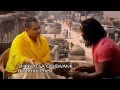
Jesus in India as a Buddhist monk (BBC video)

Pat Macpherson, Dhr. Seven, Ashley Wells, CC Liu, Wisdom Quarterly (2011); BBC 4 (British Broadcasting Corporation, "Did Jesus Die?"); National Buddhist Authority of Sri Lanka

Jesus Christ, Yshua of Nazareth, St. Issa arrives at Hemis Gompa, Ladakh, Himalayan India
 
The historical Jesus (Duccio di Buoninsegna)
Jesus Christ, Jesus of Nazareth, traveled to ancient India, to Kashmir and Buddhist Ladakh bordering Tibet, and ordained as a Buddhist monk?

How could this possibly be? Jesus is GOD (merged with Brahman), the son-of-god (devaputra), an incarnation (tulku, avatar), the Messiah (Maitreya) -- the All-Knowing, All-Powerful, All-Present, why would he go on the quest of a truth seeker in search of himself, peace, and enlightenment? He's got a universe to run and sacrificial lamb blood to spill!

Anyway, who is this rinkydink operation "the BBC" to investigate and conclude such things!? Why would a Jew leave the Holy Land and travel to the holy land to find the Wisdom of the East? It makes no sense! It upsets the cart! It's not copacetic! I have a good corporate job, a nice conservative church, a tight mortgage, and a set of Charlton Heston videos -- I will not tolerate new evidence, written documents, a tomb, a body, lore, or objective facts! It's not convenient! Oh, gawd, make it stop!

BBC 4 Documentary
Jesus Lived in India (Kersten)
(BBC 4) This documentary takes a serious look at the question, "Did Jesus die?" It examines many ideas then at Minute 25 the examination takes a very logical and grounded turn with surprising conclusions demonstrating that: the "Three Wise Men" from the East were in fact Buddhist monks, who went in search of Jesus (a tulku), found him, and came back for him around puberty.

(This kind of occurrence, characteristic of Tibetan Buddhism, is told in modern American terms in the Hollywood film "Little Buddha"). 
European eyes: "Sermon on the Mount"
The 18 "lost years" (not lost but purposely removed from official story) of Jesus are explained and were well known in the polyglot history of Christendom of the past. After monastic training in a Himalayan Buddhist monastery, or gompa, Jesus, known as "Issa" or "Isa" (just as he is referred to in Islam), taught Buddhism, then returned to his home in the Middle East. There he was persecuted as a rebel and troublemaker agitating for social justice and Jewish liberation from imperial Roman rule.

He was condemned, survived a six-hour crucifixion, and with the help of family and friends escaped back to Kashmir, Afghanistan, where he died a beloved old man or "saint" at the age of 80. His tomb has been located and examined, but exploration is limited due to Islamic sensitivities as it is now co-occupied.

Wednesday, 5 March 2014

Buddhist Ash Wednesday: LENT begins

Pat Macpherson, Dhr. Seven, Ashley Wells, Amber Larson, Wisdom Quarterly
Ashes to ashes, monk to monkey, we know Major Tom's a... (Irish Culture Customs)
Yogi "holymen" (sadhus) rub pyre-ashes over their bodies concentrating on forehead tilaks as a religious observance bringing them closer to Brahman (DavidEarlotti/flickr.com).
  
Buddha the Yogi Sage (vgonzalezortiz/flickr)
Ashes?
After the decadence, debauchery, and fattening up of Carnival (the "Goodbye to Meat") and Mardi Gras (Pancake Day) comes the guilt: Ash Wednesday (Ireland's National No Smoking Day) and LENT. It is time to repent of sensuality, excess, and "missing the mark" (Greek sin).
So cover the breasts and expose the forehead. Recollecting an ancient Hindu tradition, ashes will be rubbed on it. 

Hindu OM symbol (tizzyhyatt/flickr)
These sacred ashes or vibhuti signify mortality and death as well as the fierceness to play/work against negative forces, obstacles to rebirth in the heavens (sagga) and liberation by ending rebirth and ALL suffering (nirvana).

Vedic (or Vedantic, which refers to the "best of the Vedas") Hinduism has many practices of abstinence. The Buddha contributed various restraints and observations to Indian culture but enjoined them principally on monastics and intensive lay-practitioners.

Catholicism borrowed more from Hinduism -- particularly its tantric Vajrayana arm in Tibet with all its pomp, circumstance, and "pope" -- than any other of the many traditions it has borrowed from. Jesus may even have been a tulku among Tibetan Buddhist lamas who were the actual Three Wise Men from the East who came looking for him when he was reborn from the heavenly plane to Earth. Jesus remembered and later went to India.
 
Shiva's forehead: sacred ashes
Lent, like pilgrimages (yatra-yatra) and other Indian spiritual practices, spread far beyond the subcontinent. People adopted compassionate vegetarianism, ascetic fasting, periods of silence and reflection all to come closer to the Ultimate Reality (Brahman) behind the Illusion (Maya). No formal religion has taken more from other religions and spiritual traditions than Roman Catholicism -- itself an amalgamation of misappropriated beliefs, relics, and remnants. 

Sin on Wed. (blackshapes.com)
"Christ" is a composite character of many great teachers and their teachings all rolled into one bigger-than-life superhero. Religious scholar Prof. Reza Aslan was exactly right to distinguish Jesus of Nazareth, the person, from Jesus the Christ, the mythical figure. The Buddha was christus (xριστός) -- in that he was born an "anointed" kshatriya-caste royal, who spoke of the Maitreya (Messiah), the "spiritual friend," to come. A buddha is the best of all friends.

Catholicism became the biggest religion in the world, dwarfing the more than billion Buddhists (most of them uncounted in officially atheist/communist China), by appropriating all of these ideas and melding them into one Great Vehicle for all, one universal-congregation or super-religion. This all happened in ancient Buddhist Greece, but the ideas were taken from the wisdom of the East and applied to the nascent "West."
 
"Take that, [you Brahmin] temple priest!" (blackshapes.com)
 
"Buddhist Lent"
Vajrayana Buddhas (Buddhist Train Tour)
The period known as "Buddhist Lent" (Vas or Vassa) actually applies directly to monastics and only indirectly to lay Buddhists. It is the three-month "Rains Retreat." In ancient India, the monsoon season was such that it made travel difficult and dangerous to the life of insects, amphibians, fish (spawning in flooded farm fields), seedlings, and sprouts wriggling all over the wet earth. So the Buddha was asked to rein in his followers and have them not travel about. The Buddha agreed and declared a discipline of remaining in one location for a time of intensive practice, study, and teaching.

Buddha Maitreya in Diskit, Ladakh, Himalayan Buddhist India (PaPa_KiLo/flickr.com)
 
Agni chakra, third-eye on ashen yogi, India
Devout "hearers" (dayakas and sāvakas) of the Dharma, themselves lay Buddhists, took advantage of this situation accruing merit by bring food and other requisites for nuns and monks to utilize the remainder of the year then hanging around, hearing the Dharma, and practicing it intensively. For the day, people would adopt Eight Precepts over the normal five. And they might remain in the temple complexes (viharas) overnight memorizing, chanting, and undertaking walking and sitting meditation. 

Buddhist altar (Piyushkumar1/flickr)
It was a great time to access the wandering ascetics, have questions answered, doubts allayed, and great metaphysical matters discussed. Many people flocked to see the Buddha, few of them "Buddhists." But they would return again and again, and when he would travel on as the itinerant teacher he was, he would leave behind ascetics to help and comfort the people.
Mardi Gras has Pagan roots
International Business Times
Mardi Gras, New Orleans (Kosmic Frenchmen)
Mardi Gras (French for "Fat Tuesday") is a Christian holiday-cum-pop culture phenomenon that dates back thousands of years to pagan spring and fertility rites. Also known as Carnival, it’s celebrated in several nations across the globe -- predominantly those with large Roman Catholic populations -- on the day before the religious season of Lent [the 40 day run up to Pagan Easter]. When Christianity arrived in Rome, religious leaders decided to incorporate some pagan traditions like the raucous Roman festivals of Saturnalia [worshiping the God Saturn] and Lupercalia into the new faith -- a far easier task than abolishing them outright. As a result, the debauchery and excess of Carnival season became a prelude to the 40 days of penance between Ash Wednesday and Easter Sunday. More

Remember, sinners, ye are dust and to dust ye shall return! lol (waynestiles.com)

Saturday, 12 October 2013

Christianity was invented as Roman psy ops

Ashley Wells, Wisdom Quarterly; Travis Gettys (RawStory.com, Oct. 10, 2013); Slate.com
The Holy Roman Empire still rules but now as a religion (Observatore Romano/Reuters)
A bust of Julius Caesar, which was found at the bottom of the River Rhone in Arles in 2008. (AFP)
Bust of Julius Caesar found at the bottom of the River Rhone in Arles in2008 (AFP)
   
Christian scholar claims Christianity invented as part of ancient Roman psy-ops campaign
The make believe Jesus Christ
The Christian faith is the result of the most successful psy-ops program in history, according to a self-professed American Bible scholar.
 
Joseph Atwill will present his controversial theory Oct. 19 in London: the New Testament was written by first-century Roman aristocrats as part of a sophisticated government project to help pacify Jews in occupied territories.
 
Atwill, author of Caesar’s Messiah, claims he’s found ancient confessions by the scriptures’ authors that they invented Jesus Christ and his story as basically a form of propaganda.
 
Women pray at Western Wall with armed guards (Gali Tibbon/Getty Images/Huff Post/AFP)
 
“Jewish sects in Palestine at the time, who were waiting for a prophesied warrior Messiah [kshtriya Maitreya], were a constant source of violent insurrection during the first century,” Atwill said.
 
“When the Romans had exhausted conventional means of quashing rebellion, they switched to psychological warfare ["psy ops," psychological operations]. They surmised that the way to stop the spread of zealous Jewish missionary activity was to create a competing belief system. That’s when the ‘peaceful’ Messiah story was invented.
 
Priests molesting kids? Sure, why not?
[In fact, it was borrowed wholesale from ancient Eastern lore, the expectation talked about by the Buddha about the arising of the next world teacher, the Buddha Maitreya, far in the future. And most catholic or "universal" teachings are borrowed piecemeal from Buddhist, Vedic, European Pagan, Egyptian, and Sumerian sources. Since the leadership does not really believe what it teaches, why not molest children, embezzle Church funds, and live like Roman royalty?]
    “Instead of inspiring warfare, this Messiah urged turn-the-other-cheek pacifism and encouraged Jews to ‘give onto Caesar’ and pay their taxes to Rome.”
     
    He says that Jesus was not based on an actual historical figure, but Atwill argues that the events of his life were overlaid on top of actual events from the First Jewish-Roman War, waged by Emperor Titus Flavius in Palestinian territories.
     
    A history of suffering that will not end
    “The biography of Jesus is actually constructed, tip to stern, on prior stories, but especially on the biography of a Roman Caesar,” he says.
     
    Atwill said he understands that his theory is bound to upset Christians, and he’s hoping skeptics will come to challenge him after his lecture as part of a symposium, “Covert Messiah,” along with Kenneth Humphreys, author of Jesus Never Existed.
     
    “Although Christianity can be a comfort to some, it can also be very damaging and repressive, an insidious form of mind control that has led to blind acceptance of serfdom, poverty, and war throughout history,” Atwill says. “To this day, especially in the United States, it is used to create support for war in the Middle East.”

    Wednesday, 9 October 2013

    ZEN RADIO: Alan Watts (audio)

    Wisdom Quarterly; Mitch Jeserich (Letters & Politics, 9-9-13, KPFA.org), AlanWatts.com
    1. Disappointment, 2. Craving, 3. Freedom -- a clean cut Alan Watts on American TV
      
    Mystical Watts in 60s California
    Pacifica Berkeley's beloved history buff Mitch Jeserich finally went overtly Buddhist coordinating an entire show about the late great British-born Zen, Taoist, Eastern Philosophy master Alan Watts. It was the first day of the fund drive, and he would be following up the next day (today) with an all meditation show featuring salesman George Quant and his post-TM "IQM." The wonders of meditation were extolled but slightly sullied by Quant's crass salesmanship. It was like listening to a motivational speaker wing it on stage while thinking that nobody is noticing all the speech errors and redundancies, the misused terminology and overreaching to sound scientifical. At least he has the background for it (with TM and Deepak Chopra Foundation credentials and what he learned in one day at UCLA), and goodness knows selling mantras as a panacea has been in vogue since the 1970s. Just think of that funny scene in Woody Allen's "Annie Hall" at the California party. But sales are sales, and it is a fund drive. And if it helps Jeserich meditate more, then it was all for aught.
     
    Who cares about Watts (RIP)?
    Dhr. Seven, Amber Larson, CC Liu, Wisdom Quarterly
    The Buddha initiated a missionary movement
    It all started in Berkeley, but Alan Watts changed our lives in Los Angeles. KPFK FM remains the only Pacifica Radio station to regularly schedule segments of Watts from the archives. Thanks are due to Roy (of Hollywood) Tuckman, whose Sunday morning show (8:00 am) and overnight ("Something's Happening," 12:00 am-5:00 am) Thursday broadcasts keep Watts alive in our ears and minds. 

    Watts was perhaps the first Westerner in America to really understand Zen, the way of the Tao, Asian culture, and Mahayana Buddhism more generally. He, of course, had help from the early Occidentals, those British, German, and French scholars of the Pali Text Society and their Wisdom of the East (Orientalist) translations and interpretations. 

    What we have today by way of accurate accounts of the historical Buddha's words and teachings in English owe much more to the work of these European pioneers than that of the ordained monastics in Asia whose missionary efforts tried to carry the message across the sea in the tradition of the Buddha's earliest disciples. 

    It was the Buddha who began to set in motion the Wheel of the Dharma by teaching five hearers then sending out 60 enlightened disciples, no two in the same direction, to spread the news that enlightenment was possible for ordinary householders regardless of caste, socioeconomic status, gender, race, or other social barriers. 

    Those Buddhist missionaries apparently succeeded far outside of India to the west even before the Dharma spread east to the shores of Vietnam (Indochina) on the South China Sea. They (and their own followers) traveled from modern day Afghanistan and Iran (Baluchistan) up through Central Asia and, centuries later, through the future Indo-Greco empires of Bactria and Sogdia, into Israel (cosmopolitan Jerusalem) and Europe (Kalmykia), Mongolia, Russia, Siberia, and China. The message even seems to have reached Catholic Rome through the Church Father Origen.

    Jesus the Buddhist
    A wild eyed householder Watts who drank
    Saint Issa (Jesus of Nazareth) apparently heard something that called his attention to travel to India/Ladakh/Tibet in search of truth and a mission of his own. (But few Christians will stand for that story being widely told; fortunately, Holger Kersten, Elmar Gruber, the BBC, and others do tell it widely. 

    Few would believe that Buddhism was in an arm of ancient Greece (the "West") before it made it to China. Fewer would believe that the Buddha's teachings first came to the Americas from China a thousand years ago. But that incredible journey is documented in Rick Field's How the Swans Came to the Lake. Of course, truth has always been stranger than fiction. And now as then the world get the universal Dharma from all directions. Do we understand it? Alan Watts did.