Showing posts with label shaman. Show all posts

Wednesday, 23 July 2014

Becoming a Mother (Natureal Mom)

Mother-making needs nurturing support (Nirrimi Firebrace/naturealmom.com)

TCM and "Qi" (naturealmom.com)
For women to feel good about our births, we need to own our births by being prepared, well-informed, and making sure we have the right kind of support.

Although there is much about the labor and birthing process that we cannot predict or control, we can empower ourselves.

nirrimi-bfing-2
Better Breastfeeding (Nirrimi Firebrace)
We can choose baby and mother-friendly care providers and hospitals/birth centers, knowing our options, being an active part of the decision-making process, and trusting in our ability to birth -- all of which will enable us to become more confident and nurturing mothers.
 
“Birth is not only about making babies.  Birth is about making mothers -- strong, competent, capable mothers who trust themselves and know their inner strength.”
- Barbara Katz Rothman 

Care Providers
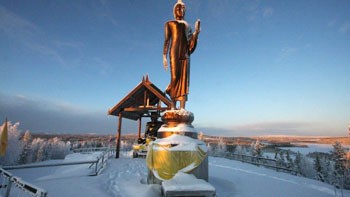
Shaman woman (Elende/deviantart.com)
Whether it is an obstetrician or midwife that practices in a hospital, birth center, or home, it is imperative that the mama-to-be feels safe and trusts her care provider.

This is one of the most important decisions we will make. Our care provider will be the one to ultimately make all of the final decisions about us and our baby’s health and safety.

Routine visits should be slow and unrushed with plenty of time to ask questions, discuss options, and communicate preferences. Mothers-to-be should be treated with care, kindness, and respect and encouraged in their ability to birth and mother.

Check out this great post written by the creator of BellyBelly: 11 Questions to Ask Before Choosing an Obstetrician. For home births, there are specific questions that are important when interviewing midwives, such as how many clients they take a month, if they work with an assistant midwife, what their transfer rate is, and how they would handle it if two people were in labor at the same time.

Birth Doulas 
Lacey
Birth doulas are trained professionals who understand the physiology of birth and the emotional and physical needs of women in labor. They provide continuous physical, emotional, and informational support before, during, and just after birth. They perceive their role as nurturing and recognizing birth as a key experience the mother will remember throughout life.
 
A doula’s role changes depending on the needs of the woman and her partner. Doulas can encourage the partner to become involved in the birth to the extent he or she feels comfortable by demonstrating effective techniques that can be used by the partner during each stage of labor, offering reassurance about the normal progress of labor, and/or allowing the partner the freedom to simply be present with the mother and love her. More
 
NM uses experts
Susan Minich (CNM, MSN, MSOM, LAc, Diplomate, Oriental Medicine has been a Certified Nurse-Midwife working in Women’s Health for 31 years) now integrates Eastern Medicine into her healing methods and is a noted author, lecturer, and teacher formerly on Clinical Faculty in the Graduate Nurse-Midwifery Program at UCLA and the Univ. of Pennsylvania, and currently on the Clinical Faculty at Cal State University Graduate Nurse-Midwifery Program as well as mentoring Nurse-Midwife, Nurse-Practitioner, and Nursing Students. She is involved in education and training for the OB/GYN and family practice residents at Kaiser Permanente Hospital in Los Angeles and is on Clinical Faculty at USC Keck School of Medicine.

Her interest and passion for Eastern Medicine has led her to pursue acupuncture humanitarian service work for women and children in Bali and providing care to Tibetan Buddhist monks, nuns, women, and children refugees living in Dharmshala, India. She traveled to Burma in January 2013 to teach Burmese doctors and has been invited back to India in November 2014.

Monday, 21 April 2014

Free College Night: Himalayan Buddhism

Ashley Wells, Seth Auberon, Wisdom Quarterly; Norton Simon Museum, Pasadena
Buddhist prayer flags flutter in the Himalayas (Bhakti Omwoods/facebook.com)


College Night is an evening at the Museum just for college students. 

Meet the curators, attend tours, and listen to gallery talks with exclusive behind-the-scenes information about favorite paintings and sculptures. 

Learn about the 20-foot-tall Tibetan Buddhist silk thangka in the special exhibition In the Land of Snow: Buddhist Art of the Himalayas.

Lamayuru gompa, Ladakh (DT)
et inspired by the photography exhibition Face It: The Photographic Portrait, and then channel that inspiration as by drawing in the galleries and enjoying music, food, and drinks with fellow art lovers in the Museum’s sculpture garden.

Students receive 25% off all food for sale in the Garden Café. Visit the Norton Simon College Night page for more information.
  • Friday, April 25, 2014, 7-9:00 pm
  • Open House, FREE with valid college I.D.
  • Registration recommended but not required

Friday, 3 January 2014

Saving Native American LA: "Hahamongna"

Mountain watershed north of Los Angeles's tangled freeways (SaveHahamongva.org
Tongva of Los Angeles, Chumash of Malibu, Acjachemem of Orange County (tongvatribe.net)

 
JPL, waterway (swartzentrover.com)
DEVIL'S GATE - In the Pasadena foothills (Los Angeles County), there is a dam placed above the world-famous Rose Bowl. 

This is sacred First Nations (the Tongva, the original inhabitants of L.A.) land known as Xaxaamonga. It was taken over by an imperial army long ago, and that military force built a jet propulsion and skunk works laboratory (JPL) affiliated with nearby Caltech University.

Chris Nyerges in Hahamongna (latimes.com)
The Hahamongna basin was once a great meeting place, a periodic city set up as the site of great gatherings of Native Americans from what is now the Los Angeles metropolitan basin, its eroding foothills, crowded coastal zone (particularly Malibu), Catalina (part of the Channel Islands), and modern Orange County.

That is all to be destroyed.
 
Angeles Nat'l Forest foothills, JPL (SH)
A new plan aims to remove the land and truck it away in the name of "sediment clean-up." At an estimated cost of $70 million, the Hahamongna Watershed Park will more or less cease to exist as a natural habitat. No tree or vegetation will be left standing. In its place concrete, dirt, and rubble will remind local hikers of what was once pre-European-invasion life in the area.

The original inhabitants, the Tongva tribe of the Los Angeles basin (tongvatribe.net)
 
Save Hahamongna!
LA County Flood Control District's EIR
Hahamongna is a rare spot in the Arroyo Seco at the foot of the San Gabriel Mountains where the natural watershed meets the urban plain. Periodically, flash floods roar into this basin. Bounded on the north by the mountains and an ominous Jet Propulsion Lab, on the south by Devil's Gate Dam, Hahamongna contains five unique habitat zones that only exist in alluvial canyons near the mountains as well as wildlife (birds, hawks, lions, deer, foxes, toads, bobcats). Most sites like this in Southern California have already been destroyed. Can we afford let Hahamongna go the way of other lost environmental treasures in Southern California. LATEST NEWS

The trucks are coming: 200,000 double-bed, diesel-spewing, street-clogging machines will cause noise, dust, and air pollution, destroying precious habitat (savehahamongna.org).

 
Scraping the Bottom
André Coleman

Hahamongna trees (SH)
City officials and local residents join forces against sediment removal plans for Devil’s Gate Dam. Pasadena officials opposed to a five-year, $70-million sediment clean-up of Devil’s Gate Dam in Hahamongna Watershed Park, which they say could increase health risks and negatively impact local traffic, are making their feelings known in a letter to L.A. County officials pushing the controversial project. County Public Works Department officials want to remove up to 4-million cubic yards of sediment and build up around Devil’s Gate Dam, located in the southern portion of the park, but the excavation would also force workers to remove trees and vegetation in the area. More

Thursday, 26 December 2013

Buddhism in SWEDEN is growing fast!

Buddhism in SWEDEN

It is evident that Europe is changing very rapidly, economically and socially. Although these changes are widely discussed in the media, there are a few that attract very little attention.
 
The change in demography, in particular the growth of alternative religions, is one notable item. Sweden is no exception.

Due mainly to the arrival of Diasporas and the organic growth of Eastern traditions, such as Buddhism, many domestic people are paying attention. Buddhism is still relatively small in Sweden. But in recent years it has seen tremendous growth. It is trending, and estimates on new Buddhists are on an upward swing.
In April 2011 (the last year for which reliable data are available) it is estimated to have risen to around 35,000 to 40,000 or 0.38-0.43% of the Swedish population, making it the third largest religion after Christianity and Islam.
 
Most practitioners have Asian backgrounds from Thailand, China, and Vietnam. According to official reports in 2011, Buddhism is proportionally the fastest growing religion.

There are now several Buddhist temples in Sweden, including Stockholm (Theravada Thai and Sri Lankan), Borås, Eslöv, Gothenburg, Fredrika, and other parts of Sweden.
 
A BNN reader reports that a giant project in the northernmost part of Sweden is underway. It is supposed to be the biggest Buddhist center in Europe. It has now, however, had to scale back its plans to get clearance for its application to build. But once the project is completed, Sweden will have an enormous Buddhist center that can facilitate more followers.
 
Stockholm Buddhist Vihara
 
Stockholm Buddhist Temple
The Stockholm Buddhist Vihara (monastic residence) is a Buddhist temple in the Theravada tradition. Like old centers in Washington D.C., Los Angeles, and elsewhere, it was established by the Sinhalese community to continue an ancient tradition of spreading the Dharma or Dhamma. The center was built in Sweden in 1985 by the Sri Lanka-Sweden Buddhist Association (SIDA) in conjunction with the arrival of the first resident monastic in Stockholm. It is the first ever Buddhist temple formed in Scandinavia, and the members are mostly of Sri Lankan origin.

A Scandinavian home
SIDA came into being in 1983 as a result of the energetic efforts and dedication of ardent Buddhist devotees who gathered in Stockholm during the winter of 1982 to discuss the possibility of forming an association.

Their courage and determination resulted in establishing a temporary organization, which became permanent after a general meeting in March, 1983 at the SIDA Auditorium in Stockholm.
 
Once established in 1985 the Stockholm Buddhist Temple moved to several temporary locations until the monastics and devotees succeeded in acquiring a permanent building for the center in Jakobsberg in 1995.

Thai Temple in Gothenburg
Thai Buddhist Temple in Gothenburg, SwedenIn 2005 Mrs. Eh and her husband Stein donated five hectares in northern Rörum for a temple building. However, lack of municipal water and sanitation would have meant additional costs if it had been built there.
 
So in 2006, Mrs. Eh and her husband found a property, one owned by a Thai/Swedish family, was for sale. They jumped at the opportunity to create a temple in southern Sweden and decided to purchase the property.
 
The temple has been built by Theravada Thai Buddhists and their partners living in southern Sweden. They have received help from the monks of Wat Pa in Copenhagen under the direction of Abbot Phar Kru Somsak.
 
Theravada temple in Skåne Åstorpsvägen
Thera Vada Buddhist temple – Skåne Åstorpsvägen
Buddhism is not a law or set of dogmas. It is a direct path to enlightenment, something to be undertaken and verified for oneself. Since it is not a "religion" in our Western sense, one need not abandon any faith or creed to practice.

It is often spoken of as an Eastern philosophy or a way of life, says the Buddhist monk Bhikkhu Assati. All are welcome here to meditate, not only Buddhists. When the temple at Railway Road 13 in Åstorpsvägen was recently inaugurated, about 100 people attended. Most were Sri Lankan Buddhists from southern Sweden who previously had to travel to Stockholm or Copenhagen, where there are already Buddhist temples.
 
"Some attendees were not Buddhists," says Mr. Nandi Dei Zylva, Chairman of Standing Behind the Temple, a Sri Lankan Buddhist cultural association in Skaane. "My wife, for example, is a Christian."

"We’re neighbors with Björnekulla Church, and the pastor and his family came here," continues Mr. Dei Zylva. "They were very friendly and accommodating and said that our visitors were free to use their parking [lot]."

Buddhism in SWEDENThe temple in Åstorpsvägen was financed by members and is a Sri Lankan Buddhist temple, unlike the Bjuv, which is Vietnamese. Bhikkhu Assati explains the difference:
 
"Buddhism, which originated in Nepal and India, has two branches -- ours called Theravada [Teaching of the Buddha's Elder enlightened disciples] and the Bjuv called Mahayana [Great Vehicle]. Theravada is more conservative than the Mahayana. It is much like the difference between Catholicism and Protestantism."
  • [A more apt comparison might be Sufism to Islam or Judaism to Christianity because both are related but one is a popularization and is ten times larger.]
"Regardless of the difference, we have a good working relationship with the temple in Bjuv," adds Mr. Dei Zylva. "Before we got our own [Theravada] temple, we went there often."
 
The temple’s representatives wish many Åstorpsbors will come to visit and meditate. They welcome all who feel the need to replace their daily stress with a moment of contemplative rest.
 
Buddhism in SWEDEN

In addition to the Bjuv Buddhist temple of Sweden, there is a Vietnamese temple in Katrineholm.

Monday, 23 December 2013

O, Christmas: Shaman Santa Cometh! (video)

Dhr. Seven, Amber Larson, Ashley Wells, Pat Macpherson, Wisdom Quarterly; John Allegro
Was "Santa" originally a Siberian/Scandinavian shaman distributing magic mushrooms?
Reindeer-drawn sleigh in pagan Scandinavia, the Norwegian Lapland (visitnorway.com)
 
Budai (Elysia in Wonderland)
We love the holiday season -- not because of the crass commercialism, family fights, or endless droning of Judeo-Christian Xmas TV specials around the house.

No, it is because scholarly research has shown us the true origins of the Santa Claus.

It is not, as the Catholic Christians say, Saint Nick(olas). But we'll have to check in with Megyn Kelly and Jon Stewart for the ongoing debate about that as Stephen Colbert and Bill O'Reilly weigh in.

The indigenous Scandinavians, the Sami, and their shaman ways tied to reindeer and magic mushrooms: Introducing Santa
 
Weihnachten means Krampus
No, it is a Scandinavian/Siberian tale of something that really happened and happens -- a custom, a ritual, something to look forward to in the cold of winter. Across Siberia and Norwegian-Swedish-Finnish Lapland, among the indigenous peoples, the blond Sami and brunette (pre-Buddhist) Mongolians, the local shaman gathered the entheogen mushrooms.
  • (Many Buddhists are Russians, and many more are Mongolian-Siberians, Central Asians, and inhabitants of Europe's only indigenously Buddhist country, Kalmykia).
Amanita mushrooms on pine needle floor
The red and white gifts from Mother Nature sprung up under and around pine trees. Big gifts come in small packages. Each family got its share, delivered by reindeer-drawn sleigh to hut houses with prominent chimneys burning away. The shaman came in the front door, made his moist distribution, which were in dire need of drying to preserve and maximize their effectiveness. (A chemical conversion process takes place through heating, drying, or boiling).
  • Why pine trees? Is it because they are evergreen and therefore a symbol of fertility? Partly as birthrates nine months down the road show, but mainly because these fly agaric mushrooms (Amanita muscaria) have a symbiotic relationship with the roots of pine trees. Not much can grow in the bed of dropped needles, a chemical plant strategy to enhance the success of their species by more or less sterilizing adjacent ground and minimizing competition.
Paul Stamets: the world's first "Internet" or communication Web, Mycelium "Running"
  
Mushrooms communicate very well.
The driest and warmest place to accomplish this was above an open fire, in the hearth, in convenient stockings that that hung their. Stocking stuffers, to the delight of Kris Kringles and toadstool-loving gnomes and sprinkling-fairies and mischievous elves who haunted residents with their poltergeist activities. These elementals really went to work, activities which became visible to those consuming the Forest's offerings. No one knew better than the reindeer themselves, with perhaps the exception of old jolly (delirious) Saint Shaman. They "fly" in two senses, high as the sky thanks to licking the snow and trotting, prancing, bounding as they pull.
  
Jolly Budai or Hotei with his sack and candy (Dbonyun/flickr.com)
Massive Budai (melissahardytrevenna)
  • Eventually the legend of an obese saintly man carrying a big sack of gifts to give out drifted Far(ther) East from Siberia to China and made it to Buddhist Asia. In addition to Scandinavian shaman "Santa" in his white and red furs, there is Chinese shraman "Santa" in his patchwork saffron robes: Budai (Hotei) Bodhisattva, the "fat, happy Laughing Buddha" as he is almost universally regarded. He was actually a historical figure, a jolly and rotund Buddhist monk who went about carrying a sack of treats to give to children.
Another Mushroom Link
Jesus was a mushroom -- no, really, he was!
If we were to say that Saint Issa (of "Jesus Christ" fame) was a mushroom, we would be scorned and ridiculed -- charged with hooliganism and inciting religious hatred like our Russian colleagues. But it is not we who say such a strange thing. 

It is preeminent, banned-by-the-Vatican scholar John M. Allegro (johnallegro.org) -- author of The Sacred Mushroom and the Cross, familiar with many texts in Christian languages (Aramaic, Hebrew, Greek, Latin, English) -- who figured it out.
 
The would-be Satan or Santa?
He was such a towering figure in Christian theology that he could not be dismissed. So his work, originally titled "The Sacred Mushroom and the Cross: A Study of the Nature and Origins of Christianity Within the Fertility Cults of the Ancient Near East," was banned.
 
What does Allegro mean when claiming that the sacred sage Jesus (a former Buddhist monk according to the BBC), son-of-god (Sanskrit devaputra, anyone reborn among celestial devas, son-of-man, anyone reborn in our manusya loka, Human Plane, as the offspring-of-humans), Jewish revolutionary (renegade rabbi), and presumptive Vajrayana "Maitreya" (Messiah, the new Mithra), was a "mushroom"?

Ye olde Xmas catalogs (wishbook)
Was he the Nazarene Leader of the Essenes or "Jesus Christ," whose name is actually a title meaning "Yahshua the Redeemer"?

Of course, Jesus of Nazareth may have been a good Middle Eastern man and troublemaker (or an exiled dynastic Egyptian trying to gather up an army to attack the Pharaoh), but he only lived on in legend as the "greatest person who ever lived" (Jesus Christ superstar) because clever esoteric Essene/Jewish cultists embodied the lore of magic mushrooms in the name of this obscure figure.

Sami (Erika Larsen/NYTimes.com)
He returned to Nazareth or Jerusalem, Palestine (or Ethiopia, or Egypt) from 18 "lost years" in Kashmir, India. (See scholar Holger Kersten). He was preaching something new, which the mushroom cult adopted as a cover story. Christianity grew to greatness not as the religion of this godman-sadhu-guru, as we are we taught in the West, but as the amalgamation of Euro Pagan Greco-Roman syncretism -- appropriating (borrowing) everything but calling it by new names to fit its take-over-the-world theology.
  • Xmas in Japan = money
    Why do so many people claim Jesus/Y'shua as their own -- Jews, Greeks, imperial Holy Romans, Egyptians (Coptics), Tibetan Buddhists (who consider him a tulku, rimpoche, or even as Maitreya Buddha), Persians (who see him as Mithra), and so on and so on? It is because Christianity misappropriated parts of Jesus' life story to fabricate the greatest story every sold/told. It worked. Catholicism/Christianity can claim about three billion adherents, at least nominally, twice the number of Buddhists (when China's billion Buddhists, formerly counted as "atheists" in officially-communist China, are classified correctly in census records).
(TTW) Allegro on the mycological origins of Jesus Christ (Min. 1:50)
 
Scandinavian shaman fairyland
The Essenes -- mystic-monastic Jews, forerunners of the Gnostics, with a monasticism for spiritual striving that was new to the Near East/West (rather than the traditional rabbinical/priestly family integration) -- would have been lost to history. But the message that we are all "GOD," that we are of a divine nature (i.e., have the potential to become devas and brahmas when we are reborn again as spiritus, "light beings," subtle matter of the Fine Material Sphere), that an entheogen like magic mushrooms draws out and makes evident, was too good to lose.

Allegro figured out and published how Jesus came to be conflated with magic mushroom lore, but that he was, of that Allegro was absolutely convinced.

Garden gnome Budai
What motivated Budai/Hotei Bodhisattva to gain weight, distribute treats, and be so happy, that we do not know. Wandering Buddhist monks, called shramans, are like that.

More importantly, what will Wisdom Quarterly staff be doing for Christmas, the Pagan holiday of gift giving and merriment? Eating traditional Chinese food, rubbing Budai's belly for luck, reading our fortunes in the folds of inedible cookies, visiting family and friends to collect and distribute gifts just as Buddhist Lisa Simpson would have us do (any maybe this year there will finally be a wrapped pony under the plastic tree), and Xmas Eve meditation at Against the Stream.

(ML) A Very Pagan Xmas: The True Origins of Christmas
 
Everything we "know" about Christmas we don't. Iranian Mithra has more to do with it than Israeli Jesus. Every common holiday misconception is cracked wide open. The producers who unmasked Halloween now unwrap Christmas. This is a must see for seekers of truth. It recounts Biblical tales. But was Dec. 25th Jesus' birthday? Why do we decorate a pine tree, put lights up, teach children to believe in St. Nicholas, or Santa and his magical reindeer? Paganism. Christendom adopted popular customs; it did not invent them. This will be the Season for Reason when the real story of Christmas is known. For once our eyes are open, Christmas may never close them again.
  
Paul Stamets' Fungi Perfecti (fungi.com)
 
The Sami or Lapp
Sami girl in kolt (visitnorway)
Lapp means a "patch of cloth" for mending. Thus, the name suggests that the Sami are wearing patched garments [just as India's "shamans," the Buddhist shramanas, or "wandering ascetics" (some say bhikkhu/ni originally meant "one who picks up  or makes use of discarded rags for clothing") wear patched robes], a derogatory term and one that needs to be replaced. The word "Laplander" is also problematic since that could mean any person who lives within this region, even non-natives. Finally, there's a part of the Sami population who always have lived outside the region of "Lapland" such as the Sami of Sweden, Jemtland, and Härjedalen. (Editor: One Sami word that made it into several major languages is tundra, which speaks volumes about this part of the world). More