Showing posts with label rebirth. Show all posts

Tuesday, 19 August 2014

Violence (Dhammapada verses)

Acharya Buddharakkhita (trans.), Dhr. Seven, Amber Larson, Crystal Quintero (eds), Wisdom Quarterly, Dandavagga: "Violence," Dhammapada 10 (Dhp X) PREV-NEXT
The Buddha, sunrise over Borobudur, Java, Indonesia (Ulambert/flickr.com)
 
The Dhammapada
Dhammapada Verse 129. All tremble at violence; all fear death. Putting oneself in the place of another, one should not kill nor cause another to kill.
 
130. All tremble at violence; life is dear to all. Putting oneself in the place of another, one should not kill nor cause another to kill.
 
131. One who, while seeking happiness, oppresses with violence other beings who also desire happiness, will not attain happiness hereafter.
 
132. One who, while seeking happiness, does not oppress with violence other beings who also desire happiness, will find happiness hereafter.
 
133. Speak not harshly to anyone, for those thus spoken to might retort. Indeed, angry speech hurts, and one may be overtaken by retaliation.
 
134. If, like a broken gong, one silences oneself, one has approached nirvana, for vindictiveness is no longer in one.
 
135. Just as a cowherd drives the cattle to pasture with a staff, so do old age and death drive the life force of beings (from existence to existence in samsara).
 
Reflecting on the world, on the causes of violence and peace (Ulambert/flickr.com)
.
136. When the fool commits unskillful deeds, the fool does not realize (their harmful nature). The witless person is tormented by those very deeds, like one burned by fire.
 
137. One who inflicts violence on those who are unarmed, and offends those who are inoffensive, will soon come upon one of these ten states:
 
138-140. Sharp pain, or disaster, bodily injury, serious illness, or derangement of mind, trouble from the government, or grave charges, loss of relatives, or loss of wealth, or houses destroyed by ravaging fire; upon dissolution of the body that ignorant person is reborn in hell.
 
Indian ascetics in Nepal (galuzzi.it)
141. Neither [engaging in ascetic extremes of mortification like] going about naked, nor wearing matted locks, nor wallowing in filth, nor fasting, nor lying on the ground, nor smearing oneself with pyre-ashes and dust, nor sitting on heels (in penance) can purify a person who has not overcome doubt (skepticism).
 
142. Even though one be well-attired, yet if one is poised, calm, controlled, and established in the pure life, having set aside violence towards all beings -- one, truly, is a holy person (sadhu), a renunciate, a monastic (samana, wandering ascetic).
 
143. Only rarely is there a person in this world who, restrained by modesty, avoids reproach, as a thoroughbred horse avoids the goad (whip).
 
144. Like a thoroughbred horse touched by the goad, be strenuous, be filled with spiritual yearning (to strive). By confidence and virtue, by effort and meditation, by investigation of the truth, by being rich in knowledge and purity, and by being mindful, destroy this unlimited suffering (of samsara).
 
145. Irrigators regulate the waters, fletchers straighten arrow shafts, carpenters shape wood, and the good control themselves.

Friday, 1 August 2014

Science and the Mysteries of TIBET (video)

Guru Rimpoche Padmasambhava, six fingered mystery figure in Tibetan Buddhism (wiki)
 
Wisdom Teachings with David Wilcock: [#69] Science and the Mysteries of Tibet Video
Wisdom Teachings with David Wilcock (#69)
The transfiguration into a rainbow body of light has long been shunted to the realms of mystical experience and Eastern philosophy.

However, there are Western scientific concepts, which we have already learned about in previous episodes, to validate the reality of this ascension [transmogrification] process.


David Wilcock, who formerly existed as Edgar Cayce, begins to weave together the science and philosophy of the rainbow body transformation before presenting physical examples of Padmasambhava’s ascension in this presentation originally webcast July 7, 2014.  
[#3] Beyond Cosmic Consciousness - Part 1  Video
Beyond Cosmic Consciousness - Part 1 (Season 1, Episode 3) Wilcock explains how to connect with the galactic center in order to boost our psychic abilities, the positive impact of the "meditation effect" upon the world, and how light affects DNA. Discover how we can begin to...

Who is David Wilcock?
(Disclosure Truth TV, June 7, 2014) In "The Hidden Science of Lost Civilizations" David Wilcock exposes some of the greatest scientific secrets of our time -- from DNA transformation to multidimensional time -- to unlock the mysteries humankind have always struggled to answer: Who are we? How did we get here? And where are we going? 

[#1] Introduction to Source Field - Part 1  VideoIn his book The Synchronicity Key, he goes beyond this new understanding to investigate how our universe works. Using history and astrology, as well as new research into fractals, spiritual geometry, and quantum physics, Wilcock demonstrates that there is a hidden architecture within time which guides individuals and nations through a system of "enlightenment" (which Joseph Campbell called the "Hero's Journey" or Heroine's Journey, as we all go through it).

What is it? Historical events occur in shockingly precise and repeating cycles of time. And once the hidden laws governing our "fate" our destinies, which we influence all along the way, through seemingly random events Jung termed "synchronicities," are identified, we are left with a remarkable blueprint of how to lead our lives in an uncertain world.

Synchronicity is more than a happy accident. It is an effect of the connectivity of the universe. It is proof that everything is a part of a unified, connected whole.

It is an affirmation of life. Wilcock's understanding of the living fabric that binds the universe together is behind his knowledge of synchronicity, the Law of One, and how we are guided by it.

 
Synchronicity is a means to awaken us to our true identity, the thoughts we think, and the actions we take (karma) are being guided by hidden cycles that repeat, as our guide to this new world of knowledge explains.

http://www.gaiamtv.com/easy-signup
David Wilcock and Wynn Free co-authored the book The Reincarnation of Edgar Cayce? in 2004. He is also the author of the 2011 book The Source Field Investigations, which debuted at No. 18 on the New York Times Best Sellers list on Sept. 11, 2011. His second book, The Synchronicity Key, debuted at No. 8 on the same list on Sept. 4, 2013.

Wilcock has appeared on several radio programs, including semi-regular appearances, and he had a role in the Syfy documentary "2012." He was a proponent of the theory that a large segment of humanity would undergo ascension in the year 2012. He also appeared in several episodes of the History Channel series "Ancient Aliens." Beginning in early 2013, he began hosting a weekly program entitled "Wisdom Teachings with David Wilcock" on Gaiam TV.

Thursday, 24 July 2014

Craving, motherhood, and rebirth (sutra)

Amber Larson, Dhr. Seven, Crystal Quintero, Wisdom Quarterly, Mata Sutta (SN 15.14-19)
There are better ways to be pregnant, to deliver, and to mother (Nirrimi Firebrace/NM)
 .
Craving is our first mother (Rudi'Peni)

Thus have I heard. At one time the Blessed One was staying in Savatthi when he proclaimed:

"Rebirth (again becoming, this continued wandering on through samsara -- a process which is impermanent, impersonal, and unsatisfactory) runs far back into an incomprehensible past. Yet no beginning point is discerned when beings -- hindered by ignorance, ensnared by craving, [and inflamed by aversion manifesting as anger and fear] -- set off on this wandering.
 
"So long has this wandering been going on that it is difficult to come across any being who has not already been one's mother, father, sister, brother, son, and daughter at some time in the past.
 
"And why is that?

"Rebirth (or the "continued wandering on" that is samsara) runs far back into an incomprehensible past. Yet no beginning point is to be discerned when beings -- hindered by ignorance, ensnared by craving -- set off on this wandering [this journey through time and place, this continued wandering on in search of pleasure now here, now there, in search of final satisfaction, fulfillment, security].

These three things are true.
"Long have we all experienced suffering (disappointment, dissatisfaction, distress), experienced pain, experienced loss (separation from the loved), swelling up cemeteries -- long enough to become disenchanted with all formations (conditional phenomena, composite things, i.e., Five Aggregates of Clinging), enough to become dispassionate, enough to be liberated."

Motherhood
But motherhood is the most beautiful thing

Wednesday, 23 July 2014

Becoming a Mother (Natureal Mom)

Mother-making needs nurturing support (Nirrimi Firebrace/naturealmom.com)

TCM and "Qi" (naturealmom.com)
For women to feel good about our births, we need to own our births by being prepared, well-informed, and making sure we have the right kind of support.

Although there is much about the labor and birthing process that we cannot predict or control, we can empower ourselves.

nirrimi-bfing-2
Better Breastfeeding (Nirrimi Firebrace)
We can choose baby and mother-friendly care providers and hospitals/birth centers, knowing our options, being an active part of the decision-making process, and trusting in our ability to birth -- all of which will enable us to become more confident and nurturing mothers.
 
“Birth is not only about making babies.  Birth is about making mothers -- strong, competent, capable mothers who trust themselves and know their inner strength.”
- Barbara Katz Rothman 

Care Providers
Shaman woman (Elende/deviantart.com)
Whether it is an obstetrician or midwife that practices in a hospital, birth center, or home, it is imperative that the mama-to-be feels safe and trusts her care provider.

This is one of the most important decisions we will make. Our care provider will be the one to ultimately make all of the final decisions about us and our baby’s health and safety.

Routine visits should be slow and unrushed with plenty of time to ask questions, discuss options, and communicate preferences. Mothers-to-be should be treated with care, kindness, and respect and encouraged in their ability to birth and mother.

Check out this great post written by the creator of BellyBelly: 11 Questions to Ask Before Choosing an Obstetrician. For home births, there are specific questions that are important when interviewing midwives, such as how many clients they take a month, if they work with an assistant midwife, what their transfer rate is, and how they would handle it if two people were in labor at the same time.

Birth Doulas 
Lacey
Birth doulas are trained professionals who understand the physiology of birth and the emotional and physical needs of women in labor. They provide continuous physical, emotional, and informational support before, during, and just after birth. They perceive their role as nurturing and recognizing birth as a key experience the mother will remember throughout life.
 
A doula’s role changes depending on the needs of the woman and her partner. Doulas can encourage the partner to become involved in the birth to the extent he or she feels comfortable by demonstrating effective techniques that can be used by the partner during each stage of labor, offering reassurance about the normal progress of labor, and/or allowing the partner the freedom to simply be present with the mother and love her. More
 
NM uses experts
Susan Minich (CNM, MSN, MSOM, LAc, Diplomate, Oriental Medicine has been a Certified Nurse-Midwife working in Women’s Health for 31 years) now integrates Eastern Medicine into her healing methods and is a noted author, lecturer, and teacher formerly on Clinical Faculty in the Graduate Nurse-Midwifery Program at UCLA and the Univ. of Pennsylvania, and currently on the Clinical Faculty at Cal State University Graduate Nurse-Midwifery Program as well as mentoring Nurse-Midwife, Nurse-Practitioner, and Nursing Students. She is involved in education and training for the OB/GYN and family practice residents at Kaiser Permanente Hospital in Los Angeles and is on Clinical Faculty at USC Keck School of Medicine.

Her interest and passion for Eastern Medicine has led her to pursue acupuncture humanitarian service work for women and children in Bali and providing care to Tibetan Buddhist monks, nuns, women, and children refugees living in Dharmshala, India. She traveled to Burma in January 2013 to teach Burmese doctors and has been invited back to India in November 2014.

Friday, 27 June 2014

Wisdom Teachings with David Wilcock (video)

Amber Larson, Wisdom Quarterly; David Wilcock (divinecosmos.com), Gaiam TV, 11-12-13
(Gaiam TV/Wisdom Teachings, David Wilcock) "Strange Physics Part 1: Atomic Densities"
 
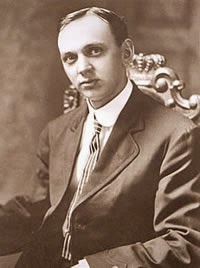
Edgar Cayce, circa 1910
(Gaiam TV) As we have seen in past episodes of "Wisdom Teachings," the physics that underlie our reality are very different from what conventional science tells us and what we think we know.

Expanding on this we gain a glimpse into the role of the observer co-creating the four densities of our reality.

Many of the unconventional scientists who have gotten close to understanding these strange physics have met with dire consequences and have had their experiments shut down.

David Wilcock (in a former life the American psychic Edgar Cayce) explains just what it is that the cabals do not want us to know yet are powerless to fully repress in this presentation.

Sunday, 25 May 2014

The Buddha's Noble FOURfold Path

"Eightfold Path? I was into it back when it was the Fourfold Path" (Elephant Journal)
 
An Elephant's Footprint
Elephant at Borobudur (TrevThompson)
The recorded teachings of the Buddha are numerous. But all these diverse teachings fit together into a single unifying frame: the teaching of the Four Noble [or Ennobling] Truths.

The Buddha compared the Four Noble Truths to the footprint of an elephant. Just as the footprint of an elephant can encompass within it the footprints of any other animal -- lions, tigers, wolves, foxes, cats, dogs, and so on -- so all the different teachings of the Buddha fit into the single framework of the Four Noble Truths.

Punk rock Buddha (Saara/Arkiharha/flickr)
The Buddha makes it clear that the FULL realization of the Four Noble Truths precedes the attainment of enlightenment itself, which means touching or glimpsing nirvana, final liberation from all disappointment.

He says that when a teaching-buddha appears in the world, what is taught are the Four Noble Truths. The special purpose of the Dharma is to make known this path to spiritual-nobility, to ultimate truth and liberation from illusions and suffering.

And the special aim of those treading the path to enlightenment is to personally know-and-see (experientially verify) the Four Noble Truths:
  1. The truth of disappointment (dukkha, unsatisfactoriness, unhappiness, pain, suffering, misery, the unpleasant),
  2. The truth of the origin of disappointment,
  3. The truth of the cessation of disappointment,
  4. The truth of the path, the [eightfold] way to complete and final liberation from disappointment.
Elephant's Footprint sutra (BPS.lk)
The technical Buddhist term dukkha has often been translated as suffering, pain...misery. But dukkha or "disappointment," as used by the Buddha, has a much wider and deeper meaning.
 
It suggests a basic unsatisfactoriness pervading all forms and planes existence, even the most exalted and long lasting, all forms of rebirth, due to the fact that all forms are impermanent (even when they do not seem to be changing in heavenly planes) and without any inner core or substance.

The term dukkha indicates a lack of fulfillment, a lack of perfection, a condition that never measures up to our standards and expectations. Each word in the phrase "Four Noble Truths" is significant. What is the doctor's prescription?

Dr. Buddha, Master Physician (Prescription)

Amber Larson, Crystal Quintero (eds.), Wisdom Quarterly; BuddhaNet.net; Molly Hahn
Cats are good friends when they sleep in under the Sun (Molly Hahn/buddhadoodles.com)
 
The Buddha and my cat (Dee McIntosh/flickr)
The Buddha sets out the Four Truths as a formula a doctor would use to deal with a patient, a suffering person.
 
1. The Buddha first establishes the basic affliction, which is determined to be the problem of liability to disappointment and unsatisfactoriness; living beings are in pain.

2. Thereafter, he makes a diagnosis. That is, he explains the cause for this disease. This is the second truth, namely, that craving is part of the problem [explained in full in the 12 causal links of Dependent Origination], and craving is the link we can do something about right here and right now.

Accept what is. Let go of judgment. Remain aware of it. And you will know and see (BD).
 
3. As a third step a good doctor gives a prognosis, the possibility of the cessation of the problem. That is to say, a doctor determines whether a cure is possible. Is there some means of bringing about the end of our affliction, our problem, the pain we are sore from, complaining about, and seeking a cure for? Fortunately for living beings, the Buddha says YES: Suffering can be ended in this very life! We can stop all our suffering.

4. Finally, in the fourth step, perhaps the most important from the standpoint of the ailing patient, the doctor prescribes the course of treatment. The Buddha prescribes a fourth truth: the Noble Eightfold Path, the way to the end of all suffering, the treatment, the actions to take for enlightenment that leads to the goal of nirvana, which the Buddha very specifically defined as the final solution, the antidote, the cure, "the end of all suffering."

Sunday, 11 May 2014

Mother's Day: The Buddha's Three Mothers

Ashley Wells, Amber Larson, Dhr. Seven, Wisdom Quarterly (AN 2.32)
Mother's Day in America in 12 comics from The New Yorker (newyorker.com)
 
The birth of Siddhartha with Mother Maya
The historical Buddha had three mothers in that final rebirth when he made an end of all suffering.

Most people will have heard of Siddhartha's second mother, his birth-mother, Maha Maya Devi ("Great Queen Maya"). She was a queen, the wife of his father a [rich Afghan Chieftain] King Suddhodana, whose riches derived from the Silk Road that brought wealth, merchants, and spiritual travelers to the faraway capital of Kapilavastu, the Buddha's hometown.

Birth mother: Queen Maha Maya Devi
Maya's beauty was like a "dream," and in fact the name maya derives from the Sanskrit and Pali word for "illusion" (taken in Mahayana-Hinduism as māyā, two religions that so influenced one another as to be the same thing with different deities, one buddhas the other avatars]. An illusion, of course, is fleeting. She passed away seven days after giving birth to Prince Siddhartha. There are reasons given for this -- the most spiritual being that she only took a human birth as a volunteer to give birth to him. We enter life knowing on some level those individuals who play the role of parents, partners, relatives, friends, and enemies. But that is a truth bigger than most can digest.

Maya, Mariah (Mary), a queen in heaven
And she was reborn as a devaputra (born-among-devas) in Sakka King of the Devas' celestial realm, the World of the Thirty-Three in space. There her former son Siddhartha, after becoming the Buddha, thanked and repaid her for her help in this life by teaching her the liberating-Dharma. The other devas of that world also benefited, although Sakka their ruler was already a stream-enterer and therefore a devoted follower of the Buddha.

Our parents do so much for us that, according to the Buddha, the only way we can ever repay them is by teaching or leading them to the ennobling Dharma.
 
Repaying our Parents (sutra)
Wisdom Quarterly translation (AN 2.32)
Shravana Kumar carries his aged and poor blind parents on his shoulders (Ramayana) More
 
Come on, dad. You, too, mom. Get on up here!
"Truly I say, meditators, there are two people who are not easy to repay. Who? Mother and father. Even if one were to carry one's mother on one shoulder and one's father on the other for a century, and one were to look after them by anointing, massaging, bathing, and rubbing their limbs, even as they defecated and urinated where they sat [the shoulders], one would not by that pay or repay one's parents. Moreover, if one were to establish mother and father in absolute sovereignty over this great Earth, which abounds in the seven treasures, one would not by that pay or repay one's parents. Why is that? Mother and father do much for their children. They care for them, they nourish them, they introduce them to this world.
 
"But anyone who rouses one's unbelieving mother and father, settles and establishes them in conviction (saddhā); rouses one's unvirtuous mother and father, settles and establishes them in virtue (sīla); rouses one's stingy mother and father, settles and establishes them in generosity (danā); rouses one's foolish mother and father, settles and establishes them in wisdom (paññā): To this extent one pays and repays one's mother and father."

Ven. Thanissaro (Geoffrey DeGraff) summarizes: This sutra (AN 2.32) shows that the only way to repay parents is to strengthen them in four qualities: confidence (faith), virtue (morality), unselfishness (generosity), and wisdom (discernment). To do so, of course, we have to develop these qualities in ourselves, as well as learning how to tactfully employ them in being an example to our parents. As it happens, these four qualities are also those of a kalyana-mitta or "noble friend" (AN 8.54), which means that in repaying our parents in this way we become the sort of person who would be a noble friend to others as well.

The Other Mothers
Foster mother: Maha Pajapati Gotami
Many will also have heard of the Buddha's foster or stepmother related by blood, Queen Mahā Pajāpatī Gotami (Sanskrit Gautami). As Mother Number 3, she was Queen Maya's sister and co-wife. 

Both were married to King Suddhodana. She stepped forward to care for the newborn Siddhhartha to the detriment of her own son, Nanda, the Buddha's brother (they shared a father, their mothers were sisters, and she nursed and adopted him at age 7 days, which would seem to make her a little more than a stepmother or Nanda a half-brother; she also had a daughter, the Buddha's rarely mentioned half-sister, Sundari Nanda) -- She was the mother of Nanda, but it is said that she gave her own son to nurses and herself nursed the Buddha.
 
Not his mother: Princess Bimba (Yasodhara)
She is much more famous in this world than Maya because Pajapati (Sanskrit Prajapati) went on to become the first Buddhist nun. The Buddha's brother and sister also ordained and became enlightened.

This was in addition to Siddhartha's wife, Rahulamata ("Rahula's mother"), Princess Bimba Devi, much more popularly known as Yasodhara.

Rahula, Bimba, Siddhartha
What we are never told as we hear the story of the Buddha's life repeated is the fact that he did not "abandon" his family. Far from becoming a deadbeat father, having a good old time in the wilderness as an extreme ascetic, he saved his family: He came back enlightened and led his mother, father, wife, son, brother, sister, foster mother, cousins, and extended family members to liberation, to enlightenment and nirvana. He even remembered his birth mother and visited her where she was reborn. Such was the reverence of the Buddha for his parents, and many monastics followed suit. For example, there is the famous case of one of the Buddha's chief male disciples, Maha Moggallana, visiting his mother in hell to help her.

Of course, the Buddha's former wife, now the Buddhist nun and famous disputant Ven. Bhaddakaccānā, is not the Buddha's mother. How could she be the Buddha's mother? She was their son Ven. Rahula's mother.

First Mother
Questionable quote (Lotusing/flickr)
No, the Buddha's "first mother" is a stranger story of rebirth. In brief, it runs as follows. One day the Buddha was walking down a road with his monastic disciples when he passed an elderly couple. The man called out to him, "Son! Your mother and I have been missing you! It has been a long time since you visited us!"

The monastics thought this was very strange. Stranger still, the Buddha approached them and spoke to them in a very kindly way with gratitude. The monastics were confused, Why is the teacher letting these strangers talk to him this way and addressing him as "son"?

The Buddha later explained that for many (500) lives this couple had been his parents. Over and over, the karma of the three being such, they were born together. She raised him over and again. And here she was in that last life running into him apparently out of the blue but not really by accident. The nuns and monks may have been surprised to hear it but, in fact, the Buddha taught something far more surprising:

So long is this samsara -- this "continued wandering on" through births and deaths -- that it is difficult to ever meet anyone with whom one has not already shared all relationships. Look around; those people have already been one's mother, father... How much gratitude do we owe them? While this seems preposterous, it seems so only because we do not know how long an aeon (kalpa) is, how many there have been, or how many times we have already been reborn, how many existences we have already lived, how much we have already suffered. We have little to no idea. For if we knew, we would not be so eager to continue to cycle and revolve in ignorance again and again.
 
Kwan Yin as Mother Goddess (D)
In that final existence, the Bodhisattva (the Buddha-to-be) had taken rebirth in a special way to accomplish his goal of becoming a world-teacher Supremely Enlightened Teaching Buddha, and Maya had volunteered to serve the world-system in the capacity of giving birth to such a great being.

But here in the world, already existing, was the Bodhisattva's long time mother, his mother many times over, and now she had again found him. Our mothers, even when they do not give birth to us this time, are all around (fathers too). Our nurturers are here, and still they nurture us -- sometimes they attack us perhaps due to our lack of gratitude or their lack of understanding -- and stranger still we, too, are former mothers and fathers of others. Such is the incomprehensible working out of karma, an imponderable (acinteyya) thing.
 
Happy Mother's Day to all the moms -- and we mean ALL of them including you -- from Wisdom Quarterly.

Friday, 11 April 2014

How Christianity SPREAD so far (film)

Pat Macpherson, Pfc. Sandoval, CC Liu (ed.), Wisdom Quarterly; Americans United for Separation of Church and State, O.C. Chapter (AU-OC.org) JUDEO-CHRISTIAN IMPERIALISM
 
Garuda and Naga on Mex flag and his palace
(History) Using war to create one world-religion: Saint, Roman Emperor "Constantine the Great" (Flavius Valerius Aurelius Constantinus Augustus, 272-337 AD) converted many to Christianity by killing those who refused. Co-Emperor Licinius issued the Edict of Milan in 313, proclaiming religious tolerance for the empire. Constantine vanquished Licinius during a civil war and went on killing. He replaced the capital of Byzantium with Constantinople (now Istanbul, Turkey), later the capital of the Eastern Roman Empire for over 1,000 years.
 
SEE IT: Sat., April 12, 2014 1:30 pm, Irvine: AU-OC.org: Constantine's Sword (@ IRWD Community Mtg Rm, 15500 Sand Canyon Ave.) uncovers the roots of war and uncovers the ongoing evangelical infiltration of the U.S. military.
 
Nazi insignia embraced by Catholic Church
The story revealed in "Constantine's Sword" is shocking. It reveals the Holy Roman Catholic Church's involvement in Germany's attempted take over of the world.

Within two weeks of Adolf Hitler coming to full power in March 1933, the Vatican's Foreign Minister Cardinal Eugenio Pacelli (Vatican Secretary of State, who went on to become Pope Pious XII) sent the new Fuhrer warm greetings.
 
Bringing Catastrophe to Palestinians like...
Treaty negotiations began between the Church's Pacelli, Secretary of Extraordinary Ecclesiastical Affairs Giuseppe Pizzardo, Cardinal Eugenio, and Germany 's Vice Chancellor under Hitler Franz von Papen.

By July they signed the Reichskonkordat (Vatican-Nazi treaty), and the Vatican became the first foreign power to enter into a bilateral treaty with Hitler. 

Was the murderer "Saint Constantine" really a saint?

The accord included a secret provision that the Church defend Jews who converted to Catholicism, but it indicated that it would have nothing to say about Nazi assaults against Jews who remained Jews.
 
Jesus' robe, the Messiah's Magic Tunic, in Trier
A few days after signing the treaty for Hitler, former German Chancellor and Hitler's Vice Chancellor Franz von Papen represented the Fuhrer at the unveiling of Jesus's seamless tunic, the Holy Robe of Trier, which would not be shown again until 25 years later. The same robe that had come into the Gospels as proof that the Messiah had come. That robe had become the centre of the celebration of the church's treaty with Hitler.


Over the next three weeks more than two million pilgrims poured into Trier to see the robe, now the symbol of the Nazi alliance of church and state. Cardinal Pacelli went on to become Pope Pious the 12th. Whereas it may be unfair to call him "Hitler's Pope," it is fair to call him "Hitler's Cardinal (who became a pope)."

Vatican documents reveal Hitler's Pope: Pius XII (John Cornwell)

"NO WAR IS HOLY"
"Constantine's Sword" is a historical documentary on the relationship between the Catholic Church and the Jews. Directed and produced by Oscar-nominated filmmaker Oren Jacoby, the film was inspired by former priest James P. Carroll's 2001 book Constantine's Sword.

It is the story of author and former Catholic priest James P. Carroll's journey to uncover the roots of war. Carroll, whose father Joseph Carroll was a famous U.S. Air Force general, implies that there has been a relationship between religiously-inspired violence and war.

This has been taking place beginning with the adoption of Christianity by the genocidal Holy Roman Emperor Constantine I in 312 AD.

Constantine was convinced that he had won a battle because he had followed the instructions of a vision to inscribe a sign of the cross (labarum) on the shields of his imperial Christian soldiers. In Carroll's view, this event marked the beginning of an unholy alliance between the military and the Church.

Carroll focuses on Catholic and evangelical anti-Judaism and invokes the cross as a symbol of the long history of xenophobic Christian violence against Jews and non-Christians, from the Crusades through the Roman Inquisition and the creation of the Jewish ghettoes, to the Holocaust (the "whole burnt," which some deny, not to be confused with the Israeli Catastrophe, which no one denies).

Carroll also charges that there is an ongoing evangelical infiltration of the U.S. military (Church supported military-industrial complex) and that this has had negative consequences for U.S. foreign policy.
 
The film's final chapter, "No War is Holy," concludes with views of military cemeteries as Aaron Neville sings "With God On Our Side." [Perhaps the film budget did not allow for "Praise the Lord and Pass the Ammunition."]

(PPB) Christianity took Egyptian and Osiris symbolism, mythic stories, and iconography.