Showing posts with label lost gospel. Show all posts

Monday, 23 June 2014

A Zen Master's Guide to the Bible (video)

Ashley Wells, Amber Larson (eds), Wisdom Quarterly; Clark Strand (spiritualityhealth.com)
COMING SOON: Wisdom Quarterly investigates the gay raping perverted Bible.

A Zen Master's Guide to the Bible
Short intro to world’s first Buddhist Bible study group
In the fall of 1999, my family and I were traveling aboard a commercial airliner out of Memphis, Tennessee, when the cabin filled with smoke and the plane suddenly plunged.
 
In popular cinema, the flight crew are all over such moments -- stowing trays, returning seats to upright positions, making announcements designed to get your attention but not cause undue alarm.
 
In real life, they’re nowhere to be found. It’s easy to follow a manual when the plane seems to be winning its battle against gravity. When it loses, suddenly the term “safety belt” is exposed for the lie it always was. At that moment, you feel it all at once -- I suspect everyone feels it. That’s when you start to pray.

Zen-Daddy, are we going to die?
As it turned out, that was also when my 6-year-old daughter, Sophie, reached across the aisle to hold my hand. “Daddy, are we going to die?” she asked. I’d forgotten that young children pray to their parents in such moments. Not knowing what to say, I closed my eyes, took a deep breath, and asked the same question myself, listening to see if anyone would reply. And, indeed, I did hear a voice.
 
Speaking in a whisper, with imperturbable calmness, it said four simple words directly into my ear.

“I don’t think so.”

I'm a Black Middle Easterner in the Bible.
Bizarre as those words were, coming from the one being in all the universe who ought to have been able to answer that question with a yes or a no, they calmed me down a bit, and I actually was able to relax. So I repeated them to my daughter, who passed them along to my wife, Perdita, who reached over to hold hands with my son, Jonah, who, like his biblical namesake who slumbered at the bottom of the storm-tossed boat, remained blissfully asleep throughout the whole ordeal. And 10 minutes later, we were safely on the ground.

“I don’t think so” wasn’t an answer you’d have gotten from the God I grew up with down South -- the one with an opinion on everything political and a punishment for every liberal act. That God was certain about everything, especially when it came to homosexuals, feminists, Hindus, and the Jews. He’d have killed a planeload of ordinary sinners to get one certified Christ-killer, or saved us all to his greater glory on a whim.

I’d run as far away from that God as I could get, which turned out to be a Buddhist monastery, and even that sometimes felt too close. But a God who admitted calmly -- serenely, even -- that he didn’t know for certain whether my family and I were going to die? That was another matter entirely. [We felt the same experience watching the cartoon God of Marjane Satrapi's "Persepolis" and the man God of Alanis Morrisette's line in All I Really Want: "I am humbled by his humble nature."]

(History Channel) This is some of the literature cut out of the Bible like it never existed. Was it God's first draft, or did men know better [than the seers and composers of the very ancient Sumerian, Egyptian, Babylonian, Phoenician, and Bedouin texts, myths, and histories that became the Hebrew/Jewish and Christian Bible]?

"When Jesus was a boy, did he kill another child? Was Mary Magdalene a prostitute -- or an apostle? Did Cain [and Lot] commit incest? Will there be an apocalypse, or is this [a] trick to scare us? The answers to these questions aren't found in the Bible as we know it, but they exist in scriptures banned when powerful leaders deemed them unacceptable for reasons both political and religions. BANNED FROM THE BIBLE reveals some of these [back stories and explanations] and examines why they were "too hot for Christianity [to handle]."

It gave me the feeling that we would be taken care of either way -- that, in fact, we couldn’t lose as long as we surrendered [gave up, let go, islam, accept what is] fully to whatever came next. If God could relax enough to stay open to what the next moment would bring -- whether it brought a soft touchdown or a fireball of shrapnel -- then, God willing, so could I.

Meeting the God of My Understanding
Young bodhisattvas Jay and Sid (Mr_Walker/flickr)
That was my first experience of what the 12-step recovery movement calls “the God of my understanding.” That God wasn’t interested in theology and had a hard time telling Jains [vegetarian Indian pacifists from a teaching slightly older than Buddhism] from Jehovah’s Witnesses or jihadis [jihad= "struggle with oneself"] from Jews.

But he came when you called him -- even if he sometimes turned out to be a “she” or an “it,” and was so indefinable that, in most cases, you just gave up and let the matter slide. In relationship with that God, the emphasis was on realizing your dependence upon a power beyond the self.

Whether that power manifested in the laws of physics or in random acts of kindness mattered little, as long as you were willing to ask for help and wait for guidance, even if the help wasn’t always what you expected or the guidance turned out to be, “Relax and trust. And stay open to whatever happens next.”

Religion and Math are terrible things (Calvin & Hobbes).
That was a revelation that had eluded me for more than 20 years of Zen practice. By the time I found myself on that plane out of Memphis, I’d been a Buddhist monk, a senior editor for the largest Buddhist magazine in America, and a meditation teacher for more than a decade. But I still hadn’t learned how to live fully in the moment.

The trick is to believe in a power beyond the self, even if you couldn’t say exactly what that power was. I got on another plane the next morning, a different person than I had been the day before, although I didn’t know it yet. I should have realized that my days as a Zen teacher were over, but it took a while to grasp what had happened.

When I finally understood it, I did something very peculiar and started the world’s first Buddhist Bible study group.

A New Spiritual Community
You can't just invent your own user-friendly Messiah
That January, I posted a flier around Woodstock, New York, advertising a new kind of spiritual community called “Koans of the Bible,” after those paradoxical sayings of the ancient Zen masters [like Jesus, whom the BBC Documentary says was a Buddhist monk as does other evidence from Nicolas Notovitch, Swami Abedananda, and other researchers] that made sense only when you learned to stop making sense of them.
 
It read, in part: You are invited to participate in an ongoing study of the mystical teachings of the Bible. Participation in the group requires nothing more than a willingness to spend some time with the Bible’s more puzzling stories, parables, and sayings -- from Genesis to the book of Revelation -- reading them as a question, not an answer; cultivating openness...

Please note, however: This study group is ecumenical [welcoming of all traditions] and is, therefore, open to anyone of any religion whatsoever -- or no religion at all. These last words were meant to warn pious churchgoers that we welcomed atheists

After all, this was a spiritual study group, not a religious one. We weren’t out to convince anyone of anything. They could bring the God of their understanding to reading the Bible, even if that was no God at all. More
Under fire in Iraq: BBC caught in ISIS gun battle - BBC News
ISIS: Onward Christian Muslim soldier
VIDEO: BBC caught in crossfire as ISIS claims more Iraqi cities
(NPR) The Sunni group has taken over four western Iraqi towns since Friday. A BBC crew captured the scene when militants opened fire.
The Bible is definitely not cool, but it is interesting...and sexist, incestuous, racist, violent, patriarchal, elitist, and re-written as well as heavily edited by humans. The great Prof. Elaine Pagels sheds light on the lost "Gnostic Gospels," texts that help explain the big Book.

ZEN LOVE: "From one's heart extend with compassion a kind word, for that one kind word the other person may change, and you yourself may change" (Ara Sensei/michaelsaso.org).

Friday, 11 April 2014

Jesus was married, papyrus shows (video)

Ashley Wells, Pat Macpherson, CC Liu, Wisdom Quarterly; NPR; ABC News via Yahoo News
ABC News reporting on authentic papyrus referring to Jesus's wife (abcnews.com)
Gospel of Jesus's Wife: "Jesus said to them, 'my wife...' " and "she will be able to be my disciple" written in the Coptic language of Egypt, the fragment contains the phrases.
 
https://www.youtube.com/watch?v=UH5C8hWsXyo
In 2012 [a year of revelations], the discovery of a tattered papyrus fragment rocked the biblical studies community after some alleged its text proved that Jesus was married.
 
Now tests show the fragment is not only likely legitimate -- it's also very old.
 
The controversial fragment known as the "Gospel of Jesus's Wife" dates to between the sixth and ninth centuries, and could possibly date back as early as the second to fourth centuries, according to a newly published study in the Harvard Theological Review.

Of course my rabbi son was married
The fragment -- which contains the words, "Jesus said to them, 'my wife'" -- first came to light several years ago.
 
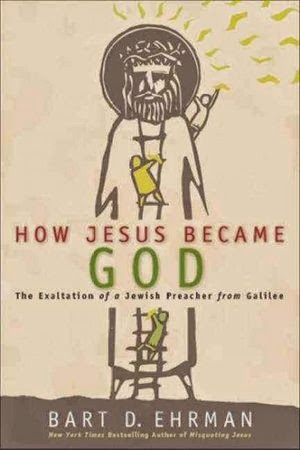
Harvard University Divinity Professor Karen L. King, who announced the fragment's existence at a conference in 2012 [declared by the Vatican to be "fake"..."probably" (NY Times)], was quick to point out that the fragment does not prove that Jesus had a wife. [See below as the eminent religious scholar Princeton University Professor of Religion Elaine Pagels weighs. See also as Bart D. Ehrman (author of How Jesus Became God: The Exaltation of a Jewish Preacher from Galilee), Mark Jordan, and King discuss the god's marriage.]
 
Jesus was not Nordic but African
"The main topic of the fragment is to affirm that women who are mothers and wives can be disciples of Jesus -- a topic that was hotly debated in early Christianity as celibate virginity increasingly became highly valued," King said in a statement.
 
The document first came to King's attention in 2011. She had it examined by Roger Bagnall, director of the Institute for the Study of the Ancient World at New York University. Bagnall's initial findings were that the fragment was ancient, which lead to more testing.
From Harvard University:

Wait, my lord God made love and everything?!
Over the past two years, extensive testing of the papyrus and the carbon ink, as well as analysis of the handwriting and grammar, all indicate that the existing material fragment dates to between the sixth and ninth centuries CE. None of the testing has produced any evidence that the fragment is a modern fabrication or forgery. More

Mary Magdalene's Secrets (Discovery and other new documentaries)

 
Prof. Elaine Pagels
Robert Siegel, All Things Considered (NPR.org, Sept. 19, 2012)
Revelations (timedoesnotrest)
When the existence of the papyrus was announced in 2012, another scholar of early Christian texts, Princeton's Elaine Pagels was on NPR to saying that the papyrus suggests that at the time it was written "apparently, there were stories going around that [Jesus] may have been" married.
 
More Revelations (Elaine Pagels)
"[It] may also suggest that Jesus is using a symbolic language as he is in other Gospels that we know of from the second century, like the Gospel of Thomas or the Gospel of Philip," Pagels told All Things Considered. LISTEN

Does it matter if Jesus was married?
(BDE) Professors Dr. Karen King, Dr. Bart Ehrman, and Dr. Mark Jordan address the question, "Does it matter if Jesus [St. Issa] was married?"

Tuesday, 24 December 2013

The Real and Fairytale "Jesus" (video)

Wisdom Quarterly; Mitch Jeserich ("Letters & Politics," Dec. 24, 2013, KPFA.org, Berkeley), Dr. Reza Aslan (rezaaslan.com, Zealot: The Life and Times of Jesus of Nazareth)
Fox News' Lauren Green attacks historian Prof. Reza Aslan, Ph.D., why a former Christian and current Muslim would write about Jesus. It's reactionary, Islamophobic FOX "News" at its best.

BESTSELLER: Zealot (amazon.com)
Religious scholar Dr. Reza Aslan has discusses his fascinating, provocative, and meticulously researched biography about the historical Jesus [Yah'shua].

It calls into question everything Westerners in Judeo-Christian societies thought we knew about Jesus of Nazareth.
 
Two thousand years ago, an itinerant Jewish preacher (rabbi) and miracle worker [siddha] walked across the Galilee, gathering followers [as an anti-imperial rebel like many modern Palestinians] to establish what he called the “Kingdom of God.” 

Good St. Issa as a bodhisattva
The revolutionary movement he launched was so threatening to the established order that he was captured, tortured, and executed as a state criminal.
 
Two decades after his shameful death, his followers would call him God. 
 
Sifting through centuries of mythmaking, Dr. Aslan sheds new light on one of history’s most influential and enigmatic characters by examining Jesus through the lens of the tumultuous era in which he lived: first century Palestine, an age awash in apocalyptic fervor. 
Jesus became a Pagan Roman god
Scores of Jewish prophets, preachers, and would-be messiahs [which always simply meant someone aiming to save Jews from Roman rule] traipsed through the Holy Land, bearing messages from God. 
 
This is the age of zealotry -- a fervent nationalism that made resistance to the Roman occupation a sacred duty incumbent on all Jews. And few figures better exemplified this principle than the charismatic Galilean who defied both the imperial authorities and their allies in the Jewish religious hierarchy.
 
Fairytale: white savior like Thor
Balancing the Jesus of the Gospels against the historical sources, Dr. Aslan explores this diverse and turbulent age and, in doing so, challenges the conventional portraits of Jesus of Nazareth. He describes a man full of conviction and passion, yet rife with contradiction:
  • a man of peace who exhorted his followers to arm themselves with swords;
  • an exorcist and faith healer who urged his disciples to keep his identity a secret;
  • and ultimately, the seditious “King of the Jews” whose promise of liberation from Rome went unfulfilled in his brief lifetime.
Aslan explores the reasons why the early Christian church preferred to promulgate an image of Jesus as a peaceful spiritual teacher rather than a politically conscious revolutionary.
  • [Biblical scholar Allegro points out that the Jesus cover-story came from an entheogen-using Jewish cult, possibly the Essenes, whose sacrament and "cross" was the magic mushroom. It provided them direct mystical experiences. The BBC documents that Jesus was a Buddhist monk. He returned from 18 lost years in India with long hair to continue his rebel and messianic activities to free the Jews.]
Vishnu, I'm going back to Palestine. - Good luck.
And he grapples with the riddle of how Jesus understood himself (as a Jew, a "messiah," a "god," and a man), the mystery that is at the heart of all subsequent claims about his divinity.

Zealot questions what we thought we knew about Jesus of Nazareth -- even as it affirms the radical and transformative nature of his life and mission. The result is a thought-provoking, elegantly written biography with the pulse of a fast-paced novel: a singularly brilliant portrait of a man, a time, and the birth of a religion.
 
“Riveting...Aslan synthesizes Scripture and scholarship to create an original account.”
—The  New Yorker
“A lucid, intelligent page-turner.”
—Los Angeles Times
“Fascinatingly and convincingly drawn.”
—The Seattle Times
“[Aslan’s] literary talent is as essential to the effect of Zealot as are his scholarly and journalistic chops. . . . A vivid, persuasive portrait.”
—Salon
“This tough-minded, deeply political book does full justice to the real Jesus, and honors him in the process.”
—San Francisco Chronicle

Tuesday, 17 December 2013

Who are the Pope, Mary Magdalene? (video)

Did I beat Miley Cyrus? That's all that matters.
This week, Time Magazine named Catholicism's current papal CEO and head of the Holy Roman Catholic Empire, Pope Francis, 2013's person of the year. Brooke Gladstone looks at the how the new Pope has been received by the media and how his messaging seems to have gone viral. through retweeting. (Martin Palmeri, Misa A Buenos Aires - Sanctus), guests: Daniel Burke, Maureen Fiedler, and Rocco Palmo. LISTEN: AUDIO

(Dsicovery/USAGnosticChurch) A documentary about Mary Magdalene and how incredibly important she is to the history of early Christianity and the modern world.

The spiritual couple: Radha-ji and Chrishna
Was Mary Magdalene murdered? Did the Catholic Church conspire to eradicate the holy bloodline from existence? To some Mary Magdalene was the wife or consort of Rabbi Yahshua (Jesus Christ), because every good rabbi would have taken a wife. The infamous Da Vinci Code has firmly put this idea back into the popular arena along with the idea of a holy bloodline descended from Jesus and Mary.

(RE) Who murdered Rabbi Jesus of Nazareth's wife?

Ancient Greek goddess
In this unique film we journey to places never before researched in connection with the story. We venture into the heart of ancient Lincoln, England, and uncover a tale so mysterious, so at odds with the accepted norm that we are forced to question everything we previously held to be true. 

The unknown texts are tracked down, a journey or treasure hunt across Lincoln County unfolds, and the final resting place of Mary Magdalene herself is discovered.

Thursday, 5 December 2013

The stories banned from the Bible (video)

(ReligionHistory) "Banned from the Bible" examines the forbidden stories in ancient gospels, how they were rediscovered, and what they might mean to the world today.
 
The new Republican Jesus
When Jesus was a boy, did he kill another child? Was Mary Magdalene a "prostitute" -- or an apostle? Did Cain commit incest? Will there be an apocalypse, or is this the JudeoChristian God's trick to scare us?

The answers to these questions aren't found in the Bible as we know it, but they exist in scriptures banned when powerful leaders deemed them unacceptable for reasons more political than religious. "Banned From the Bible" reveals some of these alternative tales and examines why they were "too hot for Christianity."
Married rabbi with wife Mary
The Life of Adam and Eve, The Book of Enoch, The Book of Jubilees, The Infancy Gospel of Thomas, The Gospel of Mary, The Apocalypse of Peter... these are just a few of the books that were intentionally left out of the official Christian Bible. 
 
The reasons for their exclusion provide astonishing insight into the concerns of Church leaders and scholars responsible for spreading the Christian faith (and the hegemony of Greco-Roman "Western" empires) around the world. It is an illuminating look at early Christian religious history.
 
(BBC) The truth is stranger than fiction. Inconvenient facts make
sense to solve a great mystery. Was Jesus once a Buddhist monk?

When Jesus was African/Middle Easterner (W)
One hundred and fifty years after the birth of St. Issa (Jesus), a man named Marcion (of Sinope) decided that a Greek or Christian Bible was needed to replace the Jewish or Hebrew Bible. Church leaders opposed Marcion's banning of the Hebrew books, but they did agree that Christianity would benefit from having a "Bible" of its own, a New Testament.
 
Jewish rebel deified as Greek god, son of Zeus
After Emperor Constantine the Great converted to Christianity in the 4th century, a serious effort was made to compile a Christian Bible, one that included both the Hebrew scriptures (Old Testament) and emerging Christian manuscripts (New Testament). It took another 40 years before a final list of New Testament books was officially canonized by the church. Many of the most popular were excluded. Upon examination today, many of these writings attempt to resolve inconsistencies and questions raised from reading the Bible.

American Hegemony and Power
Growing by invasion and force
The Monroe Doctrine is a policy of the United States introduced in1823 that stated that further efforts by European nations to colonize land or interfere with states in North or South America would be viewed as acts of aggression, requiring U.S. intervention. At the same time, the doctrine noted that the USA would neither interfere with existing European colonies nor meddle in the internal concerns of European countries. The doctrine was issued at a time when nearly all Latin American colonies of Spain and Portugal had achieved or were at the point of gaining independence from the Portuguese Empire and Spanish Empire. Peru consolidated their independence in 1824, and Bolivia would become independent in 1825, leaving only Cuba and Puerto Rico [now under de facto American control with Guantanamo and semi-statehood] under Spanish rule. The US, working in agreement with Britain, wanted to guarantee that no European power would move in. It was the USA's time to colonize the world (beginning, it seems, with Mexico and the Philippines).

(The Onion) Satirical look at things that should make the mainstream news
Occupy Movements live on (occupytogether.org)