Showing posts with label Buddhism In America. Show all posts

Monday, 12 May 2014

I'm a Mexican Buddhist...in LA/LA Land (video)

Crystal Quintero, Ashley Wells, CC Liu, Pfc. Sandoval, Wisdom Quarterly (Part 2)
"LA/LA"? Welcome to LA LA Land: Los Angeles, Latin America (sweetnrawme.com)

If I were Frieda Kahlo
LOS ANGELES, Latin America - The Getty is preparing to launch an art exhibit that accentuates the embarrassment of artistic riches we have in Los Angeles, which not everyone realizes is in Latin America.

It is for a lot of reasons. Not only did it used to be Mexico until European Invaders during U.S. War on the Spanish annexed it like Ukraine, it is again predominantly Latin American.

Buddhists discovered America before Columbus
Although Asians are the fastest growing ethnicity in the U.S., more Latinas and Latinos live in California than any other group.

Most are not Mexican Buddhists anymore, but a lot are. And it's amazing to find out that there is a connection between the Native Americans, First Nations people, and Mexicans (Aztecs, Maya or Mayans, Toltecs, Olmecs, Incas, and many others) from neighboring Mexico, Mesoamerica, and Central America.
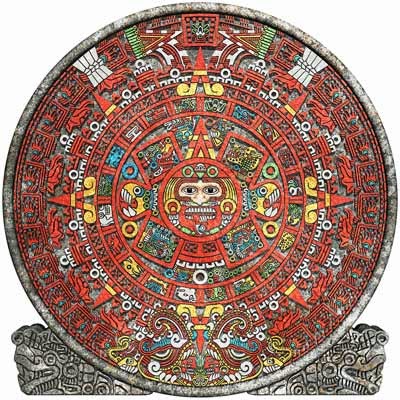
 
The famous "Mayan Calendar" is Aztec
It will be a long time before that information goes mainstream.

But it takes awhile for the truth to surface. In 1885 Edward P. Vining published the facts about inglorious Columbus and the Afghan Buddhist missionaries, led by the Chinese Buddhist monk Hwui Shan (Hui Shen), who arrived in America in the 5th century. America is the Fusang they discovered. So everyone will have to settle for the Getty's Pacific Standard Time 2017.
Getty Foundation (getty.edu)
TheGetty and the Getty Foundation: Art and Art History in Los Angeles (getty.edu)
If I were a leftist Aztec warrior marching through the streets of Los Angeles (latimes.com)
 
In the fall of 2011 Los Angeles celebrated the launch of Pacific Standard Time: Art in L.A. 1945-1980, an unprecedented collaboration of arts institutions across Southern California joining together to tell the story of the birth of the L.A. art scene.
 
If I were Irish-Mexican like Peter (as Che)*
Yet it was 230 years earlier, in 1781, that the city of Los Angeles itself was born when El Pueblo de Nuestra Señora la Reina de los Ángeles [de Porciúncula] was founded as part of New Spain. [A pueblo like that of the Puebloan Buddhists!]

Thus, while Los Angeles [the "City of Angels"] often represents the vanguard of contemporary culture in the United States, it is at the same time a Latin American city of long duration.
 
If I went to BofA or KA
Today, nearly half of the population of Los Angeles has roots in Latin America, contributing to Southern California as a lively center of artistic production and a natural nexus of cultural creativity between North and South. 
 
In recent years a number of exhibitions in the Americas and Europe have offered an introduction to the original and varied heritage of Latin America and the Latin American diaspora.

Now there is an opportunity for a broader and deeper examination of this art through a renewed collaboration by the Pacific Standard Time partners. In the process, Southern California will play a significant role in the research and presentation of Latin American art. More

Buddhism was in Mexico before Christianity (PRI video)

Monday, 7 April 2014

Buddhism in America before Columbus (video)

Amber Larson, Dhr. Seven, CC Liu, Wisdom Quarterly; All History Buff (History Channel)
Polish Jew Christopher Columbus came to infect, rape, and enslave for Europe (AMN)
   
Long before Christians and Conquistadors
The Chinese made a map of the world
It's 455 and the Aztecs live in America as the Chinese begin to make their way to the "New World."

This was long before Chris(to) Columbus' merchant mission. In fact, no less than a dozen cultures have tales of these adventures woven into their histories, but they are noticeably absent in American history books. This documentary explores the possibility that Chinese Buddhists, Japanese, Polynesians, Norse, Welsh, Irish, Ancient Hebrews, and Solutreans [DNA evidence of Africans arriving 50,000 years ago not included] all made it to the Americas much earlier than the mass murderer Columbus. 

Afghan Buddhist monks discovered America shows American historian in 1885 (archive.org)
 
Tibetans (China) brought pueblos to Natives
In 455 AD Buddhist missionaries -- Chinese Hwui Shen and Afghan Buddhist monks -- brought the world-religion of Buddhism to the Native Americans 1,037 years before Columbus, the Conquistadors and Cortes, and European Christian-Catholic missionaries in general.
 
Buddhist missionaries made it to Mexico via California (when California was part of Mexico) according to surviving records (see Minute 8:20). The Chumash (Native Americans from Los Angeles, the Channel islands, and Santa Barbara along the coast of Southern California) were even visited by the Polynesians (Min. 34:20). What hard evidence, apart from written histories, is there for all this?
 
Avoiding European invasion and genocid
Some maritime archaeological artifacts were found in our very own Los Angeles (Min. 11:20). By the time the Welsh set off for the New World, the magnificent Buddhist Khmer Empire of Cambodia was completing Angkor Wat (Min. 20:00), the greatest urban city of the time with a million suburban inhabitants made of stone in the jungle just like those in Mexico and Mesoamerica/Central America built by the Maya, Olmec, Toltec, Inca, and Aztec empires. 
 
But let's rebuild the ships, trace the routes, test the artifacts, and analyze blood evidence to finally learn the answer to one of the greatest mysteries of all time -- Who really discovered America?
Convert them like this, Columbus (Daily Mail)
Scholars now believe that Italian mass murderer Columbus was actually a Marrano, a "secret Jew," who feigned conversion to Catholicism. Historians say five clues to the explorer's faith can be found in his will. His famous voyage was funded not by the Queen of Spain, but by three prominent Jews -- and he first updated them on the progress of his quest. One new theory even suggests he may have been looking for a safe haven for Jews persecuted and driven out of Spain...

No, comments Lorenzo Damas: Search "Christopher Columbus History Turned Upside-Down by New Polish Biography." Historian Manuel Rosa has these links in his book “Kolumb: Historia Nieznana” (published May 8, 2012 in Poland), translated from the Spanish book “Colon: La Historia Nunca Contada. Jews weren't persecuted in Spain until later, and that will is a forgery.

    Friday, 15 November 2013

    Buddhist Meditation and Psychology

    Amber Larson, Wisdom Quarterly; Douglas Burns, Buddhism and Depth Psychology (BPS.lk)
    In Buddhism, "mind" and "heart" use the same term, citta, and the "mind door" is in the area of the physical heart rather than the skull (Thimphu, Bhutan/SoulTravelers3.com)
      
    (psychologyandtheother.com)
    ...If the cause of suffering (dukkha, "disappointment") is primarily psychological, then it must follow that the cure, also, is psychological. Therefore, we find in Buddhism a series of "mental exercises" or meditations designed to uncover and heal our psychic aberrations.
     
    Mistakenly, Buddhist (insight-) meditation is frequently confused with yogic meditation, which includes physical contortions, autohypnosis, quests for occult powers, and an attempted union with GOD [Brahman]. None of these are concerns or practices of the Noble Eightfold Path
     
    There are in [original*] Buddhism no drugs or stimulants, no secret teachings, and no mystical formulae. Buddhist (insight) meditation deals exclusively with the everyday phenomena of human consciousness. In the words of Ven. Nyanaponika Thera, a renowned Western Buddhist scholar-monk:
    In its spirit of self-reliance, Satipatthana [the setting up of the Four Foundations of Mindfulness] does not require any elaborate technique or external devices. The daily life is its working material. It has nothing to do with any exotic cults or rites nor does it confer "initiations" or "esoteric knowledge" in any way other than by self-enlightenment. Using just the conditions of life it finds, Satipatthana does not require complete seclusion or monastic life, though in some who undertake the practice, the desire and need for these may grow (The Heart of Buddhist Meditation, Nyanaponika Thera, London: Rider & Co. 1962, p. 82).
    Unless the reader suspects that some peculiarity of the "Western mind" precludes Westerners from the successful practice of meditation, note also the words of Rear Admiral E.H. Shattock, a British naval officer, who once spent three weeks of diligent meditation practice in a Theravada monastery near Rangoon, Burma:
    Meditation, therefore, is a really practical occupation: it is in no sense necessarily a religious one, though it is usually thought of as such. It is itself basically academic, practical, and profitable. It is, I think, necessary to emphasize this point, because so many only associate meditation with holy or saintly people, and regard it as an advanced form of the pious life... This is not the tale of a conversion, but of an attempt to test the reaction of a well-tried Eastern system on a typical Western mind (An Experiment in Mindfulness, E.H. Shattock, New York: E.P. Dutton & Co., Inc., 1960, pp. 17-19).
    The Buddha in the Golden Triangle (Ursula in Aus/Ursula_bkk/flickr.com)
      
    Reading about meditation is like reading about swimming; only by getting into the water does the aspiring swimmer begin to progress. So it is with meditation and Buddhism in general. The Dharma must be lived, not merely thought. Study and contemplation are valuable tools, but life itself is the training ground.
     
    Using words
    The following passages are attempts to put into words what must be experienced within oneself. Or in the words of the Dhammapada: "Buddhas only point the way. Each one must work out one's own salvation with diligence."

    Meditation is a personal experience, a subjective experience, and consequently each of us must tread our own path towards the summit of enlightenment. By words we can instruct and encourage, but words are only symbols for reality. More

    *"Original" Buddhism?
    Dhr. Seven, Wisdom Quarterly (COMMENTARY)
    (meditationgold.com)
    After the original dispensation (sasana) was set up by the historical Buddha, the Dharma he set rolling began to be conflated with the indigenous Brahmanism of his day. It eventually swallowed Buddhism, calling the Buddha an incarnation (avatar) of the god Vishnu, and making the Buddha's contrary message part of orthodox Hinduism. Adi Shankara is responsible for throwing Buddhism out of India with the idea of promoting the "eternal teachings" (Sanatan Dharma) free of foreign influence. The Buddha was a foreigner from the northwest frontier. Although the Buddha rejected the authority of the sacred Brahminical Vedas, modern Vedantic-Hindus and Mahayana-Buddhists ignore the differences and blend the two traditions. While this departs from the original message of the Buddha, teaching the same thing with new names gives Buddhism a longer history, elevates Sanskrit above Pali, Prakrit, and Magadhi, and loses sight of what the Buddha felt was indispensable for actual enlightenment (bodhi) and final-liberation (moksha), which he called "nirvana" to distinguish this Path's goal from the goal of the ancient Brahmins. For them "the end of rebirth and suffering" is "rebirth in Brahma's eternal heaven." The Buddha rejected this, pointing out that it was not permanent but changing just like all planes of rebirth. The key difference between Brahmanism (Hinduism) and Buddhism regards the soul or self (atta, atman). Until one penetrates anatta, the impersonal or not-self nature of all things, one will not enter the first stage of Buddhist enlightenment called stream entry. Therefore, there will be no actual liberation but only continued wandering on in samsara, the Wheel of Life and Death, through heavens, hells, and other realms.